
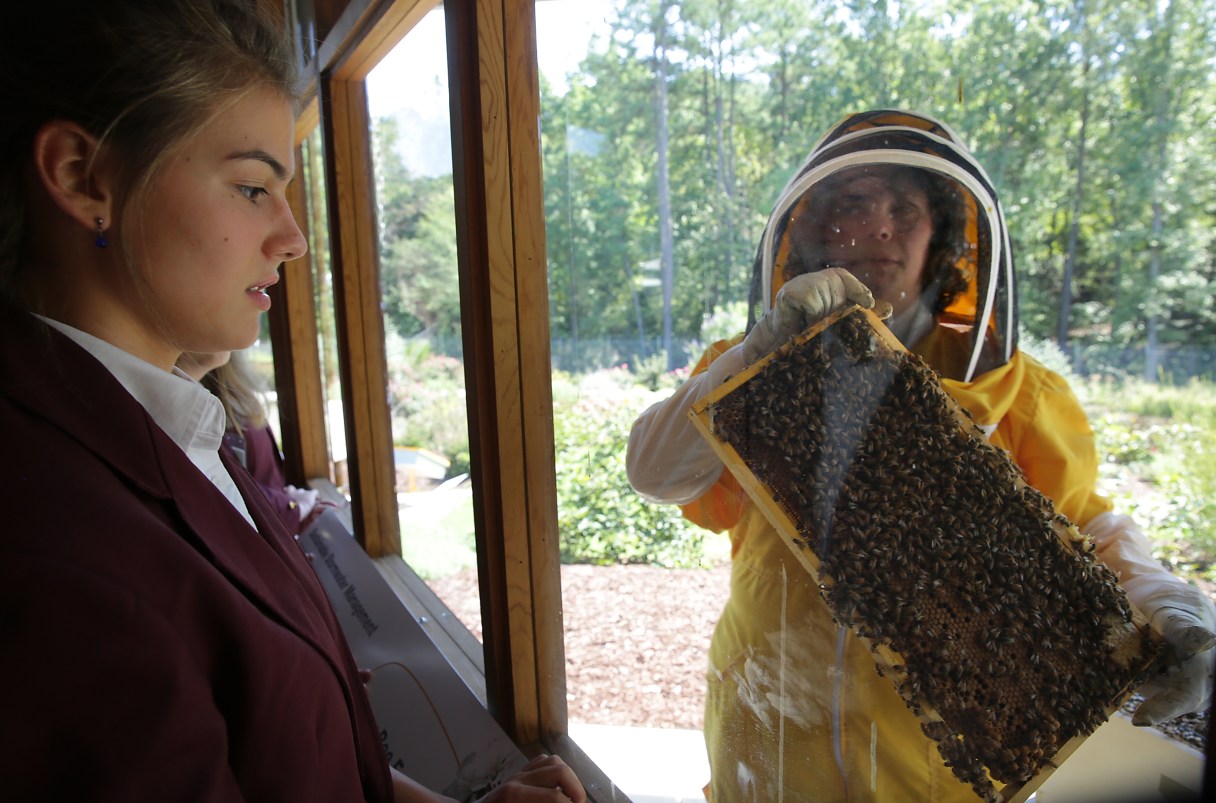
RESEARCH TRIANGLE PARK, N.C. (AP) – In a Nordic-inspired building tucked in a corner of the Bayer CropScience North American headquarters, high school students wander through 6,000 square feet dedicated entirely to the specialness of bees. Children taste different types of honey and examine the differences between honeybee and carpenter bee specimens.
The pesticide maker highlights its work to foster the insects around the world, welcoming school-age children at the site built apart from plant research labs and executive offices. Amid the displays are bottles of Bayer pesticides, something that struck Cara Garrison, a student at Raleigh’s St. Thomas More Academy, as odd.
“I thought it was a little weird to see some of that among all the bee-related things,” Garrison said. “I was like, is that supposed to be there?”
That display in that building captures Bayer’s multi-billion-dollar balancing act.
Some of those pesticides contain tobacco-derived chemicals called neonicotinoids that many researchers say play a role in declining bee populations. Bayer spent $12 million last year, when it earned profits of more than $3.6 billion, promoting bee health as the world’s top neonic maker and No. 2 Syngenta fend off suggestions the chemicals are bee-killers.