
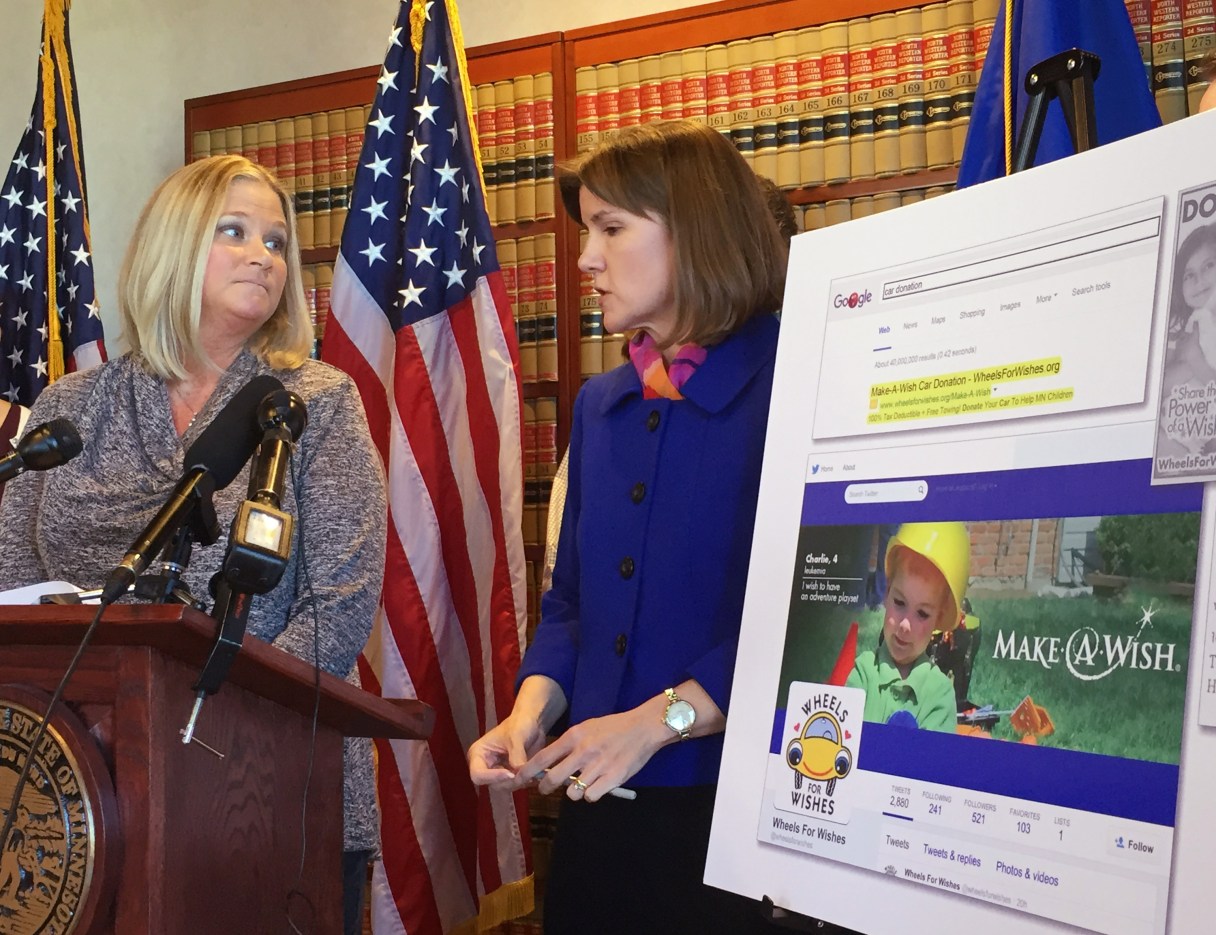
ST. PAUL, Minn. (AP) – Minnesota’s attorney general accused one of the nation’s largest vehicle-donation charities on Wednesday of putting little money toward its advertised mission while steering millions to the for-profit companies owned by the group’s founders.
Democratic Attorney General Lori Swanson said about one-fifth of the Car Donation Foundation’s $108 million in gross revenue over a four-year period went toward charitable grants, while the rest was used for overhead, marketing and payments to a pair of companies. The St. Paul-based foundation solicits vehicle donations under a “Wheels for Wishes” program that pledges the proceeds to local Make-A-Wish chapters to help children battling cancer.
Almost 50,000 vehicles were donated to the foundation in 2014, amounting to $37 million in revenue. The foundation makes itself attractive to donors by arranging quick pickup of inoperable vehicles and documentation that could be used for income tax deductions.
“Donors need transparency to make informed decisions, including who they are donating to and how their money is going to be used,” Swanson said. “Transparency wasn’t given to donors here.”
The foundation referred calls for comment to the founders, William Bigley and Randy Heiligman. The Associated Press left phone messages seeking comment from both men.