
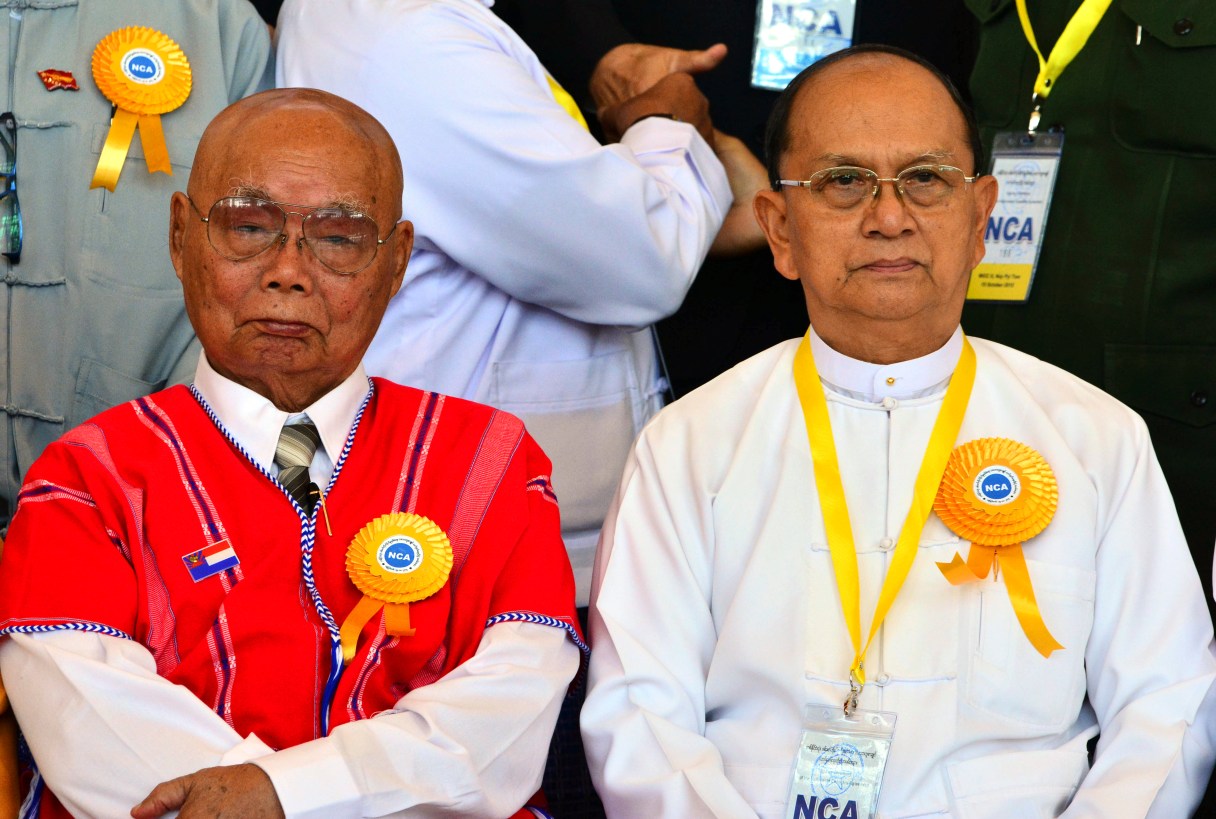
NAYPYITAW, Myanmar (AP) – Myanmar’s government and eight smaller ethnic rebel armies signed a cease-fire agreement to end more than six decades of fighting, but other more powerful groups refused to come on board, signaling that peace will remain elusive for some time to come.
The pact was signed at a ceremony in Myanmar’s administrative capital, Naypyitaw, by President Thein Sein and representatives of the groups. The refusal by the larger armies, such as those of the Kachin and Wa ethnic groups, to sign it robs Thein Sein of what he had hoped would be the crowning achievement of his five-year term.
Still, the agreement, called the “National Ceasefire Agreement” despite its truncated list of participants, is seen as a first step toward ending longstanding insurgencies against the Burmese-majority government by various minority groups demanding autonomy and control over their natural resources in the north, northeast and east of the country.
Ethnic groups, representing 40 percent of the country’s 52 million people, have found themselves victims of military abuses and discrimination in areas spanning from health and education to road construction and access to electricity.
“Although some organizations are currently not ready to sign, the government decided to conclude the (agreement) with the vanguard group.” Thein Sein said in a speech at the signing ceremony.