
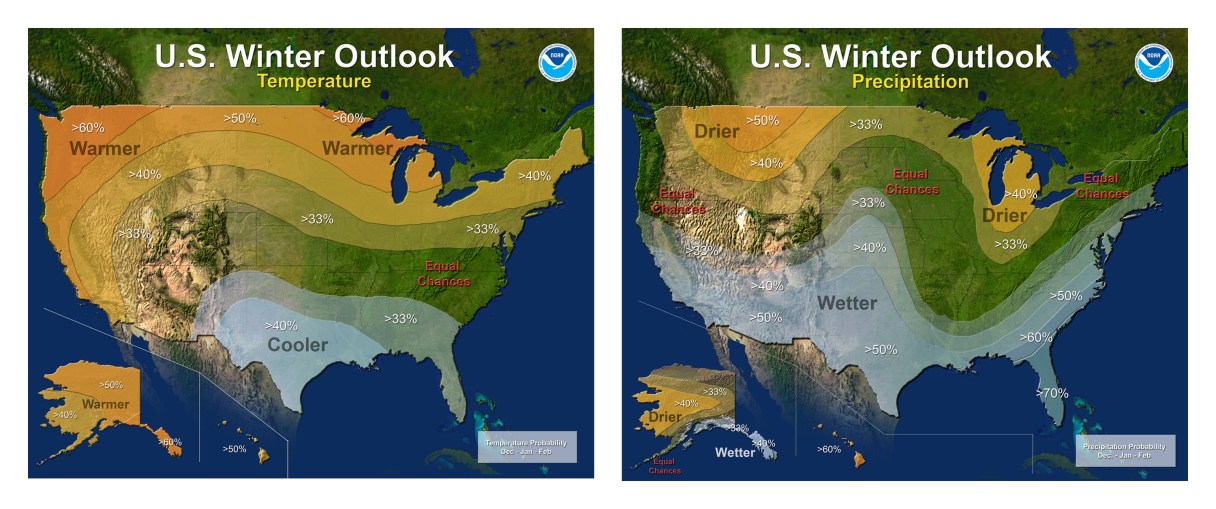
WASHINGTON (AP) – El Nino this winter will leave a big wet but not necessarily snowy footprint on much of the United States, including parched California, forecasters said Thursday.
The National Oceanic Atmospheric Administration issued its winter forecast and “the driver of this winter’s outlook is El Nino,” said Mike Halpert, deputy director of NOAA’s Climate Prediction Center.
El Nino changes weather worldwide, mostly affecting the United States in winter. The weather pattern happens every few years when the Pacific Ocean warms up around the equator. This year’s is one of the strongest El Ninos on record.
NOAA expects a cooler and wetter winter for the South. For California, more precipitation than usual is expected during the critical time that its reservoirs usually fill, but there’s no guarantee. Only northern tier states, the Ohio Valley states and Alaska should be dry.
While California’s drought is likely to lessen in January, even the wettest winter on record – 33 years ago – didn’t have enough rain to wash out the current four-year drought, said NOAA hydrologist Alan Haynes of the California Nevada River Forecast Center.