
Competition – it’s a force in almost every aspect of our culture, economy, politics and pastimes that’s embraced as a positive dynamic, with a few exceptions.
Frequently cited by politicians and business leaders, global competition for jobs is driven by the needed strength of manufacturing and technology growth in international commerce and the extraordinary influence of overregulation and punitive policies that drive American jobs abroad.
That competition is now expanded beyond the cost of production.
 Robin Smith
Comparative cost of any good or service – the end product for public purchase and consumption – has been the priority, with the capability to meet demand with the lowest overhead costs in order to allow a business to grow and generate the word the left views as evil: profit.
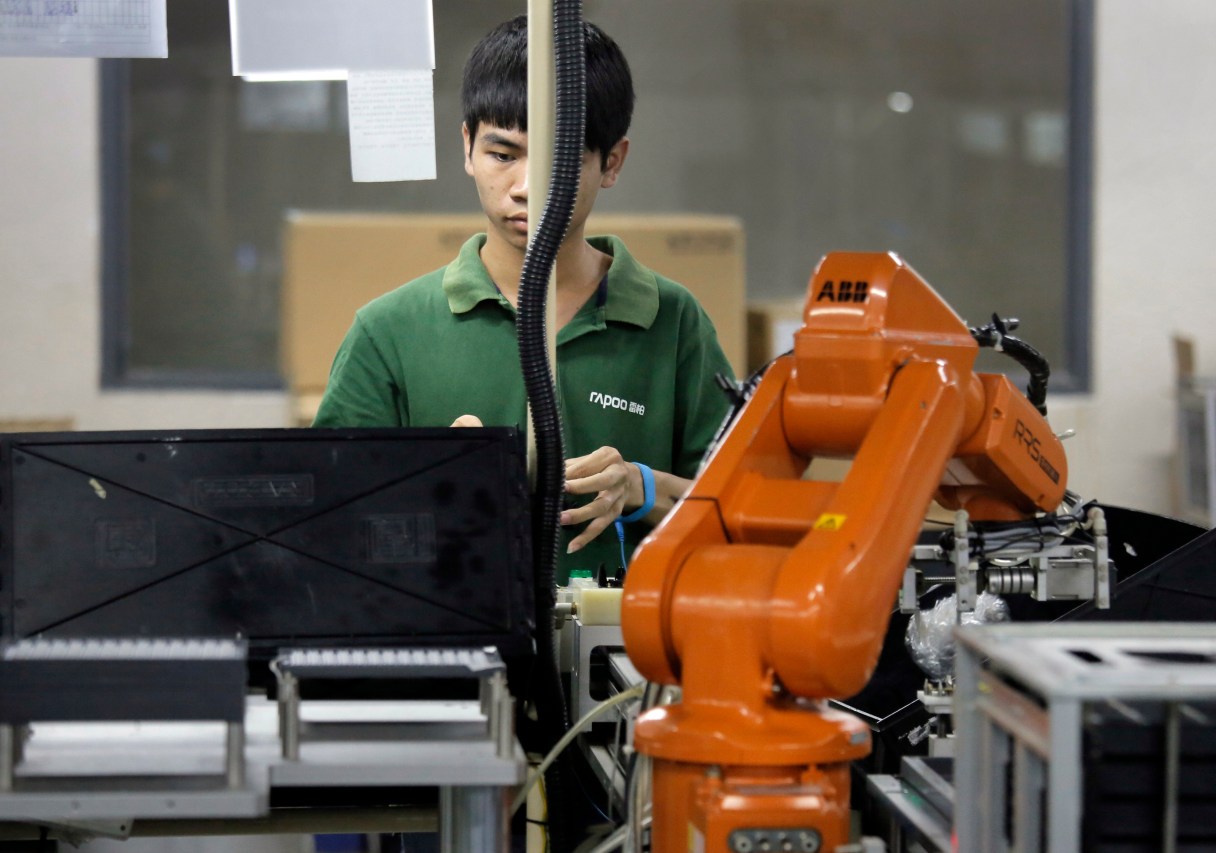
After decades of construction in the Chinese countryside of expansive industrial sites to lure foreign companies’ manufacturing facilities, the insatiable global demand for technologically advanced items – computers, phones, cameras, all things digital and constantly connected – has changed the workforce requirements not just in America but internationally. The People’s Republic of China is being forced to change its tactics of manufacturing dominance from the least expensive trinket produced in massive volume by uneducated, low-paid laborers to meet the need for a workforce with specific skills and educational requirements.
So, what is the world’s most populous country doing to address the increased academic needs in its workforce? Why, what any socialistic state that openly embraces communism would do – build education “factories.”
Sure. In a nation where there are no individual rights observed by the government and no freedom that includes private property, the wards of the state are at the mercy of said state. China, therefore, intends to maintain its prowess in the world of manufacturing and is building its workforce from its state-owned schools housed within “vocational school districts” in various provinces of the mammoth country.
One of these school districts under construction and due to open in 2017 in the Gansu Province will feature 30 schools “teaching” 150,000 students. In a Reuters article, a construction school student was quoted of his experience that “going to class feels like going to work in a factory.” Indeed, a factory to mass produce children with skill sets that match the industrial needs in that province and in China.
What does that mean to us in Chattanooga, Hamilton County, Tenn., the South or in the United States?
If our goal is to achieve a level of education, let’s say K-12 or even K-16 (kindergarten through post-secondary), and believe that’s adequate, we will have accomplished the status quo, and China will continue to use its forced education factories to meet the instantaneous need to compete and win.
The new normal, however, must be a lifetime of learning, with expectations that K-12 plus a certificate or some type of post-secondary education is required but also includes periodic episodes of refreshing and refinement of skills in order to obtain new abilities. If you’re not learning and growing, you’re losing in this global economy, and we must educate from K to J, from kindergarten to job.
Tennessee has committed to and produced countless educational offerings for the purpose of academic and skills attainment through Tennessee Promise, Tennessee Reconnect, the Drive to 55 and others.
“If we run things the old way, we’ll be left behind,” said the vice president of the Guizhou Machinery Industry School, Xu Guoqing.
Individuals must commit to personal achievement, discipline and attainment in a lifetime of learning or else, indeed, “we’ll be left behind.”
Robin Smith, a former chairwoman of the Tennessee Republican Party, is owner of Rivers Edge Alliance.