

As the holiday party season nears, rural law enforcement agencies across Southeast Tennessee are putting more than $1 million they were just awarded into safety programs, most aimed at drunk driving enforcement.
While prosecutors, police and sheriff’s departments in Hamilton and Bradley got about $600,000 in this summer’s round of funding, more than $500,000 went out to agencies and offices in Southeast Tennessee’s rural counties. Statewide, more than $17.8 million was doled out to 376 agencies.
At more than $204,000, the largest single grant award in the lower right corner of the state went to 31st District Attorney Lisa Zavogiannis’ drunk driving prosecution team in Warren and Van Buren counties.
DUI coordinator Susan Bell said she and DUI prosecutor Darrell Julian have nine years under their belts in changing the way cases are pursued.
“When we first started there was a big backlog of these cases,” Bell said. Years ago, small staffs in district attorneys offices were so swamped that suspects who had multiple charges often got their DUI charges dropped in order to gain a guilty plea or conviction on other charges.
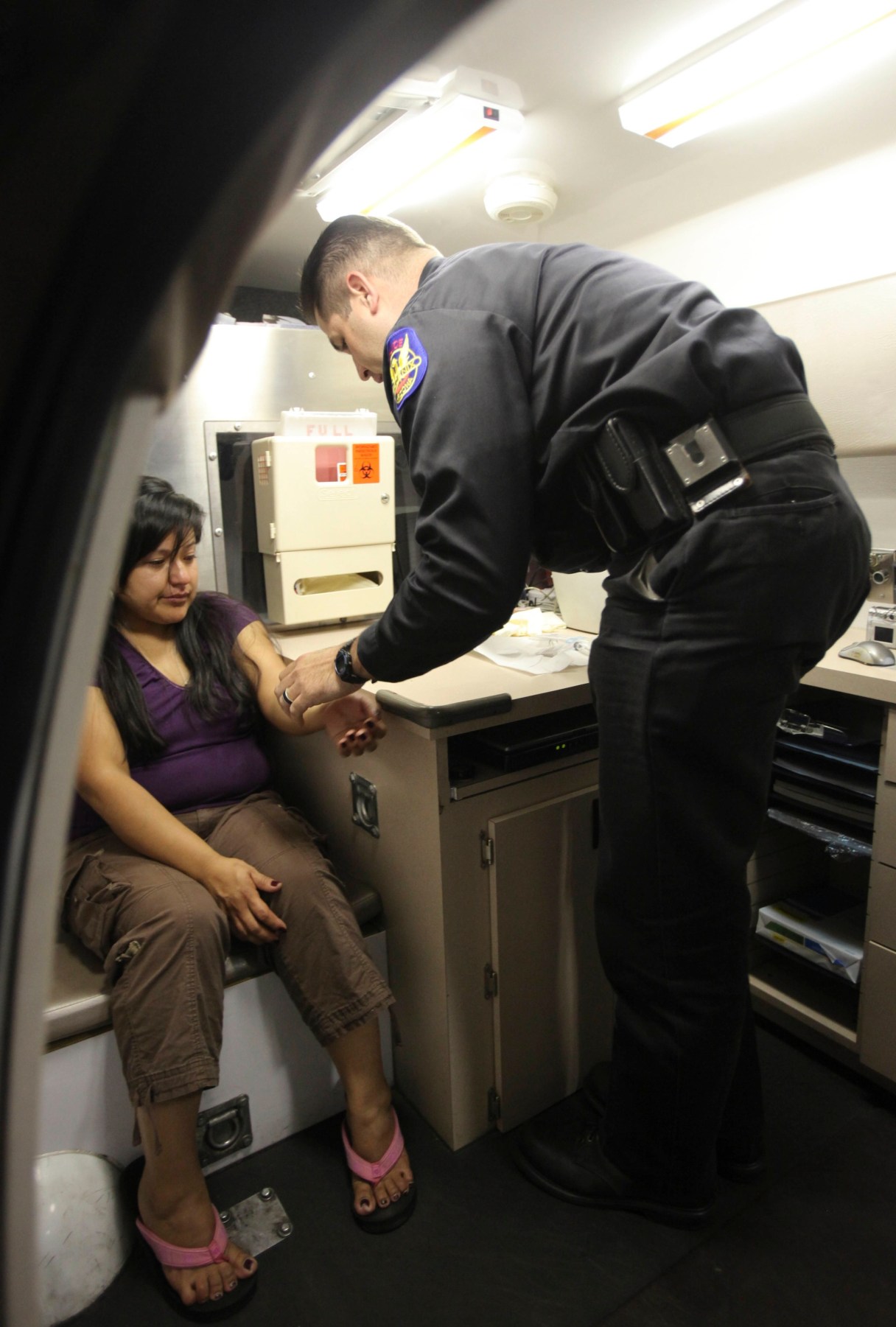
Rather than simply charge DUI suspects who refuse to take a blood-alcohol test with violation of the implied consent law, Bell said, officers in the district get a search warrant to immediately collect blood evidence of impaired driving, something especially helpful when pills are the suspected intoxicant.
“Our policy now is that we do not dismiss DUI cases,” she said. “And we handle the cases from start to finish. We work as a team.”
Since they specialize in DUI, Julian and Bell work with law enforcement agencies in their district to make sure charges are properly filed.
Officials with the DA’s offices in Loudon and Coffee counties, which got $166,000 and $160,000, respectively, say they use the funds the same way in hopes of effectively prosecuting drunk driving cases.
Law enforcement agencies also got sizable chunks of the grants.
In Southeast Tennessee, the Cumberland County Sheriff’s Office at $77,285 got the largest grant, again with funding aimed at impaired driving. The Benton Police Department garnered the second highest grant among law enforcement offices, according to state officials.
Benton Assistant Chief Ken Ritenour says the department’s almost $35,000 in grant money will fund DUI patrols and checkpoints and the department’s role as Governor’s Highway Safety Office network coordinator for Bradley, McMinn, Monroe, Meigs, Polk and Rhea counties.
Ritenour says the battle against DUI, from prosecutors to patrol officers, is working.
“Right now across the state it looks like we’re down 47 [fatalities] from last year,” he said. “As long as we’re going down on fatalities, we’re doing something good.”
Contact staff writer Ben Benton at bbenton@timesfreepress.com or twitter.com/BenBenton or www.facebook.com/ ben.benton1 or 423-757-6569.
More Info
Law enforcement agencies in the following rural Southeast Tennessee counties received federal grants to fund highway traffic safety efforts and DUI programs. Below is a breakdown of funding for agencies within the counties.BLEDSOE COUNTYPikeville: $5,000COFFEE COUNTYManchester: $14,998.50Tullahoma: $14,932.4714th District Attorney: $159,898.04CUMBERLAND COUNTYSheriff: $77,285Crossville: $20,000FRANKLIN COUNTYSheriff: $24,993.72Cowan: $4,974.75Decherd: $4,999.99Estill Springs: $4,993.50Huntland: $5,000Winchester: $5,000GRUNDY COUNTYSheriff: $15,000Monteagle: $5,000Tracy City: $5,000LOUDON COUNTYSheriff: $10,0009th District Attorney: $166,325.98Lenoir City: $5,000MARION COUNTYSheriff: $5,000Crossroads Volunteer Fire Department: $5,400Jasper: $15,000Kimball: $4,999.99Powells Crossroads: $5,000South Pittsburg: $15,021.40Whitwell: $5,000MCMINN COUNTYSheriff: $35,000.66Calhoun: $5,001Englewood: $5,000Etowah: $14,999.96Niota: $5,000MEIGS COUNTYSheriff: $15,110.70MONROE COUNTYSheriff: $5,000Sweetwater: $5,000Vonore: $5,000POLK COUNTYSheriff: $5,000Benton: $34,999.72RHEA COUNTYSheriff: $25,005.12Dayton: $5,213.36Dayton Fire Department: $9,528.20Spring City: $5,272.70SEQUATCHIE COUNTYSheriff: $20,003.79Dunlap: $15,024.10WARREN COUNTYSheriff: $24,318.58District Attorney: $204,759.27McMinnville: $15,532Source: Tennessee Department of Transportation