
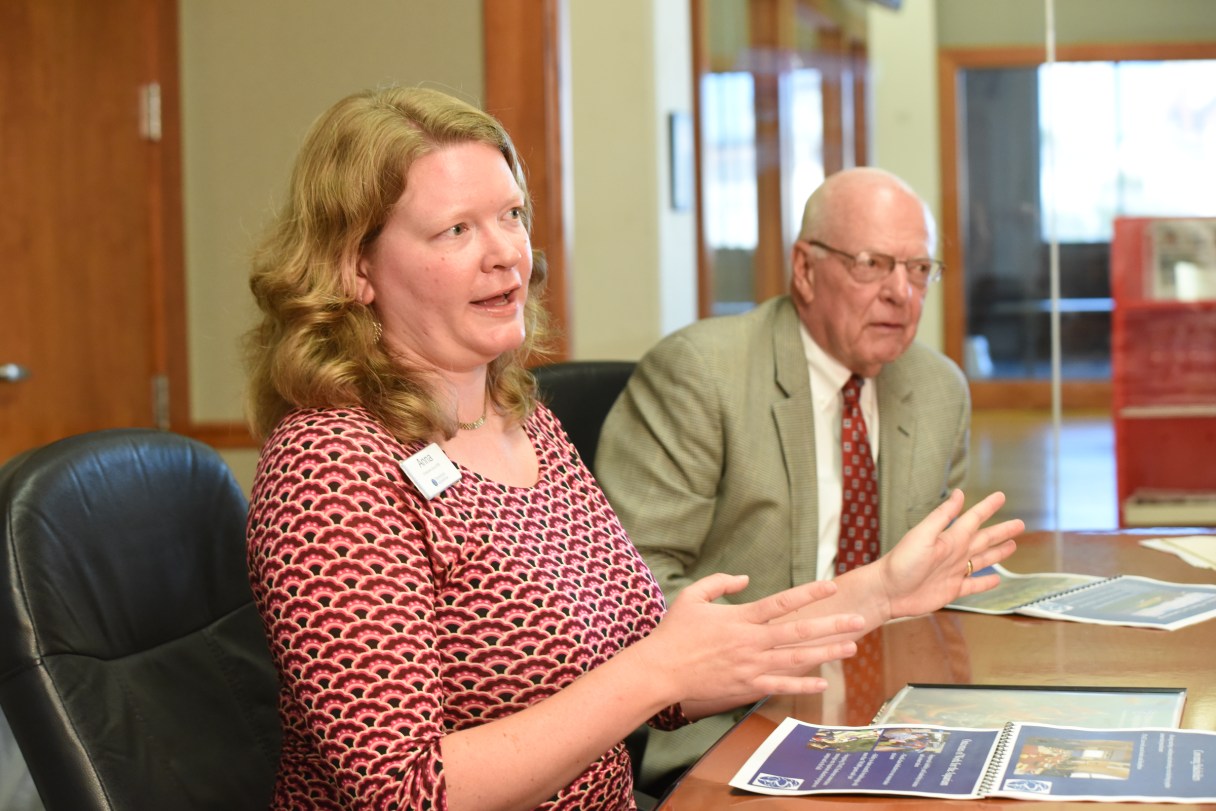
The Southeast is one of the most biodiverse regions in the world. And underwater, within the world’s temperate zone, it is the most biodiverse. Dr. Anna George, director and chief research scientist at the Tennessee Aquarium Freshwater Conservation Institute, aptly calls it an underwater rainforest.
So it is fitting that by this time next year, Chattanooga and the Tennessee Aquarium target the opening of a $4.5 million teaching and research facility on the banks of the Tennessee River’s north shore on a sliver of Baylor School’s campus near Williams Island.
The Tennessee Aquarium Freshwater Conservation Institute is intended to become something similar to Maine’s Woods Hole Oceanographic Institution, but it will be here, and it will focus on fresh water.
We hear a lot from scientists and environmentalists about the importance of healthy oceans, but the fact is that we are intensely dependent on fresh water, and only 3 percent of all the world’s water is fresh water. We – mankind – are joined in this dependence by about a quarter of the rest of the world’s vertebrate species that live in fresh water. In the Southeast, our rivers and streams hold almost half of the nation’s freshwater species.
Under the oversight of George and Tennessee Aquarium President and CEO Charles Arant, already the Aquarium and TNACI, since 1996, have made wonderful inroads toward preservation of several threatened and endangered species – brook trout, river sturgeon and the barrens topminnow, for example.
But now the Aquarium and the institute will broaden that effort and move from offering a common ground to other researchers and conservationists to becoming its own respected research organization on the national stage. Along the way, it cannot help but reinforce the assertion that Chattanooga is the conservation and outdoor capital of the South.
The research angle of this donor-funded effort couldn’t come at a better time – for all of us.
The National Oceanic and Atmospheric Administration, the American agency that tracks worldwide temperatures, announced Wednesday that global temperatures are running far above last year’s record-setting level, all but guaranteeing that 2015 will be the hottest year in the historical record – and undermining some conservative political claims that global warming had somehow stopped.
Last month marked the hottest September on record, and in fact took the biggest leap above previous Septembers displayed since 1880, when tracking began at a global scale. The agency also noted that the January-to-September period had been the hottest such span on the books.
The year’s strong El Nio weather pattern is part of it, but warm temperatures are running so far ahead of those during the last strong El Nio, in 1997 and 1998, that scientists said these new records would not be occurring without an underlying trend caused by human emissions of greenhouse gases.
Here in Chattanooga, the new institute will become a freshwater field station to test and track climate and other human impacts on the environment of our streams and rivers. It will be a place where aquarium staff will work with biologists and scientist colleagues from around the country and the world, along with college professors on sabbaticals and students looking for research internships and advanced learning opportunities.
This is great news long in the making.