
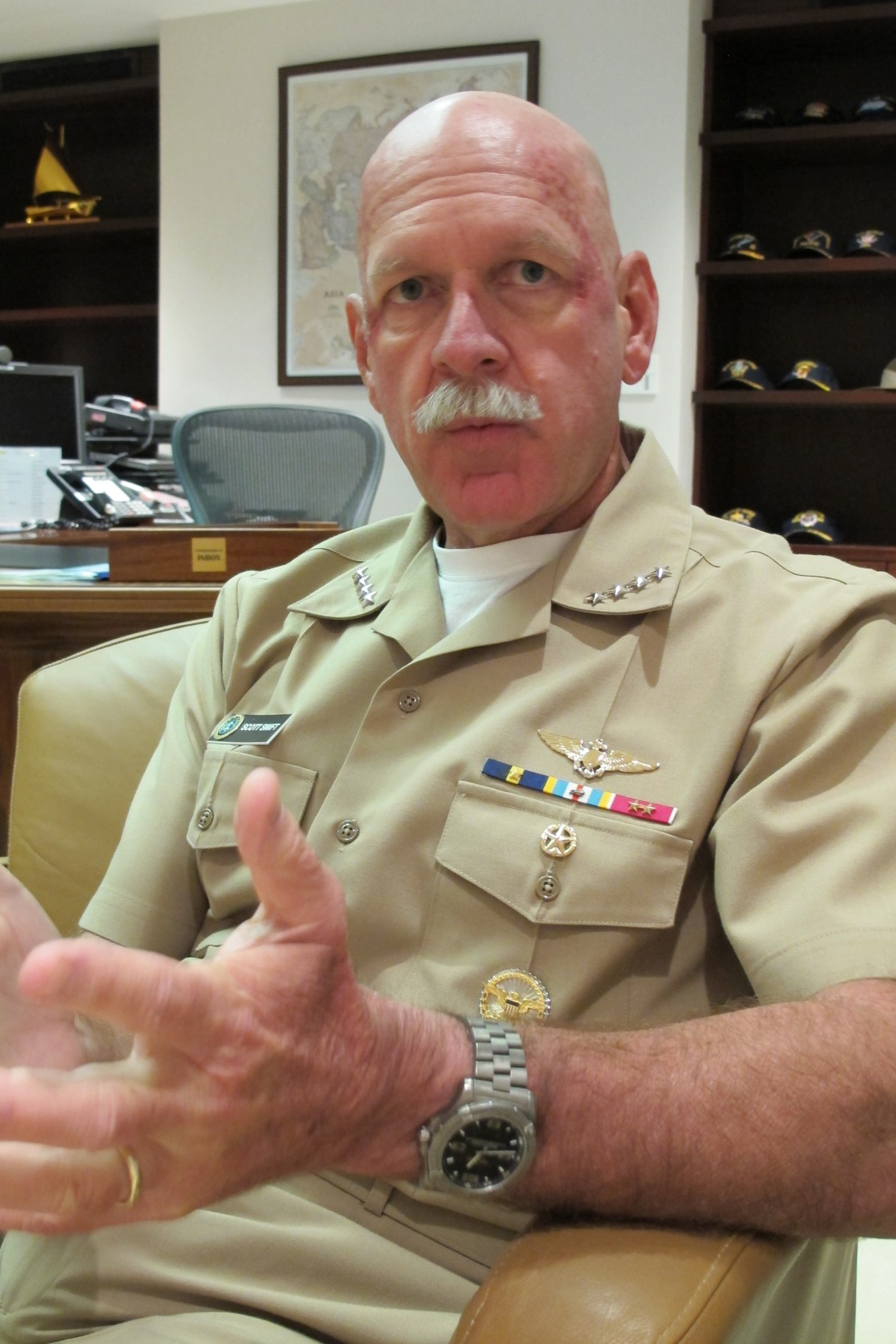
PEARL HARBOR, Hawaii (AP) – The U.S. Navy’s top commander in the Pacific says it’s up to policymakers in Washington whether his sailors patrol within 12 nautical miles of newly constructed islands claimed by China in the South China Sea.
Pacific Fleet Commander Adm. Scott Swift spoke during an interview Thursday amid tensions over Beijing’s territorial claims in the South China Sea and reports the U.S. will sail near the disputed islands to challenge those claims.
Swift told The Associated Press his sailors have the capacity and capability to enter the waters, but he emphasized that the patrols would reinforce international laws and wouldn’t be directed at a specific country.
“We’re ready,” Swift said at his Pearl Harbor office. “We have the resources to support whatever those policy decisions are and whatever policymakers may ask us to do to demonstrate the U.S. resolve with respect to the operations that we conduct in the South China Sea.”
China and five other governments lay claim to part or all of the South China Sea, a busy passageway for commercial and military vessels. Washington has a policy of not taking sides in the territorial disputes, but says it’s in its national interest to ensure freedom of navigation and overflight and the peaceful resolution of the conflicts.