
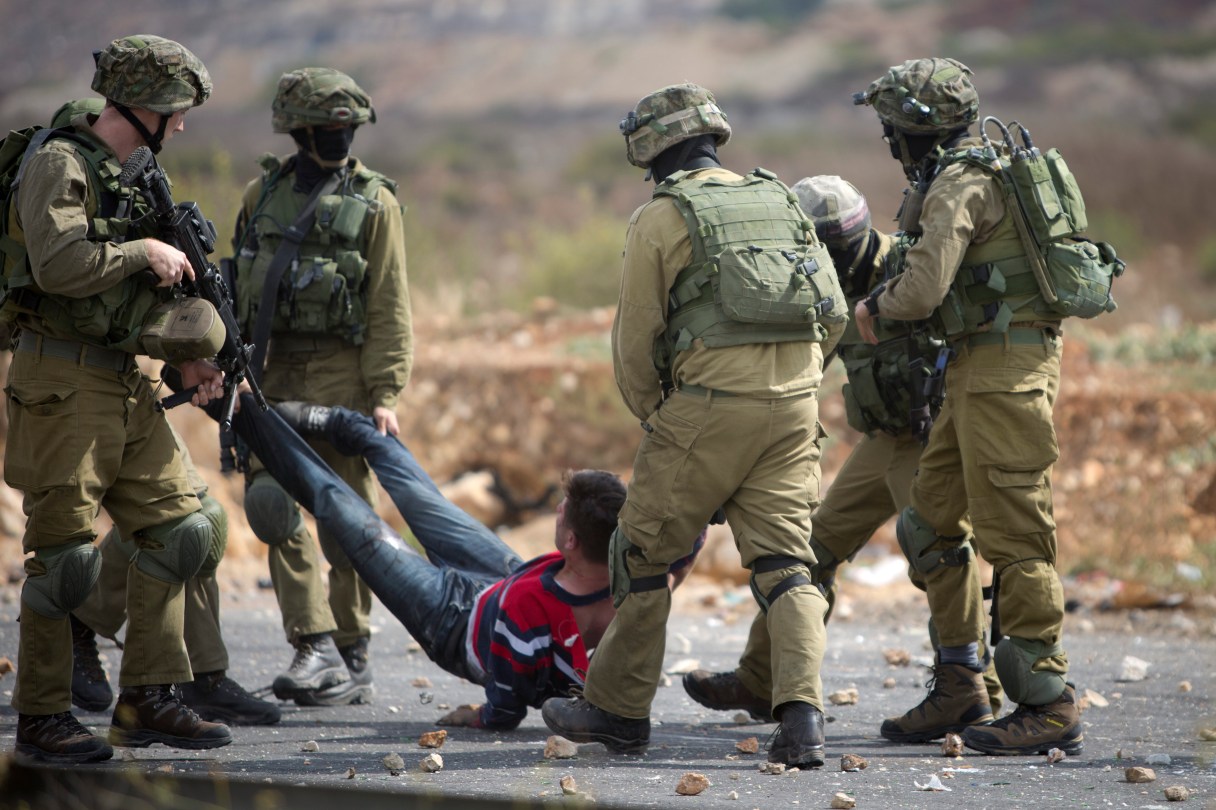
RAMALLAH, West Bank (AP) – Four dailies, eight TV stations, and scores of radio stations report on the current wave of Israeli-Palestinian violence in the Palestinian territories. But they are background noise for many Palestinian youth, whose No. 1 source of news comes from Facebook groups that pump out a minute-by-minute stream of bloody images and pro-violence slogans.
Many Palestinians say such sites only hold up a mirror, or camera, to incessant Israeli violence and pent-up Palestinian fury – that social media reflects reality, not creates it. But Israeli officials argue the medium is the message – that Palestinian social media news sites, some with millions of followers, and the content they post are the driving force in the current wave of violence.
“We are seeing a situation in which Osama Bin Laden meets (Facebook founder) Mark Zuckerberg,” Israeli Prime Minister Minister Benjamin Netanyahu said this week. “The incitement on the social networks is what is causing the wave of terror.”
It was a message Netanyahu repeated in meetings this week with U.S. Secretary of State John Kerry and other world leaders trying to find a way to calm the current tensions. The incitement, Israeli officials say, includes caricatures and video reenactments demonizing Israelis, graphics with instructions on “how to stab a Jew,” and youth calling for martyrdom on Facebook before carrying out stabbings. Hashtag slogans label the violence an intifada, or uprising, and accuse Israel of endangering Islam’s third-holiest spot – a claim that has fueled recent violence.
Palestinians say such claims miss the point, and that the violence is the natural result of nearly 50 years of Israeli military occupation and, after years of failed peace efforts, the lack of hope for gaining independence anytime soon. They note that Israeli Facebook pages also post graphic images and hateful messages that contribute to the tense and sometimes vengeful atmosphere.