
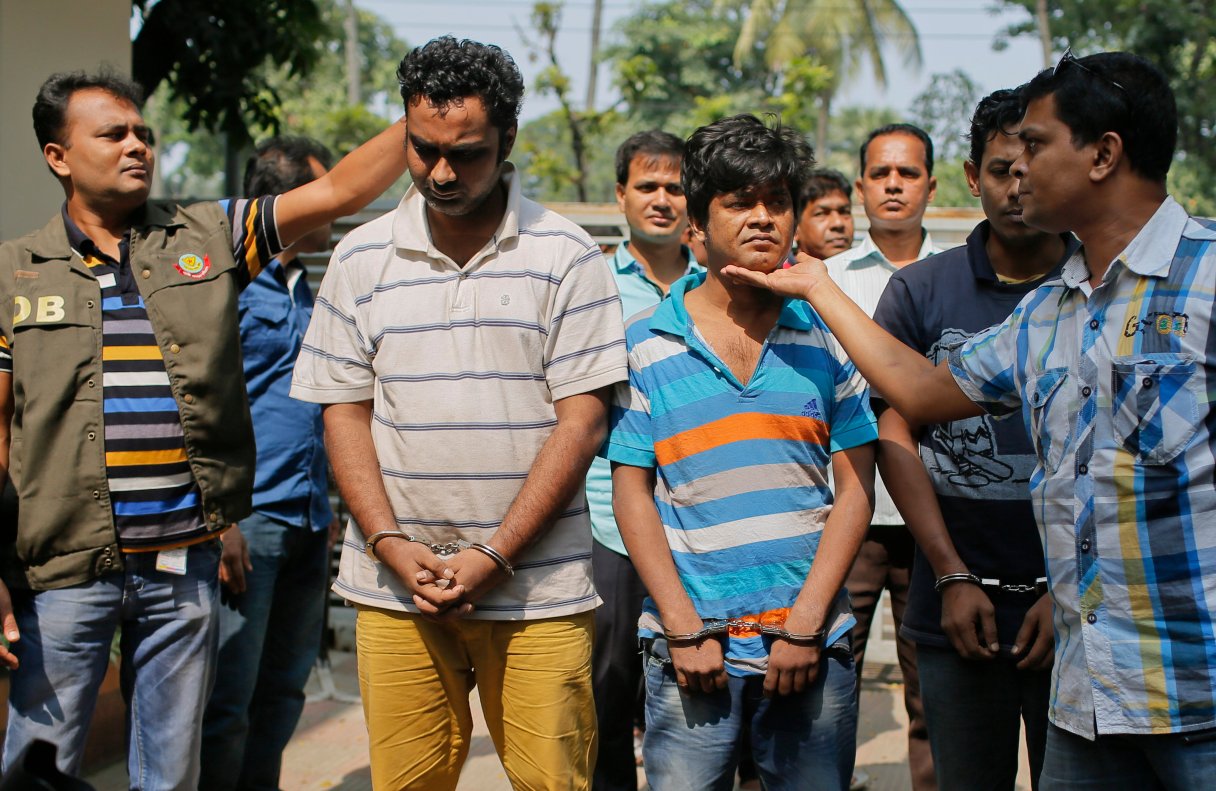
DHAKA, Bangladesh (AP) – Police in Bangladesh have arrested four suspects in the killing of an Italian aid worker last month, and said Monday that the alleged gunmen had confessed to being hired to attack “a white man” in order to destabilize the impoverished South Asian nation.
Cesare Tavella was gunned down by motorcycle-riding assailants Sept. 28 while jogging in the diplomatic quarter of Dhaka, Bangladesh’s capital. Five days later, a Japanese citizen was killed in a similar attack in northern Bangladesh.
The killings spooked the country’s expatriate community and threatened its fragile economy, which is heavily reliant on foreign aid and a $25 billion garment industry supplying clothing for international brands.
Responsibility for the attack on Tavella was quickly claimed by the Islamic State group, but Bangladesh’s government rejected the claim and said there was no evidence that the extremist Sunni militant group had any presence in the country. It also rejected Islamic State claims for killing the Japanese man, and for the bombing of a Shiite procession over the weekend that left a teenage boy dead and more than 100 people injured.
Bangladesh has instead accused domestic Islamist militants along with Islamist political parties – specifically the opposition Bangladesh Nationalist Party and its main ally, Jamaat-e-Islami – of orchestrating the violence to destabilize the already fractious nation.