
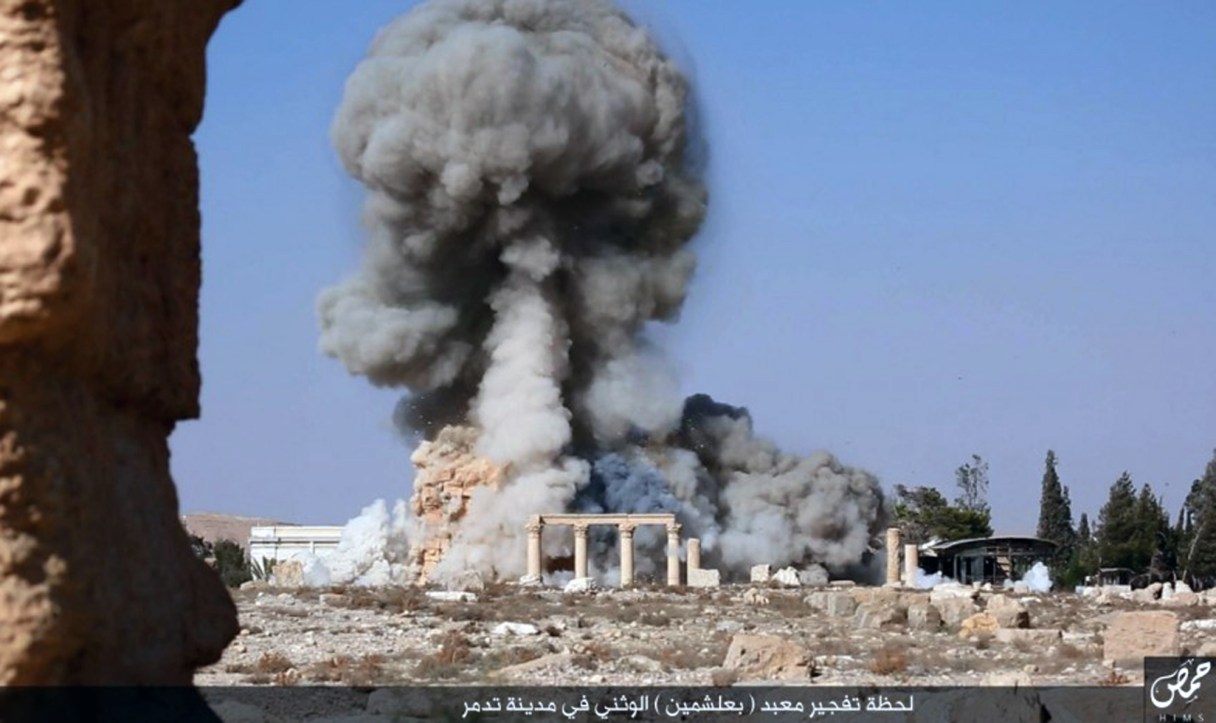
BEIRUT (AP) – The Islamic State group killed three of its captives in Syria’s ancient city of Palmyra by tying them to Roman-era columns at the site, then blowing the structures up with explosives, activists said Tuesday.
The Palmyra explosions were the latest method of killing by IS militants, known for beheadings, immolation and drowning of prisoners.
A Palmyra activist who goes by the name Nasser al-Thaer said that the killings of the three captives took place on Monday afternoon at the Palmyra archaeological site, located a few kilometers (miles) away from the city. Al-Thaer and the Britain-based Syrian Observatory for Human Rights, which relies on a network of activists on the ground, said the three were civilians but that their identities remain unknown.
Earlier this week, IS posted images on social media purported to show its members driving a tank over a captured government soldier, allegedly to revenge what it said was his driving over IS militants. The group is known to have tanks, mostly captured in battle from Syrian troops or in the territory it holds in neighboring Iraq.
IS has also destroyed many of the ancient Palmyra’s Roman-era relics, including the magnificent Temple of Bel and the iconic Arch of Triumph. IS captured Palmyra from government forces in May, and considers such relics as promoting idolatry. But scientists say the group resorts to promoting and documenting such attacks also for their shock value, to spread awe and fear. The group has relied on looting and selling such antiquities on the black market for revenue.