
Monday, November 9, 2026Nov 9

Q&A: Impact of US warship sailing near China-held island

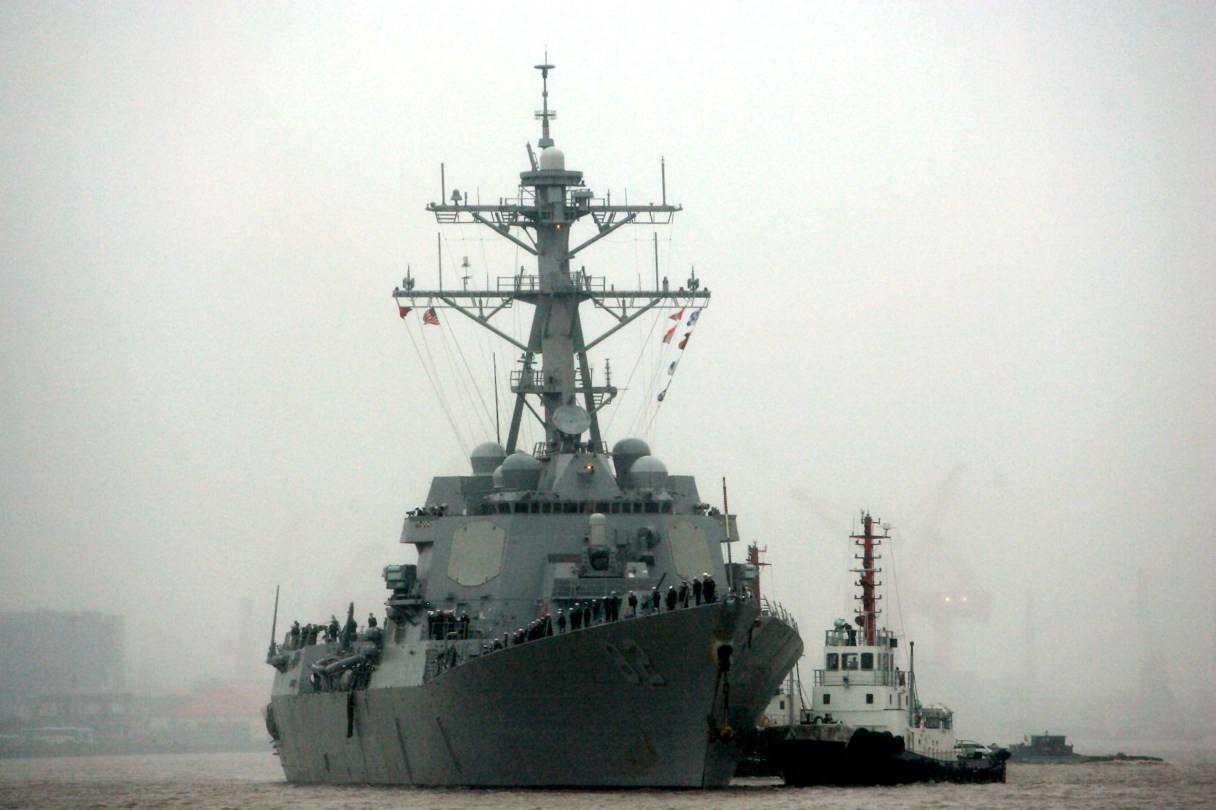
In this April 8, 2008, file photo, guided missile destroyer USS Lassen arrives at the Shanghai International Passenger Quay in Shanghai, China, for a scheduled port visit. The USS Lassen has sailed past one of China's artificial islands in the South China Sea on Tuesday, Oct. 27, 2015, in a challenge to Chinese sovereignty claims that drew an angry protest from Beijing, which said the move damaged US-China relations and regional peace. (AP Photo/Eugene Hoshiko, File)
In this April 8, 2008, file photo, guided missile destroyer USS Lassen arrives at the Shanghai International Passenger Quay in Shanghai, China, for a scheduled port visit. The USS Lassen has sailed past one of China's artificial islands in the South China Sea on Tuesday, Oct. 27, 2015, in a challenge to Chinese sovereignty claims that drew an angry protest from Beijing, which said the move damaged US-China relations and regional peace. (AP Photo/Eugene Hoshiko, File) In this April 8, 2008, file photo, guided missile destroyer USS Lassen arrives at the Shanghai International Passenger Quay in Shanghai, China, for a scheduled port visit. The USS Lassen has sailed past one of China's artificial islands in the South China Sea on Tuesday, Oct. 27, 2015, in a challenge to Chinese sovereignty claims that drew an angry protest from Beijing, which said the move damaged US-China relations and regional peace. (AP Photo/Eugene Hoshiko, File)

BEIJING (AP) – Beijing reacted harshly to a U.S. warship sailing near one of its newly created islands in a disputed area of the South China Sea. The action did not spark a confrontation or roll back any Chinese island-building activities, but it sent a high-profile message to both Beijing and U.S. allies that Washington wants to test Chinese sovereignty assertions and ensure freedom of navigation.

Some questions and answers:

___

WHAT IS THE IMPACT?

As in previous incidents, Beijing is likely to voice its outrage for a time, before reasserting the wisdom of the government’s calculated approach to its crucial relationship with the U.S. However, the testy reaction underlines tensions in the strategically vital region through which about one-third of global trade passes. Frictions are likely to worsen as Washington’s renewed focus on Asia rubs up against Beijing’s increasingly robust assertions of its claim to virtually the entire sea and its islands, reefs and atolls. China says its sovereignty claims do not conflict with the rights of other nations to operate in the South China Sea, although the Defense Ministry accused the U.S. of abusing those rights.