
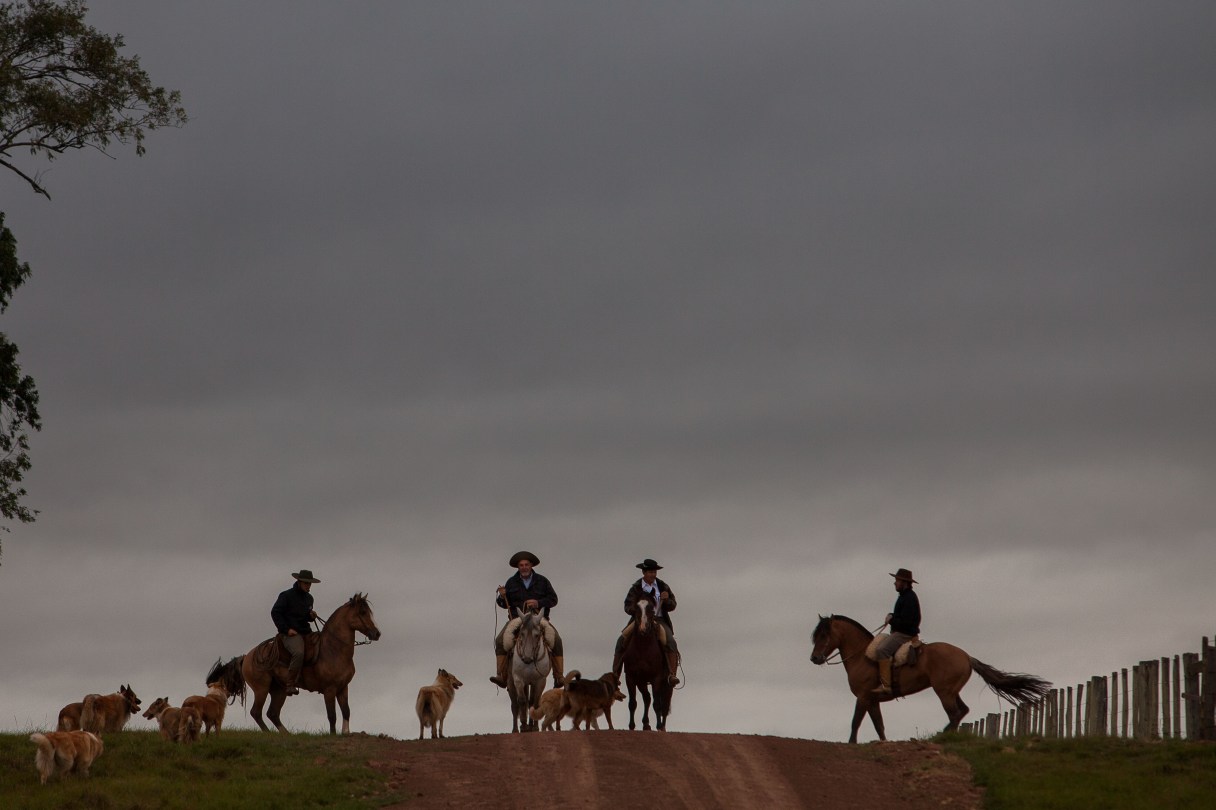
ALEGRETE, Brazil (AP) – Wearing traditional broad-brimmed hats and red neckerchiefs, their trousers tucked into soft, leather boots, the South American gauchos trot on handsome horses down the street of the small southern community.
Some of the Brazilian cowboys ride with little girls wearing old-fashioned dresses. They parade before crowds in southern Rio Grande do Sul state, which fancies itself as practically a separate nation, with its rugged rural traditions and Germanic roots.
During “Semana Farroupilha,” or “Ragamuffin Week,” in this enclave of 75,000 people, the locals celebrate cowboy tradition and intense pride in the region’s 1835 uprising over taxation against the federal government. Celebrated every September, the regional revolt is known as the “Ragamuffin Revolution” because the poor fighters wore raggedy clothing in an insurgency that took a decade to put down.
It’s a different world here, about 700 miles southwest of the Brazilian megalopolis of Sao Paulo. Today, revolution is no longer on the table – instead it’s the endless rows of barbecued beef. The region is known for having Brazil’s best steaks, ribs, sausages and other carnivorous delights, all slow roasted over massive pit of flames.
During the celebration, cowboy culture is kept alive with traditional dances to accordion music, lectures, book readings and camping out under the stars.