
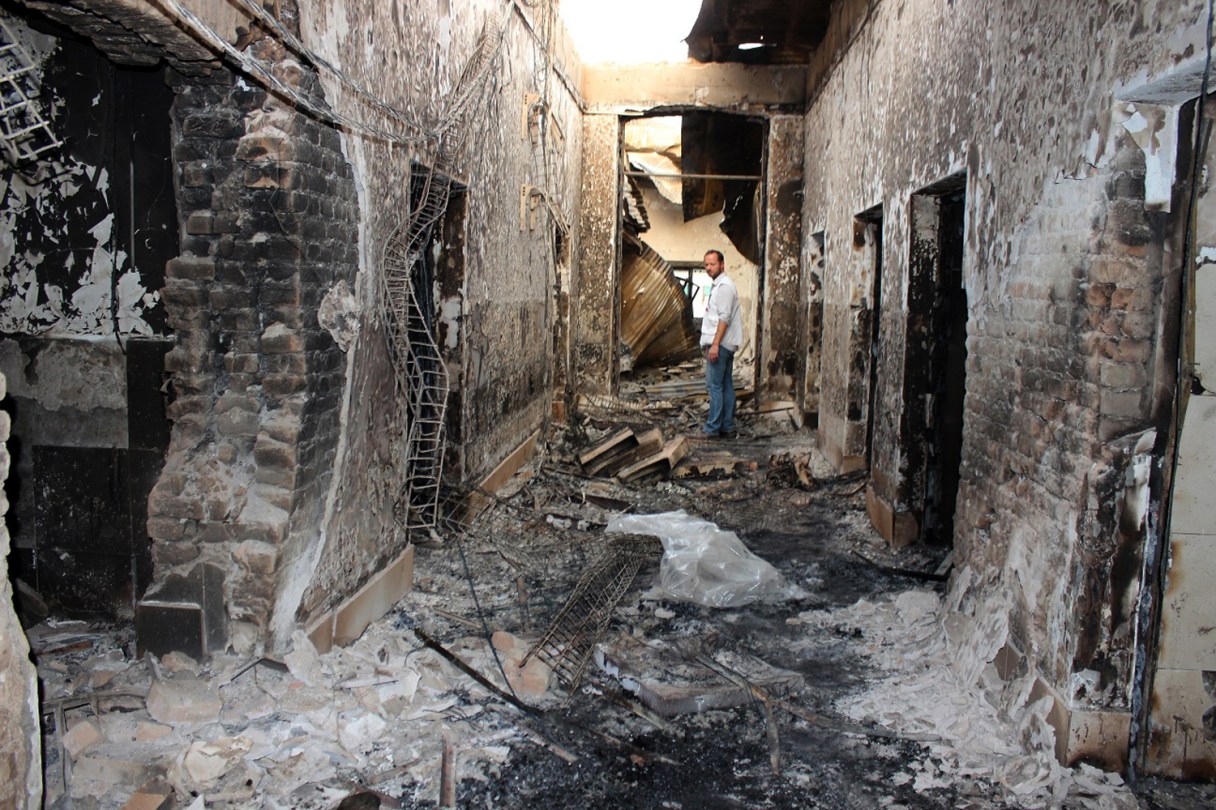
BEIRUT (AP) – The first missile slammed into the field hospital in the rebel-held Syrian town of Sarmeen, killing a physiotherapist inside. Five minutes later, the aircraft returned, firing another missile that hit nearby just as the first responders were arriving. A total of 13 were killed, and the hospital organizers blamed Russian warplanes.
In Yemen, airstrikes by a Saudi-led coalition targeting rebels destroyed a hospital run by the international medical charity Doctors Without Borders this week. Although there were no deaths, the hospital was the latest casualty of a campaign that has claimed the lives of nearly 3,000 people since March.
But those strikes on hospitals brought little international outcry – a sharp contrast to an Oct. 3 American strike on a hospital in Afghanistan that killed 30 people and brought a firestorm of criticism on Washington.
The reasons are many, perhaps chief among them is general fatigue over the conflicts in Syria, now in its fifth year, and in Yemen, a relatively impoverished and isolated country mired in turmoil for more than a decade. Also, while the U.S. acknowledged relatively quickly that it carried out the strikes and President Barack Obama apologized to Doctors Without Borders, which also ran that facility, Russia and Saudi Arabia categorically deny that their campaigns hit civilians, and conditions on the ground make confirmations more difficult, muddying the waters for critics. Russia denied it hit the Sarmeen hospital, which was struck Oct. 20.
“After more than four years of war, I remain flabbergasted at how international humanitarian law can be so easily flouted by all parties to this conflict,” said Sylvain Groulx, head of Doctors Without Borders’ mission for Syria. “We can only wonder whether this concept is dead.”