
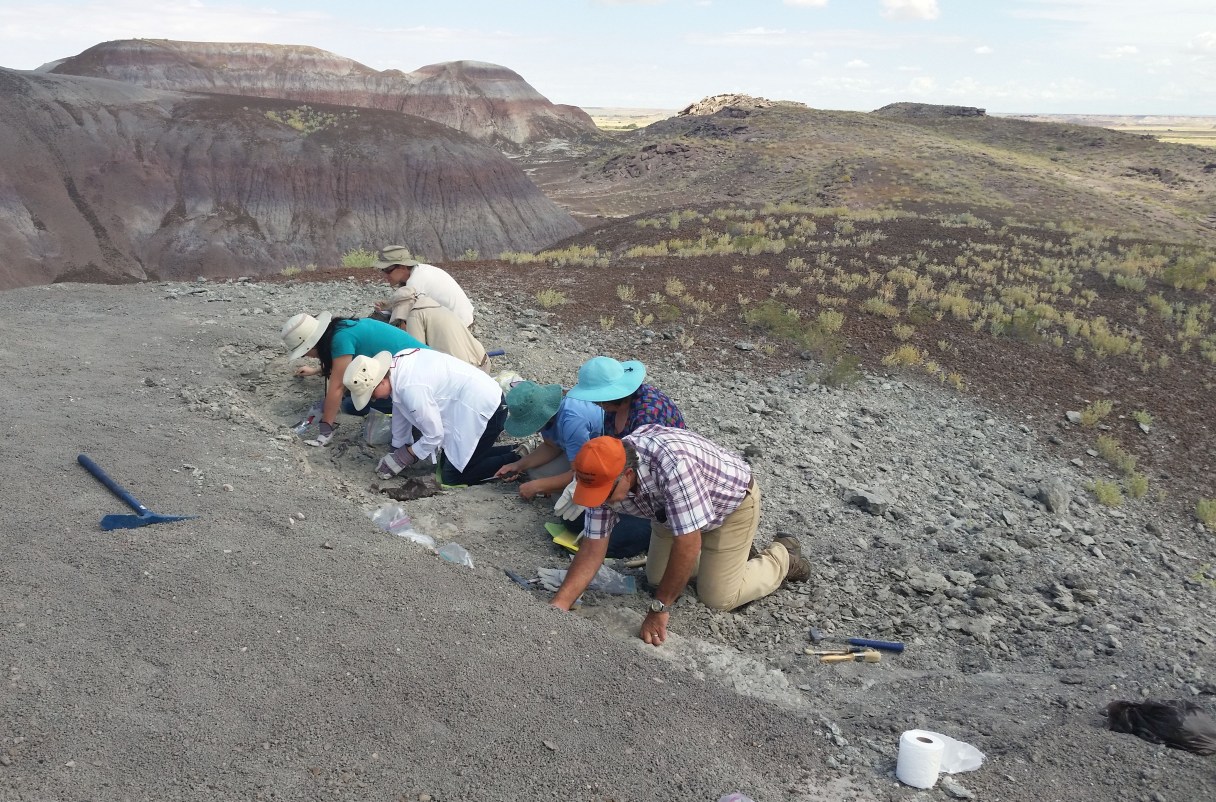
FLAGSTAFF, Ariz. (AP) – Growing up, Stephanie Leco often would dig in her backyard and imagine finding fossils of a tyrannosaurus rex. She was fascinated with the idea of holding something in her hand that was millions of years old and would give her insight on how the world evolved.
Safe to say, she hit a paleontology jackpot this summer with the discovery of a jaw bone from a long-snouted fish at Petrified Forest known to exist more than 220 million years ago.
Leco was part of the first dig for citizens held last month at the national park near Holbrook that routinely turns up fossils from the dawning age of dinosaurs and has vast expanses of rainbow-colored desert.
The fossil about the size of a pinky fingernail was unearthed from the site of what was a lake or pond during the Late Triassic period when the fish were thought to be extinct in North America. Scientists knew closely related fish were present around the world in the Early Triassic period, about 10 million years earlier, but the fossils were found only in China in the Late Triassic, said park paleontologist Bill Parker.
“People who actually study this group of fish might start setting their sights in our direction now,” he said.