
Friday, October 30, 2026Oct 30

This story is free to read.

Visibility a challenge for scientists studying German U-boat

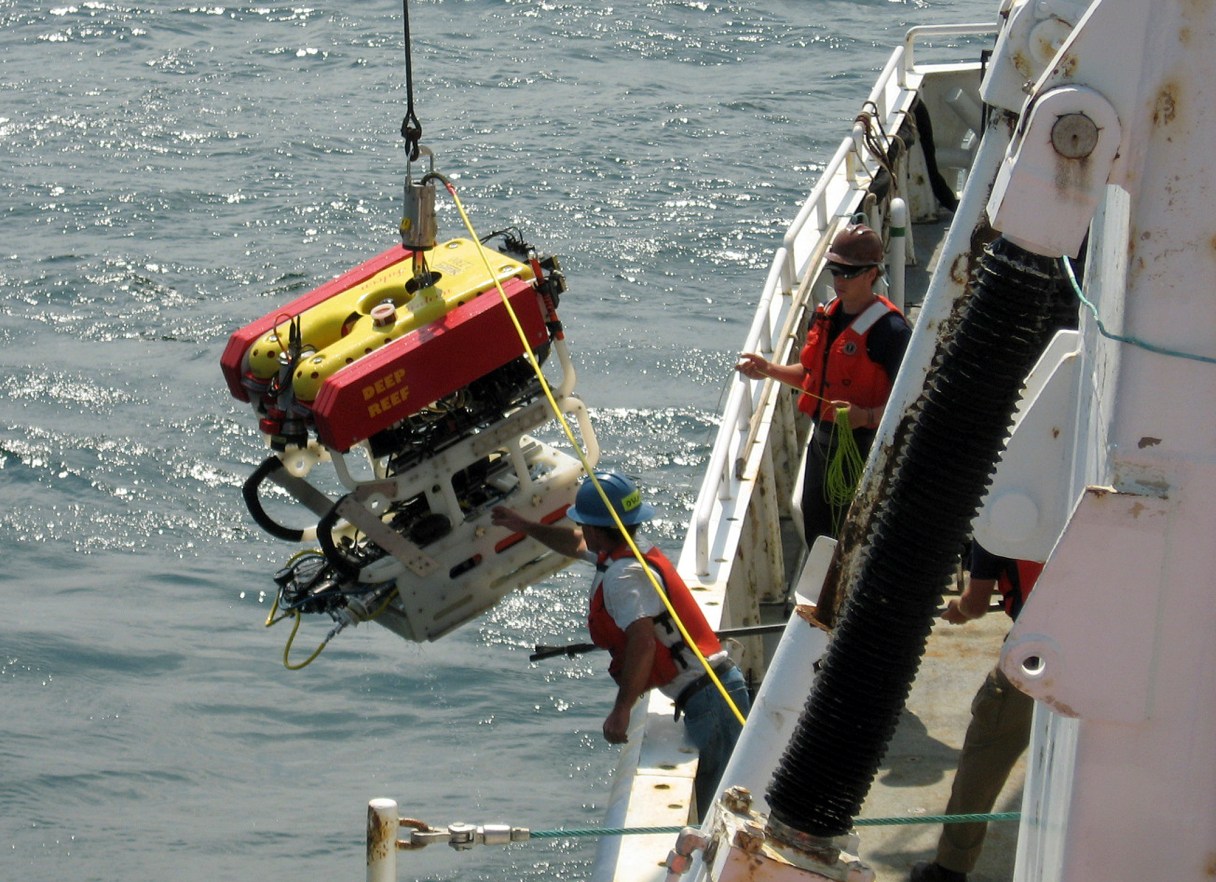
In this photo provided by the University of Rhode Island, scientists deploy a remotely operated submersible vehicle Friday, Sept. 4, 2015, to explore a German U-boat that sank at the end of World War II several miles off the Rhode Island coast. Scientists from the University's Inner Space Center, Connecticut's Ocean Exploration Trust and the U.S. Coast Guard Academy are attempting the exploration during a five-day trip that lasts through Sunday. (Alex DiCiccio/University of Rhode Island via AP)
In this photo provided by the University of Rhode Island, scientists deploy a remotely operated submersible vehicle Friday, Sept. 4, 2015, to explore a German U-boat that sank at the end of World War II several miles off the Rhode Island coast. Scientists from the University's Inner Space Center, Connecticut's Ocean Exploration Trust and the U.S. Coast Guard Academy are attempting the exploration during a five-day trip that lasts through Sunday. (Alex DiCiccio/University of Rhode Island via AP) In this photo provided by the University of Rhode Island, scientists deploy a remotely operated submersible vehicle Friday, Sept. 4, 2015, to explore a German U-boat that sank at the end of World War II several miles off the Rhode Island coast. Scientists from the University's Inner Space Center, Connecticut's Ocean Exploration Trust and the U.S. Coast Guard Academy are attempting the exploration during a five-day trip that lasts through Sunday. (Alex DiCiccio/University of Rhode Island via AP)

PROVIDENCE, R.I. (AP) – Scientists who set out to use submersibles to study a German U-boat just off the Rhode Island coast say they were hampered by poor visibility.

Dwight Coleman is director of the Inner Space Center at University of Rhode Island. He said Tuesday that the mission was still a success because researchers were able to test new technologies that allow such expeditions to be broadcast to large audiences.

The group had hoped to explore U-853 during the five-day trip that ended Sunday. The sub was sunk by Coast Guard and Navy ships in the Battle of Point Judith on May 6, 1945, the day before Germany surrendered in World War II.

Coleman says the group was able to reach tens of thousands of people with live broadcasts.