
The party in the strongest position to secure the best terms in an agreement is the party willing to walk away. Understanding this core principal is critical to negotiating a good deal. After almost two years of negotiations between Iran and the P5+1 nations, the current deal allows Iran to continue its dangerous nuclear ambitions and empowers it to advance its extremist, belligerent campaign for Middle East power. For these reasons and those below, I made the decision to vote against this agreement.
Under the agreement, the international community immediately gives up most economic sanctions, but Iran only temporarily suspends its nuclear activity. In just 10 years, Iran will be steps away from a nuclear weapon and essentially free to pursue one. At that time, Iran will be in a stronger position militarily, technologically and economically.
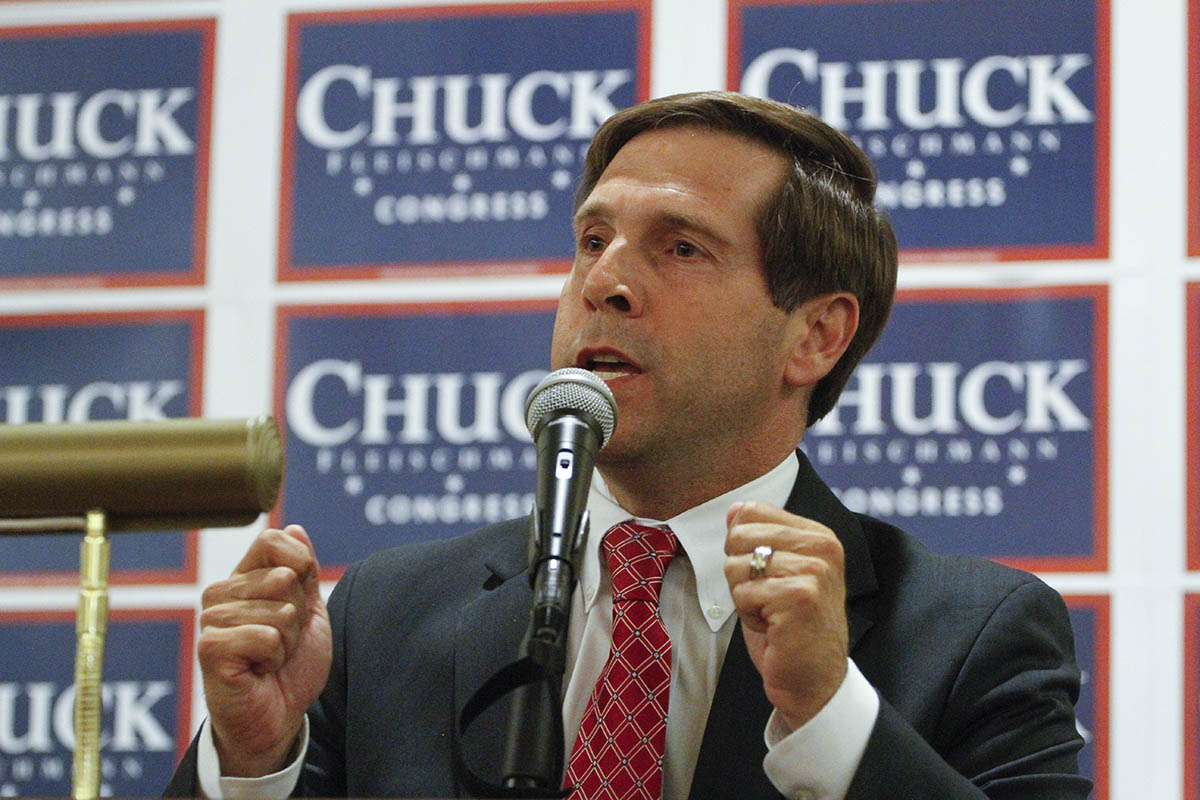 Chuck Fleischmann
Despite the administration’s promise of inspections with little or no previous notice, the Iranians will be notified up to 24 days before an inspection. Additionally, inspections cannot be demanded unilaterally by the United States but require a majority vote of the partner nations participating in the agreement.
The deal also allows Iran to modernize its military arsenal. After eight years, the agreement allows Iran to build an intercontinental ballistic missile capable of reaching America, and the U.N. ban on conventional weapons will be lifted after five years.
The president counters that this agreement is better than the alternative of continuing current sanctions while pursuing a better deal. I firmly disagree. He essentially has a two-part argument. First, that U.S. rejection of the agreement will lead to the collapse of international sanctions. Secondly, without these sanctions in place, Iran will be free to build a nuclear weapon which can only be stopped by military force.
On the first point, the president is predetermining that our international partners will walk away from the current sanctions. There is no certainty this will happen. To the contrary, if the president would exert appropriate leadership, sanctions could stay in place. If the president is correct and our partners walk away from sanctions, accepting this deal is still worse than the U.S. standing firm and not accepting this deal’s almost guaranteed path to Iranian nuclear development.
The president’s logic also fails on the second point. Almost every policymaker, including the president, has said that military action must remain on the table. I believe this current agreement will make such action more likely, not less. If Iran cheats, sanctions are unlikely to be put back in place, leaving military action as one of the only remaining options. Even in the unlikely event that Iran abides by the terms of the agreement, 10 years from now Iran will have few restrictions from pursuing nuclear weapons. This will leave a future president facing the prospect of accepting Iran as a nuclear power or engaging a regime that is much more powerful than the current one.
Iran’s previous actions do not demonstrate a desire for a peaceful nuclear program. They are the world’s leading supporter of terrorism, and their rhetoric toward their neighbors, the United States and Israel remains hostile. Unfortunately, the administration believes that just about any deal is better than no deal. I respectfully disagree. For the safety and security of our country, I oppose this agreement.
U.S. Rep. Chuck Fleischmann, a Chattanooga attorney, represents the 3rd Congressional District.