
BERLIN (AP) – Refugees and migrants are making their way into Europe by the hundreds of thousands, adjusting their routes as some become too dangerous and others are blocked by authorities. Most want to get to Germany, Sweden and other northern European countries considered more welcoming than their counterparts to the south. Here’s a look at how their paths to new lives are changing:
STARTING THE JOURNEY: There are two main routes into Europe. The first requires a long, dangerous boat trip from Libya to Italy. From there, travelers head north across open borders with France and Austria, mainly trying to get to Germany, Scandinavia and Great Britain. The other requires a much shorter, though still risky, boat trip from Turkey to Greece. From there, people walk, take trains or are driven through the Balkans as they try to reach Germany and other points north.
CHANGING ROUTES: Last year, some 170,000 refugees arrived by sea in Italy, while only 34,000 arrived in Greece. So far this year, 122,000 – a mix of Eritreans, Nigerians, Somalis, Sudanese and a small number of Syrians – have arrived in Italy. Meanwhile, 345,000 have arrived in Greece – 10 times the number who used the route in all of 2014. About 75 percent are Syrians fleeing civil war and the Islamic State, while the rest come from Afghanistan, Iraq and elsewhere. The switch happened for several reasons, but the Italy route was perceived as much more dangerous after several shipwrecks that killed hundreds. More than 2,800 people have died or disappeared trying to make it to Europe so far this year, the vast majority in the sea trying to reach Italy.
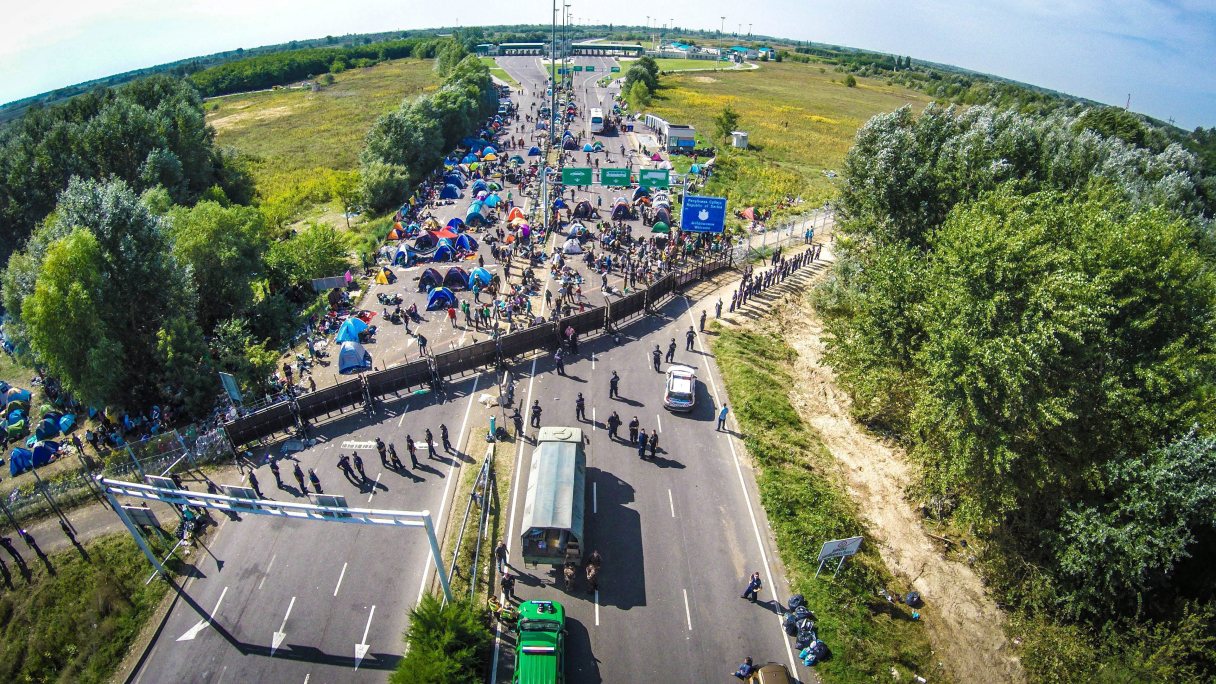
LEAVING GREECE: The vast majority of refugees arriving in Greece have been leaving by the simplest route – directly north through Macedonia and Serbia, which aren’t in the European Union, before entering Hungary, which is. According to the European border control agency Frontex, the so-called Western Balkans route has seen a 1,374 percent increase in illegal border crossings detected this year through the end of August, compared to the same period last year – up to 155,170 from 10,525. Hungary is inside what’s known as the Schengen area, a group of 26 countries that have abolished passport and other border controls. So once migrants get to Hungary, they can travel freely to other destinations in Europe. Or at least they could until Tuesday, when Hungary sealed its border with Serbia and began arresting people trying to breach the razor-wire barrier.
NEW PATHS: Following Hungary’s move, migrants already in Serbia began moving west into Croatia, seeking a new entry point into the Schengen zone – either through another Hungarian border crossing or through Slovenia. About 150 people crossed into Tovarnik, Croatia, early Wednesday after they were bused to the Serbian border town of Sid on an all-night ride from Macedonia. Croatian Prime Minister Zoran Milanovic criticized Hungary’s decision to seal its border, saying his country wouldn’t do the same and would allow migrants to pass through Croatia.