
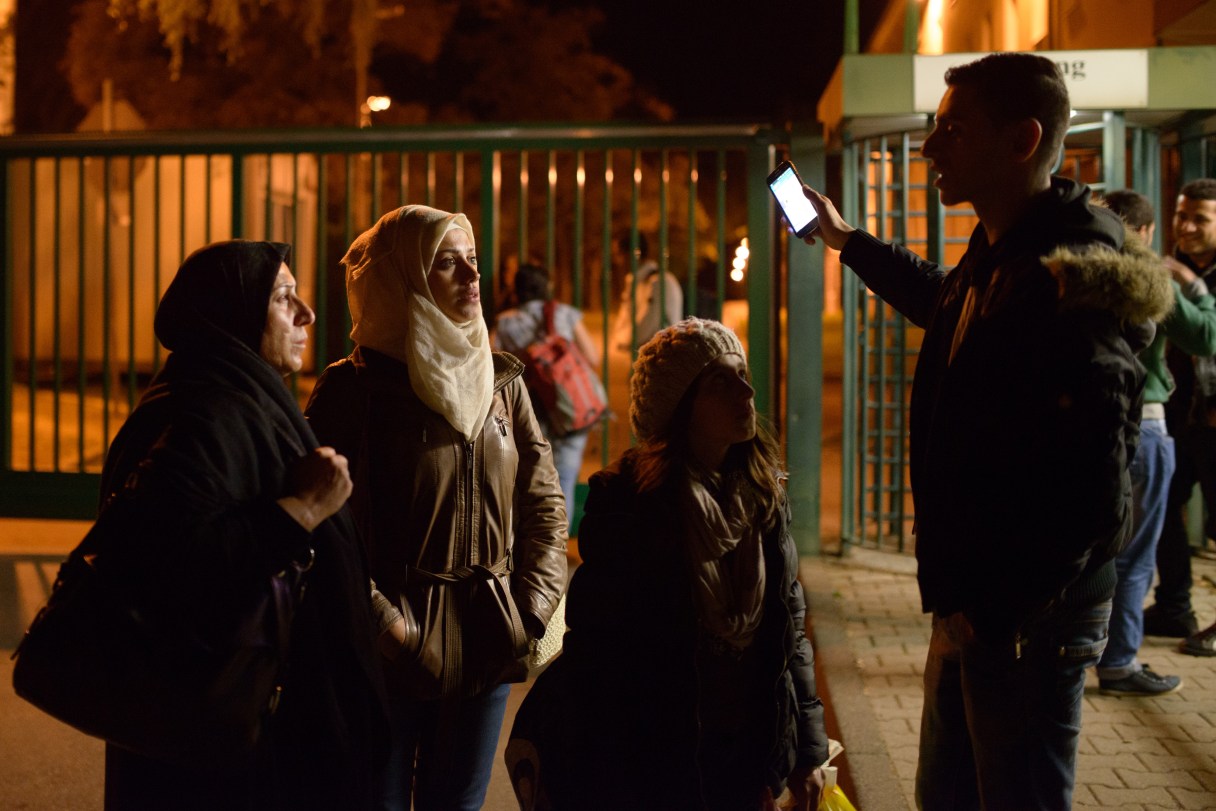
CHEMNITZ, Germany (AP) – It was pitch-dark by the time the Syrian refugee family arrived in the eastern German town that was to be their new home. As they prepared to get off the train, a drunken skinhead stumbled past them, giving a glare that made 11-year-old Raghad huddle closer to her mom.
The five members of the Habashieh family took a taxi to the asylum center assigned to them by a computer in Berlin. It was a former army barracks used by the Soviets and by the Nazis before them, surrounded by towering fences topped with barbed wire.
That’s when Raghad lost it and began to cry: “I’m scared, I hate this,” she burst out, staring at the forbidding gates.
For the Habashiehs – mother Khawla Kareem, 19-year-old daughter Reem, sons Mohammed, 17, and Yaman, 15, and little Raghad – it was then end of a draining day, the latest in a string of draining days in a terrifying journey to a new life. It has taken them from bombed-out Damascus; over the choppy Mediterranean on a rubber dinghy; across the Balkans at the mercy of human traffickers; and finally through Austria by minibus and into the promised land of Germany.
Beyond the gates, young migrant men were lined up in the gloom, dimly illuminated by floodlights, waiting to get plastic bags stuffed with rolls and wrapped cheese, a late dinner. A police officer with a gun in his belt stood nearby, surveying the scene.