
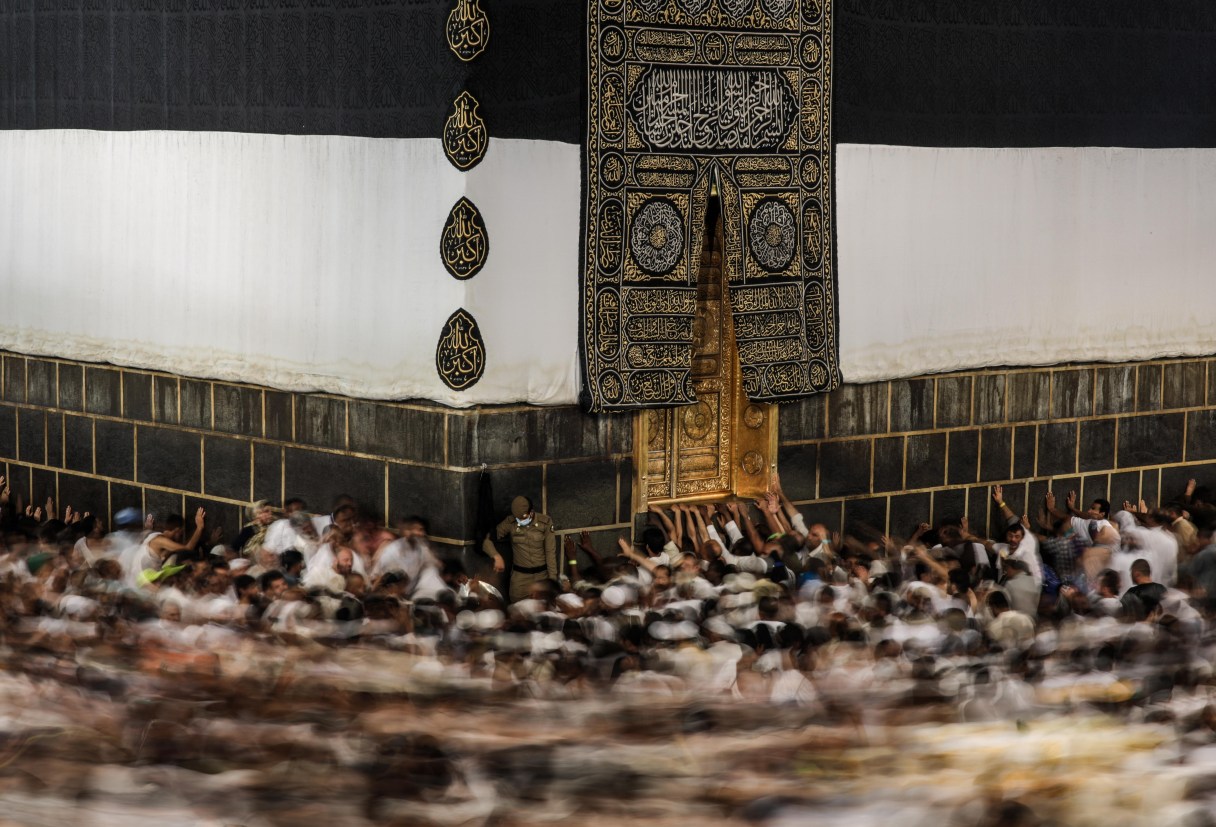
MECCA, Saudi Arabia (AP) – More than 2 million Muslims on Tuesday started the first rites of the annual hajj in Saudi Arabia, one of the world’s largest religious pilgrimages that draws people from different countries to the holy city of Mecca to perform a series of rituals and prayers aimed at erasing past sins.
Newly-arrived pilgrims circled the Kaaba, the black cube-shaped structure in Mecca’s Grand Mosque toward which all Muslims pray. In a sign of humility and equality before God, the pilgrims shed symbols of worldly materialism, entering a state known as “ihram” – women forgo makeup and perfume for loose fitted clothing and a head-covering while men wear seamless terry cloth white garments.
Islam requires all able-bodied Muslims to perform the hajj once in a lifetime. The pilgrimage is among the five main pillars of Islam, which also include belief in the oneness of God and the Prophet Muhammad as his final messenger, five daily prayers facing toward the Kaaba, annual charity and fasting during the month of Ramadan.
Muslims believe the hajj traces the paths of the Prophets Abraham, Ishmael and Muhammad. Pilgrims start the hajj in Mecca, before heading to the nearby tent city of Mina, five kilometers (three miles) away.
In Mecca, they circle the Kaaba counterclockwise seven times, and also re-enact the path of Hagar, the wife of the patriarch Abraham, who Muslims believe ran between two hills searching for water for her dying young son. Tradition holds that God then brought forth a spring of water that runs until this day and which Muslims drink from during the hajj.