
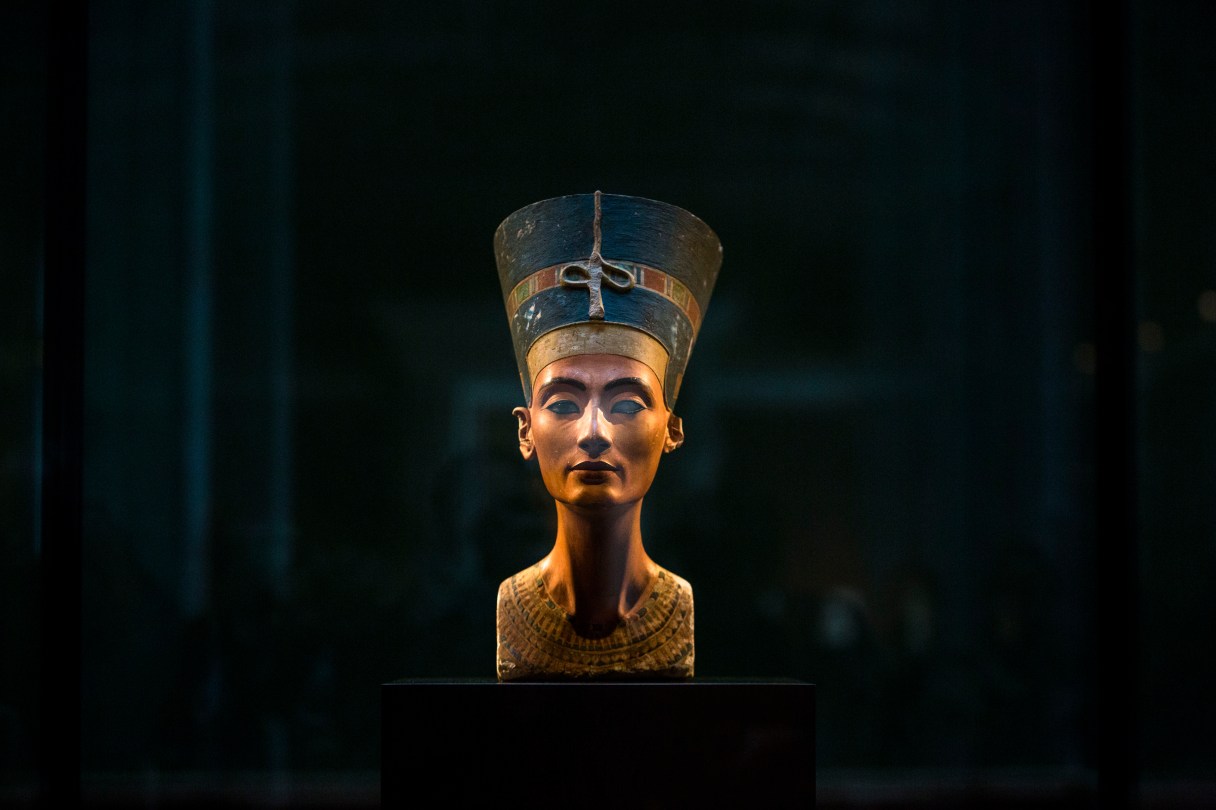
CAIRO (AP) – The Egyptian Antiquities Ministry granted preliminary approval for the use of a non-invasive radar to verify a theory that Queen Nefertiti’s crypt may be hidden behind King Tutankhamun’s 3,300-year-old tomb in the famous Valley of the Kings, a ministry official said Tuesday.
A security clearance for the radar’s use will probably be obtained within a month, said Mouchira Moussa, media consultant to Antiquities Minister Mamdouh el-Damaty.
“It’s not going to cause any damage to the monument,” Moussa said.
Egyptologist Nicholas Reeves recently published his theory, but it has yet to be peer-reviewed. He believes that Tutankhamun, who died at the age of 19, may have been rushed into an outer chamber of what was originally the tomb of Nefertiti, which has never been found.
British archaeologist Howard Carter discovered Tut’s tomb in Luxor’s Valley of the Kings in 1922 – intact and packed with antiquities including Tut’s world-famous golden mask.