
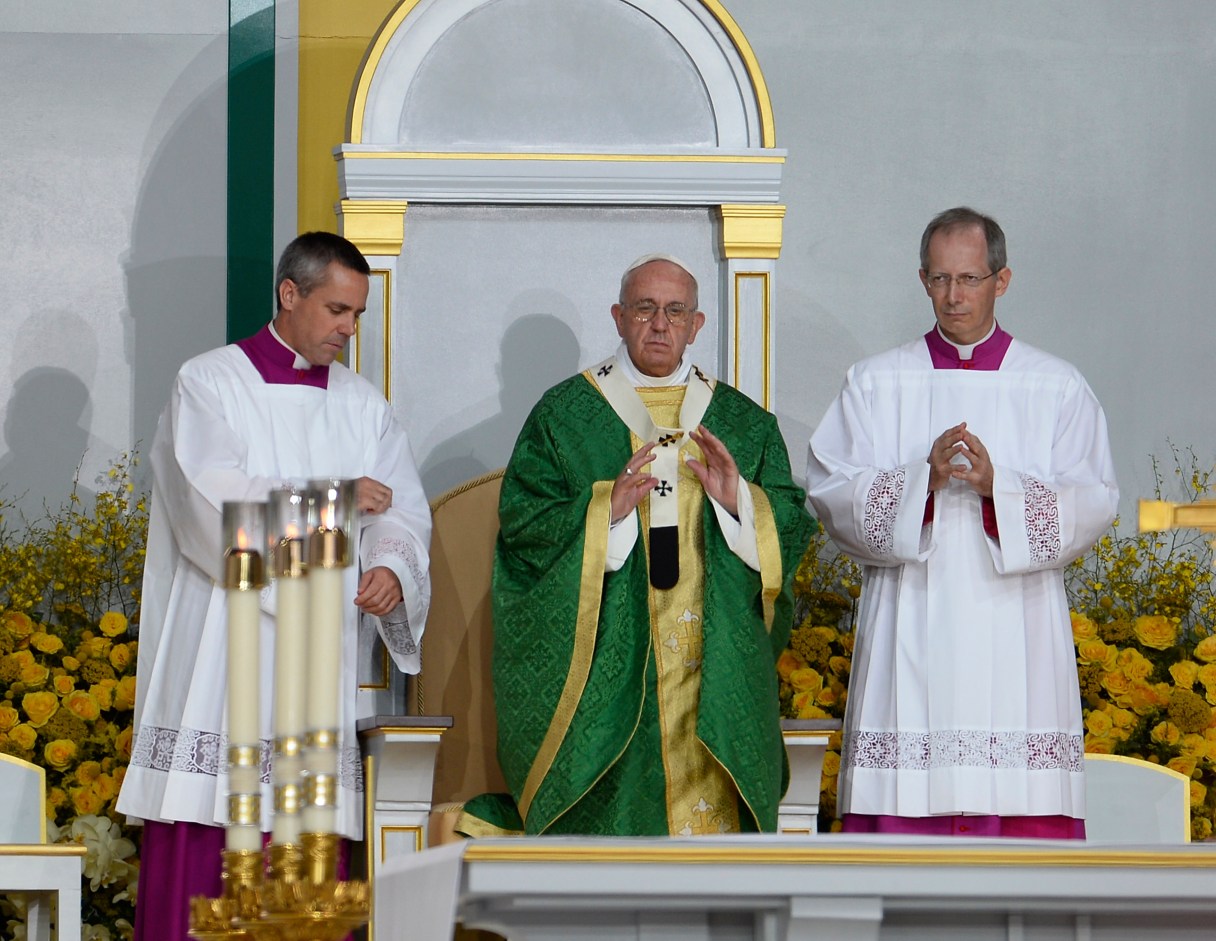
Pope Francis’ just concluded visit to the United States was a grand moment in history for the U.S. Roman Catholic Church, the United States government and several of America’s major cities to celebrate in both grand and solemn style. The pontiff’s welcome was enthusiastic, welcoming and joyous – filled with the customary pomp and high theater reserved for a head of state and a leader of one of the world’s most influential religious institutions. His trip, though, was far more than stagecraft. It brought sharp and deserved focus to vexing global, social and religious issues.
The primary purpose of the pope’s visit, of course, was to strengthen his ties to U.S. Catholics and to buttress their relationship to an institution that, while strong, continues to struggle with divisive internal issues at a time when all mainstream faiths are under duress. Pope Francis, by all accounts, did that.
One need only to view the hordes – including a delegation from Chattanooga – that stood good-naturedly in lines for hours to see or hear him to understand the strong connection he has with what seems to be a majority of his American flock. His frank admission that problems remain in the U.S. church – the role of women, the continuing fallout from sex abuse scandals, various social issues, a shortage of priests, trouble in the many of the church’s educational institutions – and his steely determination to address them within the framework of his faith were reassuring to Catholics as well as others.
There was more than church business on the pope’s long U.S. agenda. Pope Francis understands the moral power of his office. He wisely uses that power to promote causes that he believes are in the best interests of all of Earth’s inhabitants – regardless of faith. His brave decision to speak publicly in Congress, the United Nations and elsewhere about issues like immigration, the environment, the plight of the poor, the desire for freedom by the world’s oppressed and the necessity of economic parity might have received a mixed reception in public. You can bet, though, that his words will engender private conversation and debate in the halls of power, as well as in the confines of church and home.
Pope Francis’ public Masses, his frequent orders to stop the popemobile so he could kiss a child or bestow a blessing, as well as his willing engagement with representatives of other faiths did create a powerfully positive public image of a humble, yet strong religious leader moving forward rather than living in the past. It is a vision that U.S. Catholics, especially the young who thronged every venue where he appeared, should remember as they prepare the blueprint for the future of the American church. That, surely, is one of Pope Francis’ fervent hopes.