
Friday, November 13, 2026Nov 13

Drone company demos how blood air-drops will work in Rwanda

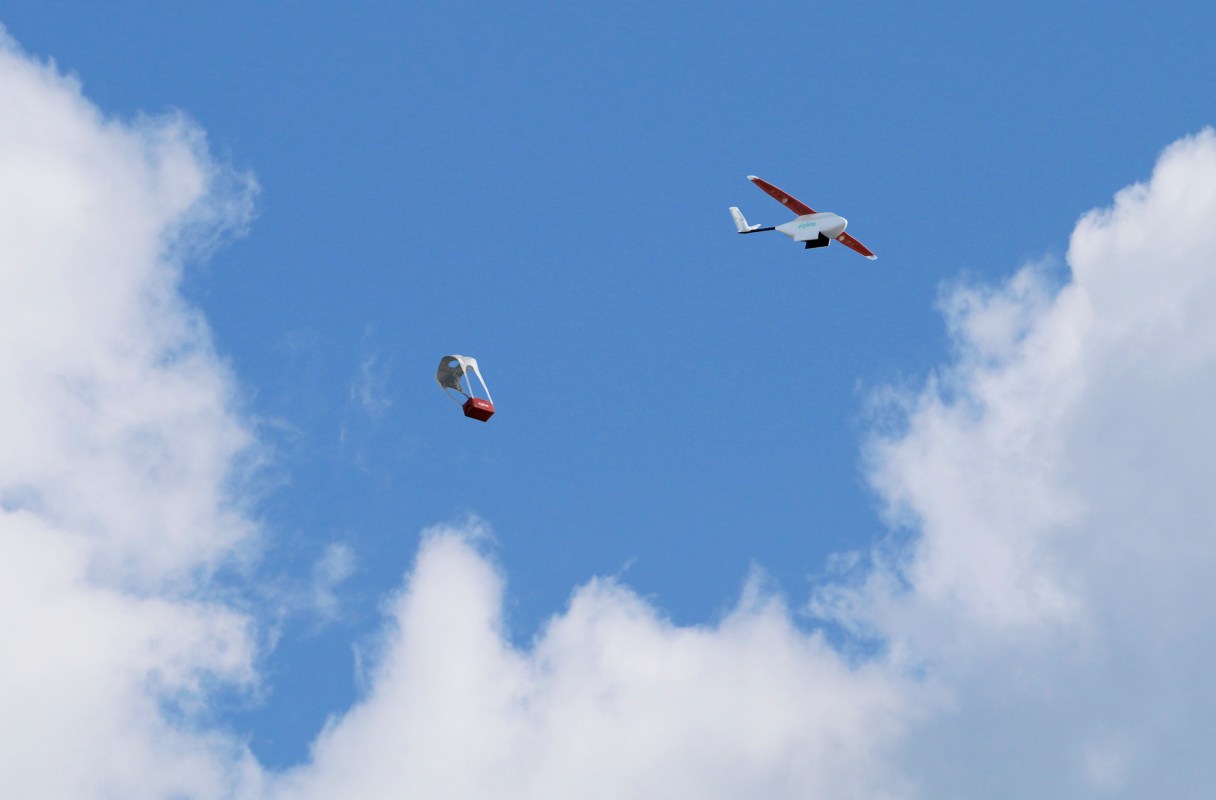
In this March 30, 2016 photo provided by Zipline International, a drone demonstrates making a delivery off the California coast south of San Francisco. Drone delivery might be years away in the U.S., but it's becoming a reality in Rwanda this summer. A San Francisco-based drone delivery company says it'll start making its first deliveries of blood and medicine in Rwanda in July. (Ryan Oksenhorn/Zipline International via AP)
In this March 30, 2016 photo provided by Zipline International, a drone demonstrates making a delivery off the California coast south of San Francisco. Drone delivery might be years away in the U.S., but it's becoming a reality in Rwanda this summer. A San Francisco-based drone delivery company says it'll start making its first deliveries of blood and medicine in Rwanda in July. (Ryan Oksenhorn/Zipline International via AP) In this March 30, 2016 photo provided by Zipline International, a drone demonstrates making a delivery off the California coast south of San Francisco. Drone delivery might be years away in the U.S., but it's becoming a reality in Rwanda this summer. A San Francisco-based drone delivery company says it'll start making its first deliveries of blood and medicine in Rwanda in July. (Ryan Oksenhorn/Zipline International via AP)

LOS ANGELES (AP) – Drone delivery might be years away in the U.S., but it’s becoming a reality in Rwanda this summer.

A San Francisco-based drone delivery company says it’ll start making its first deliveries of blood and medicine in Rwanda in July.

Zipline International Inc., backed by tech heavyweights like Sequoia Capital and Google Ventures, demonstrated its technology for journalists last week in an open field in the San Francisco Bay area.

In a demo broadcast on Periscope on Friday, a staffer launched a fixed-wing plane weighing just 22 pounds off a launcher that used compressed air.

Electric-powered propellers took it the rest of the way, on a flight that could extend to 75 miles round trip, using military-grade GPS and software to navigate.