
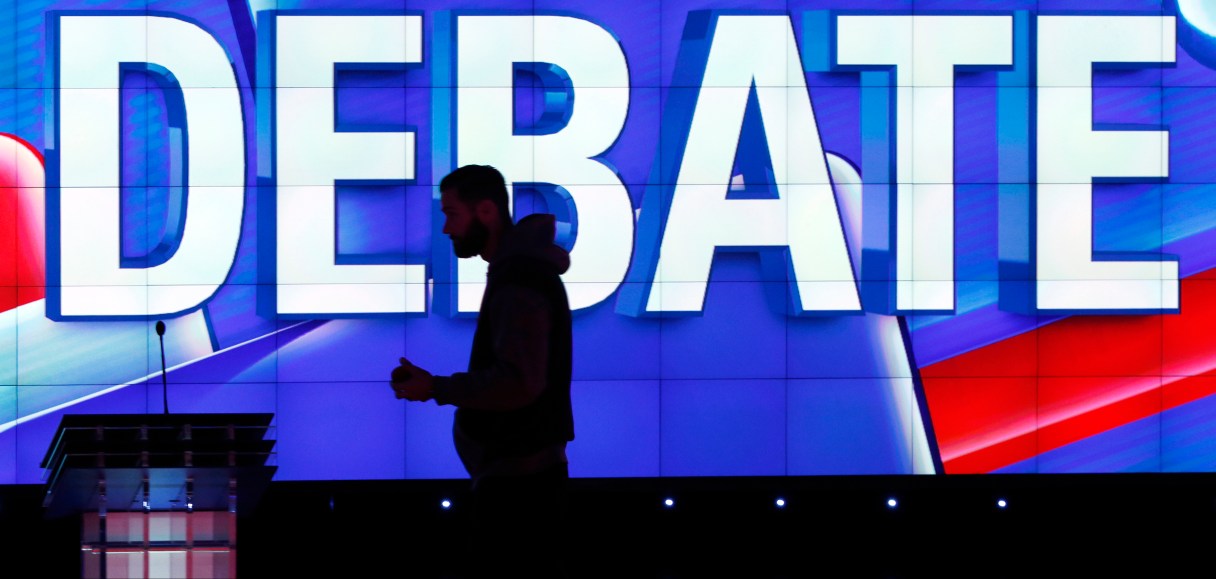
WASHINGTON – In a campaign that has involved talk of revisiting the Geneva Conventions, rewriting the 14th Amendment and rounding up and expelling 11 million people, failures of politeness, violations of manners, would seem a secondary concern. But in this political cycle, insults, invective and coarseness have been charged with a political significance. They are intended to indicate authenticity and a fighting spirit – the liberation of politics from political correctness and elite sensibilities.
Some find this invigorating; others offensive. But it is one of the ways that the election of 2016 will be remembered – for playground taunts, for attacks on candidates’ families, for vulgar bodily references and for a nasty, ungenerous spirit.
 Michael Gerson
People get tired of living in a society filled with the sharp corners of incivility. The mannerlessness of the late 1960s and 1970s produced a backlash of good taste, symbolized by the popularity of Miss Manners (aka Judith Martin) in the 1980s and Ronald Reagan’s rather courtly formality.
What is different this time is that the challenge to manners is coming from the right – not the “free speech movement” but from brushfire populism. The standards and values of reality television – the exaggerated feuds, the personal vilification and the deleted expletives – have invaded the political realm. And it is a form of social decay.
America’s founders actually thought and wrote a lot about manners. (No. 2 on the “Rules of Civility” George Washington copied down as a boy: “When in company, put not your hands to any part of the body not usually discovered.” I imagine this would also cover references to your manhood during a presidential debate.) The founders worried that a society without an aristocracy would lack obvious standards of propriety. But it is good manners that allow citizens to argue without coming to blows, and even to find productive compromise.