
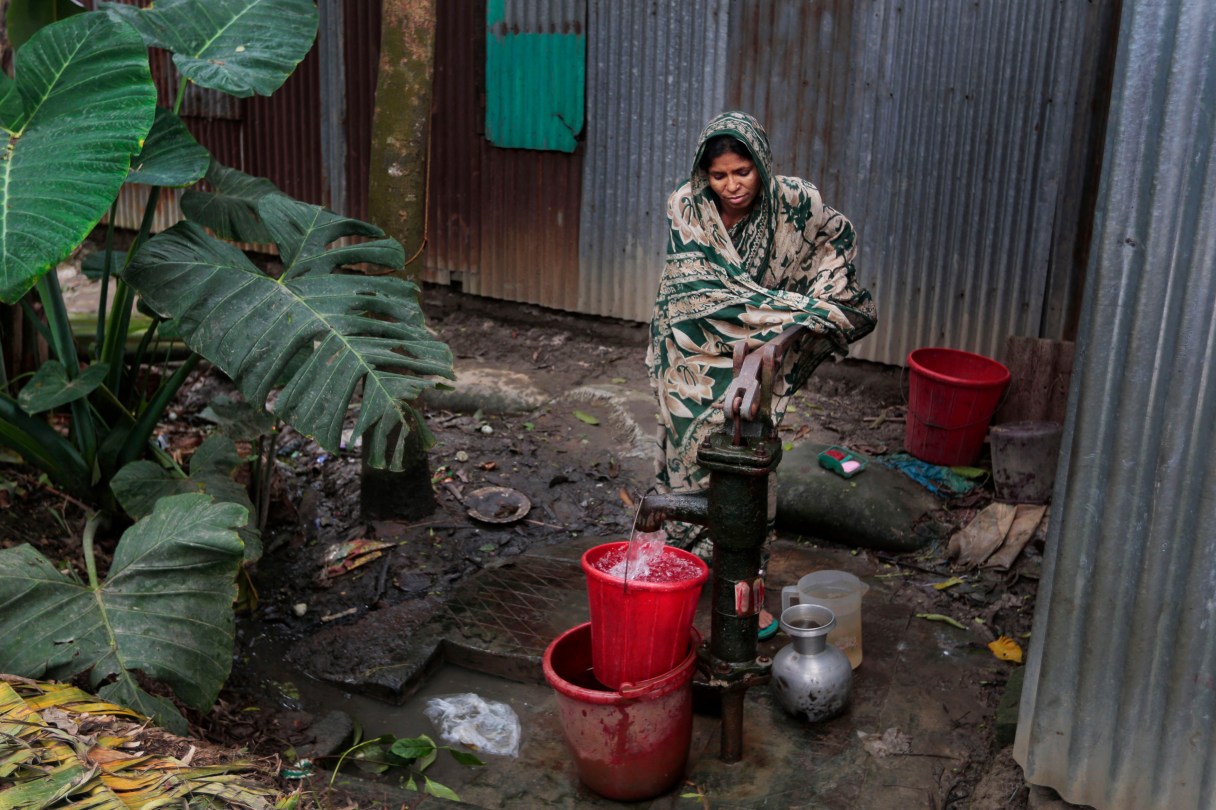
DHAKA, Bangladesh (AP) – Arsenic-tainted government wells are still poisoning an estimated 20 million people in Bangladesh, a number that is unchanged from 10 years ago despite years of action to dig new wells at safer depths, according to a report released Wednesday.
Arsenic is a naturally occurring and toxic element found in the soil and groundwater of some areas of the world, including vast delta regions like Bangladesh and eastern India.
The new report by New York-based Human Rights Watch blames nepotism and neglect by Bangladeshi officials, saying they are deliberately having new wells dug in areas convenient for friends, family members and political supporters and allies, rather than in places where arsenic contamination is highest or large numbers of poor villagers are being exposed.
Government officials did not immediately comment on the findings.
Human Rights Watch based its report on a survey of about 125,000 government wells dug from 2006 to 2012 specifically to give villagers safer options, after an earlier survey of 5 million wells found millions exposed to water that exceeded Bangladesh’s arsenic contamination limit of 50 parts per billion. The Bangladeshi limit, which is the same limit set in neighboring India, is far higher than the World Health Organization’s recommended limit of 10 ppb.