

When the Tennessee General Assembly voted in 2012 to pass a new state law that automatically increased sentences for some criminal gang members, Chattanooga Mayor Ron Littlefield said the move would “cut the heart out” of the city’s worst gangs.
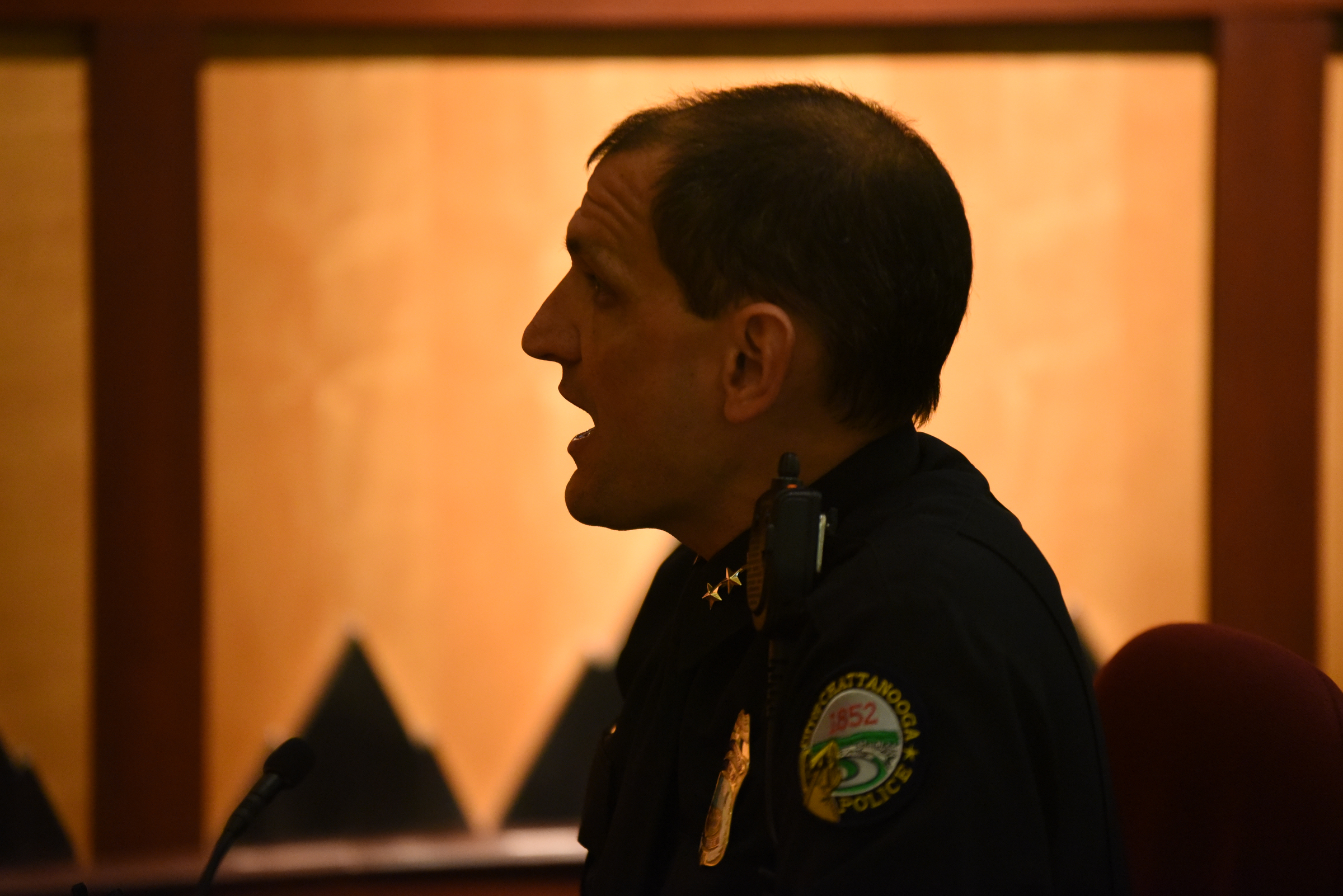 Chattanooga Police Chief Fred Fletcher makes a strong case concerning the successes his men have had with the VRI program during Tuesday’s meeting with the Chattanooga City Council to discuss gang violence. Agencies involved with the initiative were invited to report to the council, but Hamilton County District Attorney Neal Pinkston declined and now says he’ll ignore a resulting council subpoena for next Tuesday.
But on Thursday, a Tennessee appeals court struck down a key part of the law and ruled that automatically increasing the sentencing range for a defendant solely because the person is a gang member is unconstitutional.

He and other Chattanooga leaders had championed the bill, which was designed to levy significantly heavier sentences against gang members who committed particular – and mostly violent – crimes.
Chattanooga Police Chief Fred Fletcher makes a strong case concerning the successes his men have had with the VRI program during Tuesday’s meeting with the Chattanooga City Council to discuss gang violence. Agencies involved with the initiative were invited to report to the council, but Hamilton County District Attorney Neal Pinkston declined and now says he’ll ignore a resulting council subpoena for next Tuesday.The court ruled the law would be acceptable if it specified that gang members would face enhanced sentences for gang-related offenses.
But the current statute fails to include that requirement, which makes it possible for defendants to face extra punishment for crimes completely unrelated to their gang membership. And that, the court ruled, is unconstitutional.