
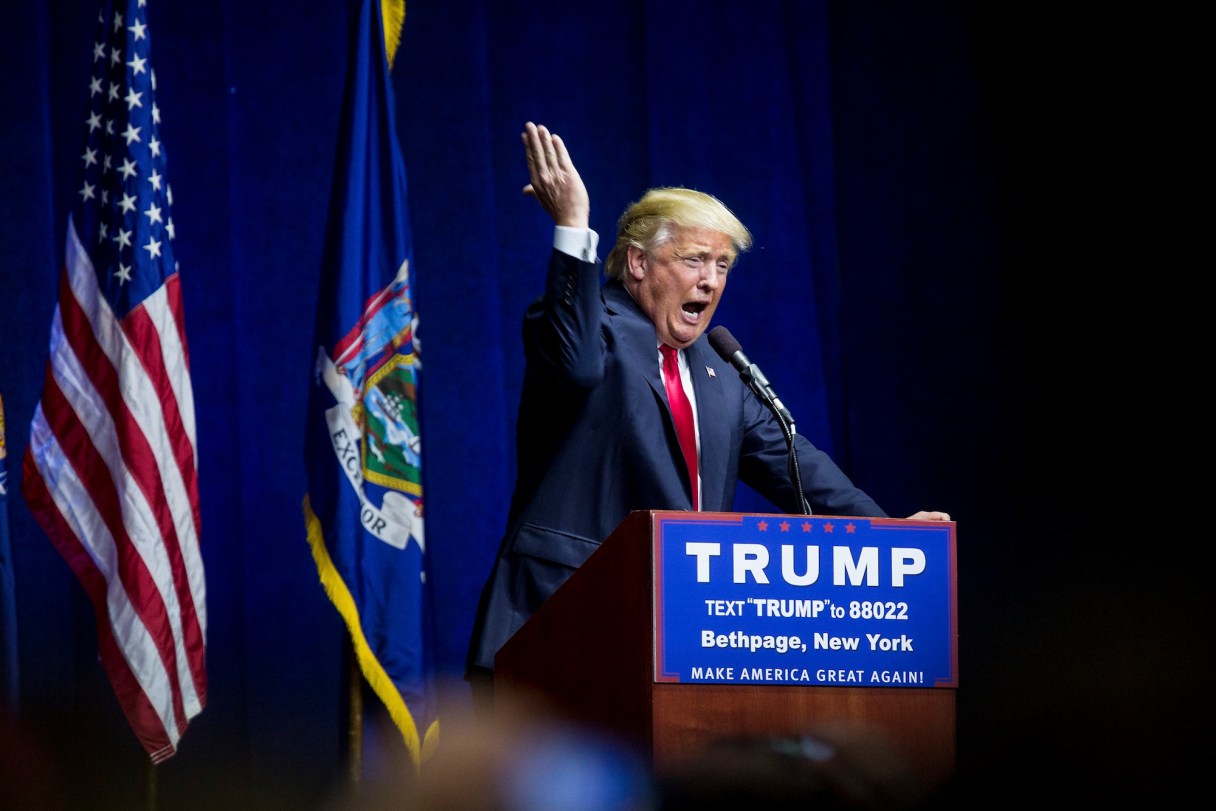
WASHINGTON – Donald Trump tests the limits of campaign speech. He makes false statements and refuses to correct them. He attacks other religions and ethnic groups, inflaming domestic tension and foreign terrorist rage. He pledges to overhaul long-standing U.S. commitments in ways that frighten allies. He cavalierly predicts a “massive recession,” undermining confidence in the U.S. economy.
When criticized, Trump adopts the stance of one of his beloved WWE professional wrestlers caught in the act: He throws up his hands, protests his innocence and claims the other guy threw the first punch.
Trump’s comments are troubling because he isn’t just a candidate, he’s an alternative news source. The Washington Post’s “Fact Checker” may give him “Four Pinocchios” for falsely claiming that he saw TV clips of “thousands and thousands” of New Jersey Muslims celebrating the collapse of the Twin Towers on 9/11. But the absence of any confirming video footage is seen by some Trump supporters as evidence of a “mainstream media” conspiracy to conceal the truth.
The Founding Fathers’ instructions were clear: The right to free speech includes bad speech; it means tolerance of ideas that many find obnoxious. First Amendment partisans avoid discussing hypothetical situations where free speech becomes so recklessly defamatory that it no longer deserves protection. But we should recognize that in other countries suffering political decay and the popular rage it engenders, free speech has indeed proved to be an instrument in the destruction of liberty.
The Supreme Court has considered this problem on two recent occasions, as it happens. Both times, the Court ruled for protection of political speech, even when it’s false.