
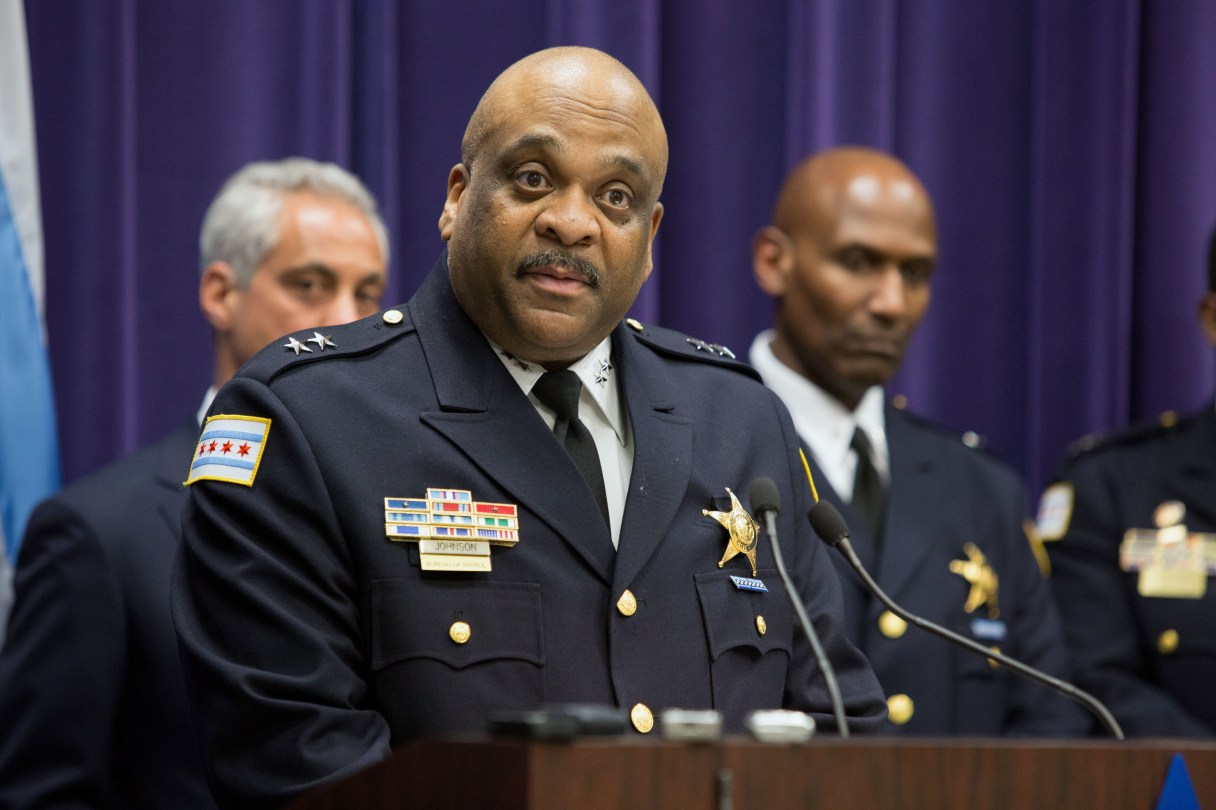
CHICAGO (AP) – Police in Chicago have “no regard for the sanctity of life when it comes to people of color” and have alienated blacks and Hispanics for decades by using excessive force and honoring a code of silence, a task force declared Wednesday in a report that seeks sweeping changes to the nation’s third-largest police force.
The panel, established by Mayor Rahm Emanuel late last year in response to an outcry over police shootings, found that little is done to weed out problem officers and routine encounters unnecessarily turn deadly.
The group concluded that minorities’ lack of trust and fear are justified, citing data that show 74 percent of the hundreds of people shot by officers in recent years were African-Americans, even though blacks account for 33 percent of the city’s population.
The task force pointed to a painful history spanning generations, including the 1969 killing of Black Panther Fred Hampton, allegations of torture from the 1970s to the 1990s under former commander Jon Burge and stop-and-frisk in the 2000s.
“It raises consciousness. It shines a light into the darkness,” activist Greg Livingston said of the report.