
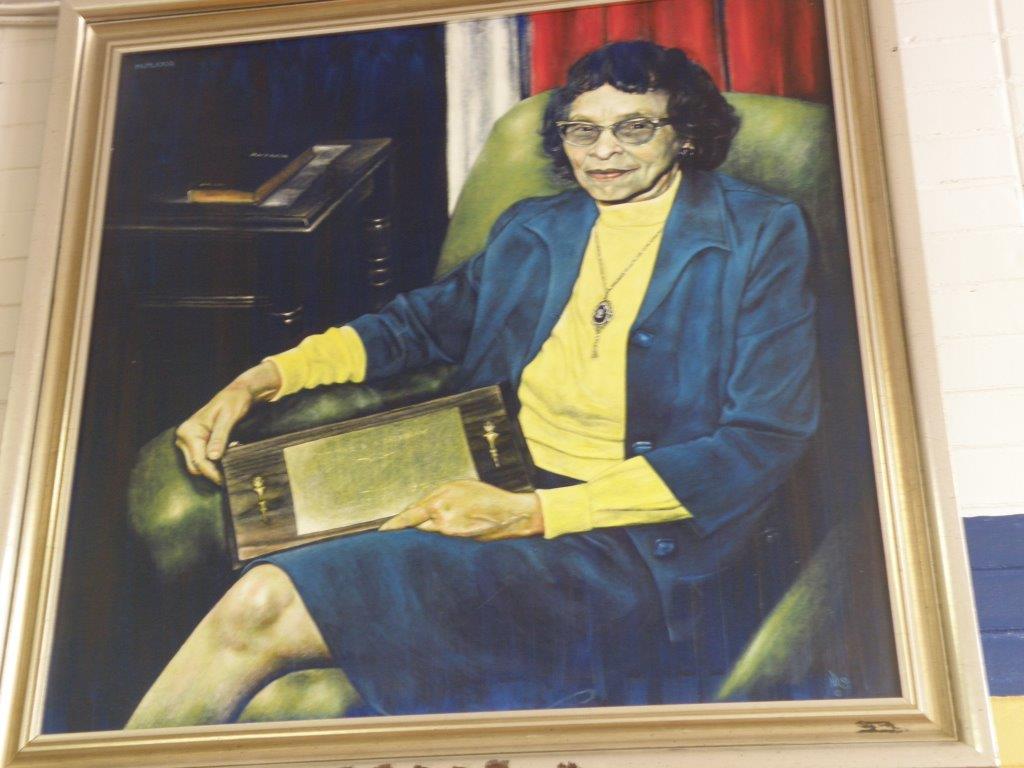
Born around 1900 in LaGrange, Ga., of Irish, Cherokee and African-American descent, Sallie Alford Crenshaw was reared in Chattanooga. A July 3, 1977, News-Free Press article described her as a “tiny, caramel-colored lady.” She described herself as “born 50 years ahead” of her time.
A graduate of the Chattanooga public schools, she attended Tennessee State Normal School, Gammon Theological Seminary, Clark College and the University of Nebraska. She was the first African-American to attend Tennessee Wesleyan College. Hers was a practical schooling that included courses in Christian education, church administration, missions, religious work in urban areas, hymnology, Bible, recreation and child care. Since ordination was closed to women, she became a missionary under the auspices of the Methodist Board of Missions.
By 1930, she was living in Virginia. Licensed to preach in 1930, she received deacon’s orders in 1934 and elder’s orders in 1938.
In 1935, the Board of Missions sent her to minister to the black coal miners around Bluefield, W.Va. She lived with desperately poor mining families, often sleeping on the floor, teaching them, especially the children, what she could. At the same time, she was pastoring churches in the East Tennessee Methodist Conference. Over her career, she served as supply pastor to 12 churches, including several in Chattanooga. She was later appointed as the first African-American to travel the country, preaching to both black and white congregations and promoting church desegregation.
In 1947, the East Tennessee Conference asked her to survey neglected areas in Chattanooga. Although she was initially cursed and doors were slammed in her face, she found the needs in the St. Elmo community to be particularly severe and started a mission in the neighborhood. She began with a Sunday school in a tavern that was closed on Sundays. Sixty-five children and three adults came the first Sunday. Two months later, she moved to a rented house.