
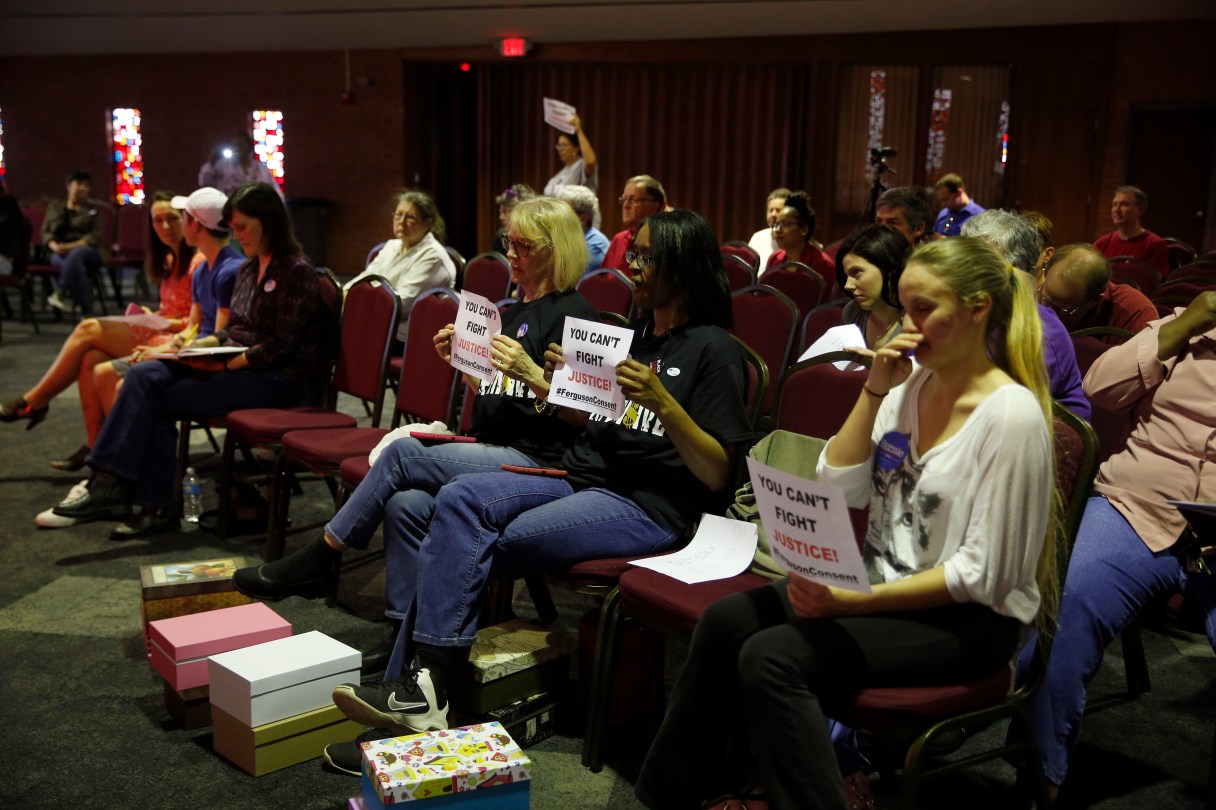
ST. LOUIS (AP) – Reforms are expected to begin quickly in Ferguson now that a federal judge has approved a settlement between the U.S. Department of Justice and the city where 18-year-old Michael Brown was fatally shot by a police officer.
Federal Judge Catherine Perry issued her ruling Tuesday approving the agreement after a lengthy public hearing in St. Louis. Perry called it a “reasonable resolution” that avoids an extensive court battle.
Mayor James Knowles III said the city has already implemented many reforms, and will act swiftly on others to “move into compliance as soon as possible.” Some reforms are expected to be in place within 30 days, while the city has 60 days or 90 days on other components.
Ferguson has been under scrutiny since Brown, who was black and unarmed, was fatally shot by white Ferguson officer Darren Wilson in 2014. Brown’s death was a catalyst in the national Black Lives Matter movement.
A grand jury and the Justice Department cleared Wilson, who resigned from the police force in November 2014, but the shooting led to a Justice Department investigation that found alarming patterns of racial bias in policing and a municipal court system that generated revenue largely on the backs of poor and minority residents.