
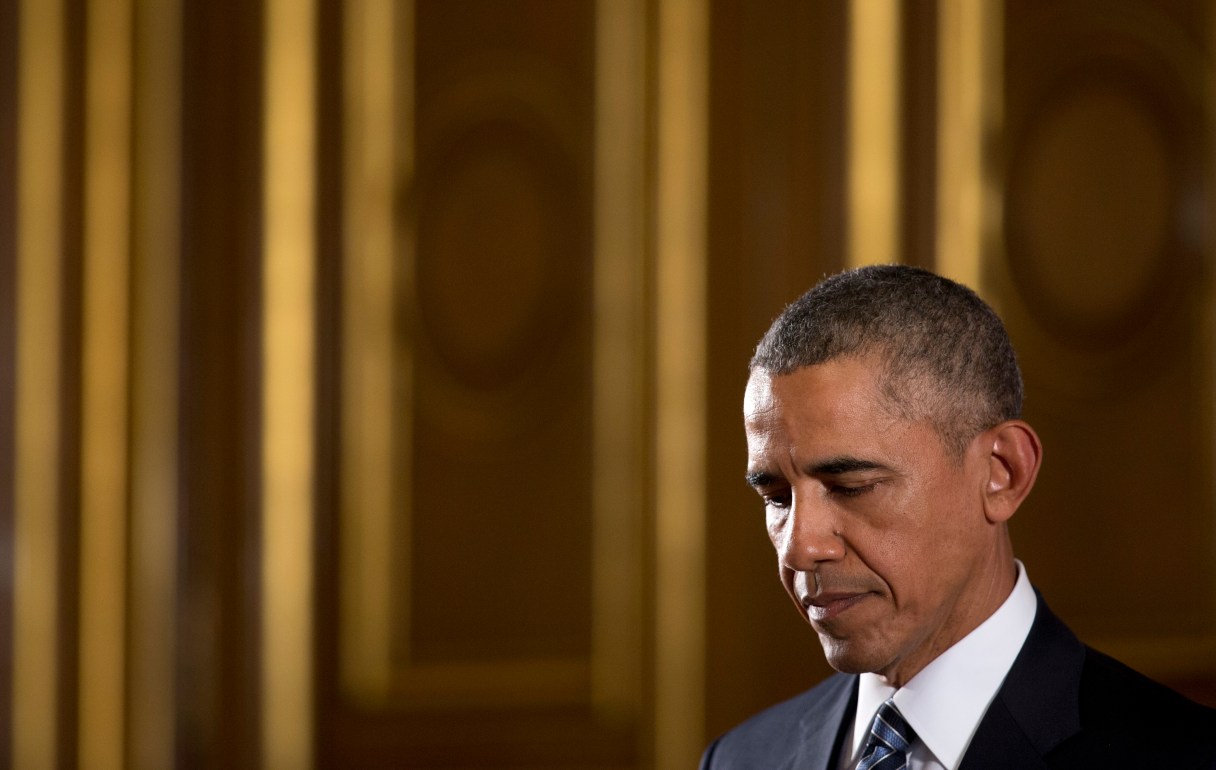
BERLIN (AP) – When President Barack Obama opens the world’s largest industrial fair in the northern German city of Hannover on Sunday, he’ll be leading a delegation of American companies hoping to conquer new markets abroad. He’ll also be trying to complete one of his presidency’s main pieces of unfinished business – a trans-Atlantic trade pact.
Officials in Washington and Brussels are trying to clinch key parts of the deal before the end of the year, after which a new U.S. president and election campaigns in major European countries could complicate negotiations.
Proponents of the agreement – known as the Trans-Atlantic Trade and Investment Partnership, or TTIP – argue that lowering tariffs and harmonizing rules would give a much-needed boost to businesses at a time of global economic uncertainty. Or as Obama put it when the talks launched three years ago: “New growth and jobs on both sides of the Atlantic.”
But this rosy view of TTIP hasn’t caught the public’s imagination, particularly in Germany, where more than 100,000 people marched through the streets of Berlin in November to protest the proposed pact.
Trade unions, nationalists and green groups have lobbied hard against the deal, claiming that it will drive down wages, erode consumer protection and environmental standards.