
Monday, November 16, 2026Nov 16

What’s the deal? Voters cheer, jeer, shrug off GOP pact

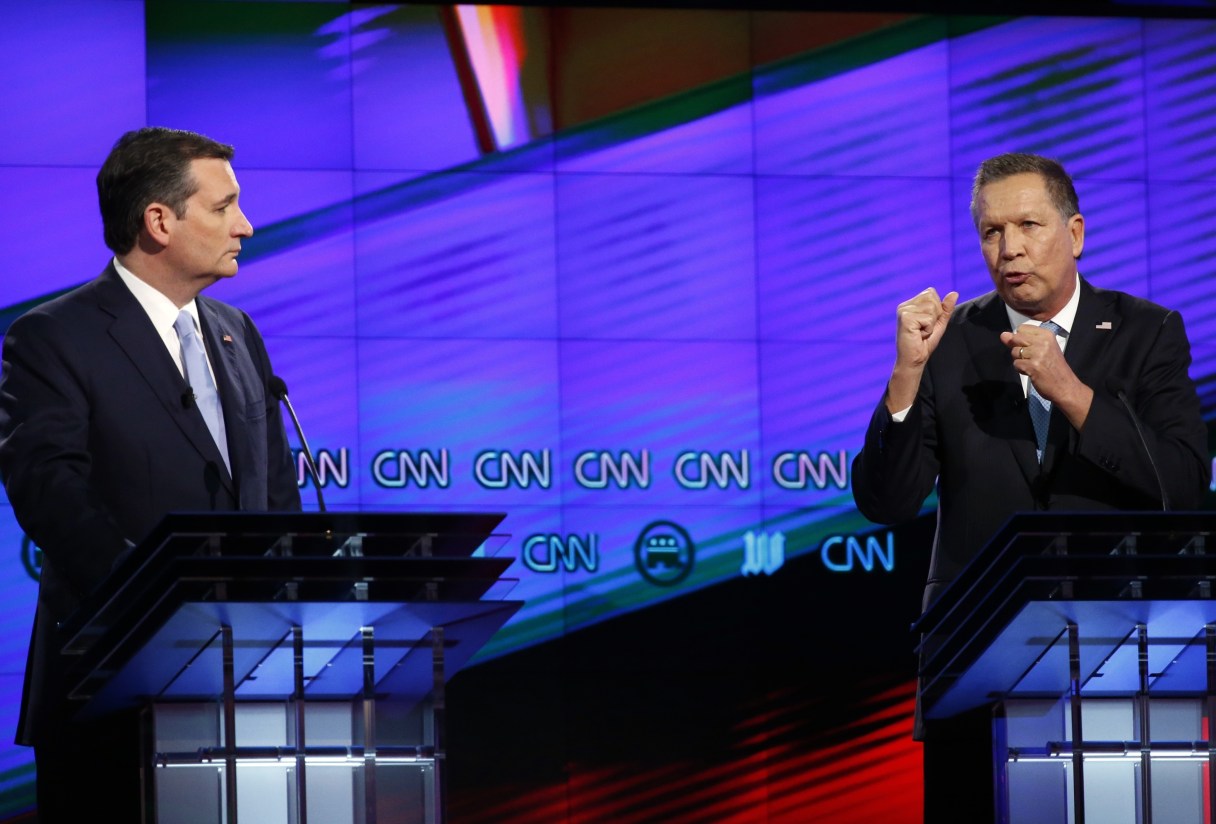
FILE - In this March 10, 2016, file photo, Republican presidential candidate Ohio Gov. John Kasich, right, speaks as Republican presidential candidate, Sen. Ted Cruz, R-Texas, listens, during a Republican presidential debate sponsored by CNN, Salem Media Group and the Washington Times at the University of Miami in Coral Gables, Fla. Declaring the Republican presidential contest at "a fork in the road," Cruz and Kasich defended their extraordinary new alliance on April 25 as the party's last, best chance to stop Donald Trump, even as the New York billionaire surged toward another big delegate haul. (AP Photo/Wilfredo Lee, File)

FRANKLIN, Indiana (AP) – Kathy Hiel said she hadn’t made up her mind to vote for Donald Trump – until the billionaire businessman’s two Republican White House rivals formed an extraordinary political non-aggression pact to stop him.

“I’ll have to support him now,” said Hiel, an Elizabeth, Indiana, resident who designs cabinets for a home interior company.

While the political world waits to see if Texas Sen. Ted Cruz and Ohio Gov. John Kasich’s alliance proves brilliant or desperate, some voters in the three states most affected applauded the move while others panned it. But many were still struggling to understand what, if anything, it will mean for them.

Kasich says he won’t compete in Indiana, where Cruz is boasting he’s “all-in,” while the Texas senator said he will cede contests in Oregon and New Mexico to Kasich – an agreement both candidates hope will keep Trump from winning the 1,237 delegates needed to secure the GOP presidential nomination at the party’s national convention in Cleveland beginning July 18.

Hiel was first in line to see Cruz at an ice cream parlor he visited in Columbus, Indiana, on Monday, and aggressively pressed the Texan as he stepped off his campaign bus on the convention’s delegate-selection process.