
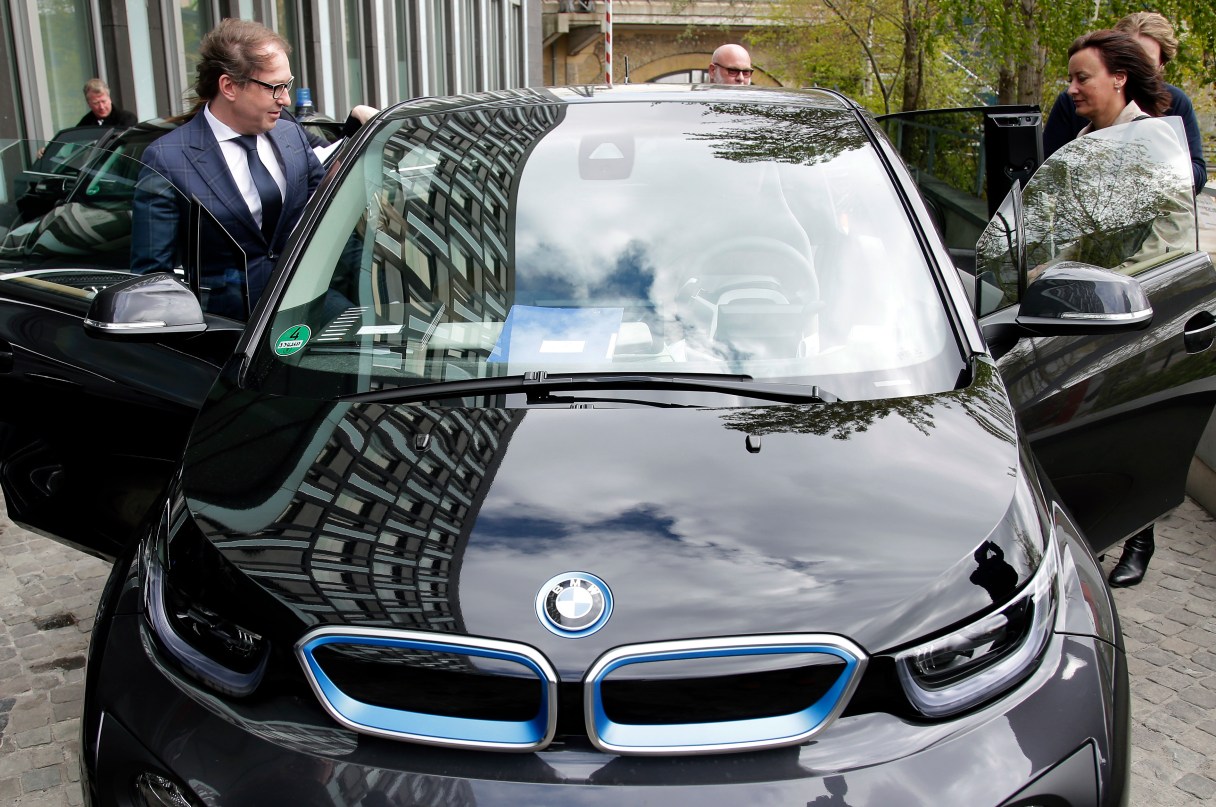
BERLIN (AP) – Germany’s auto industry risks being overtaken by foreign competitors unless it receives greater domestic support, the country’s economy minister said Wednesday, announcing a 1 billion euro ($1.13 billion) plan to subsidize electric cars that are seen as the technology of the future.
Electric vehicles have had a sluggish start in Germany, the country where the combustion engine-powered automobile was born. A government plan to get 1 million e-cars on the streets by 2020 is far behind schedule, with just 50,000 sold so far.
“After a long debate we have agreed to a subsidy program that aims to show on the home market that we can master these new drive trains, from plug-in hybrid to battery-powered vehicles, and make them suitable for the mass market,” Economy Minister Sigmar Gabriel said at a news conference in Berlin.
Starting in May, buyers will get 4,000 euros ($4,514.80) toward the purchase of an all-electric vehicle, while plug-in hybrids will receive a subsidy of up to 3,000 euros. The cost will be shared equally by the government and industry.
Finance Minister Wolfgang Schaeuble said he would set aside 600 million euros for the rebates, which will be available on a first come, first serve basis. Another 100 million euros will be used to procure electric vehicles for the government’s own fleet and 300 million euros will be invested in electric charging stations.