
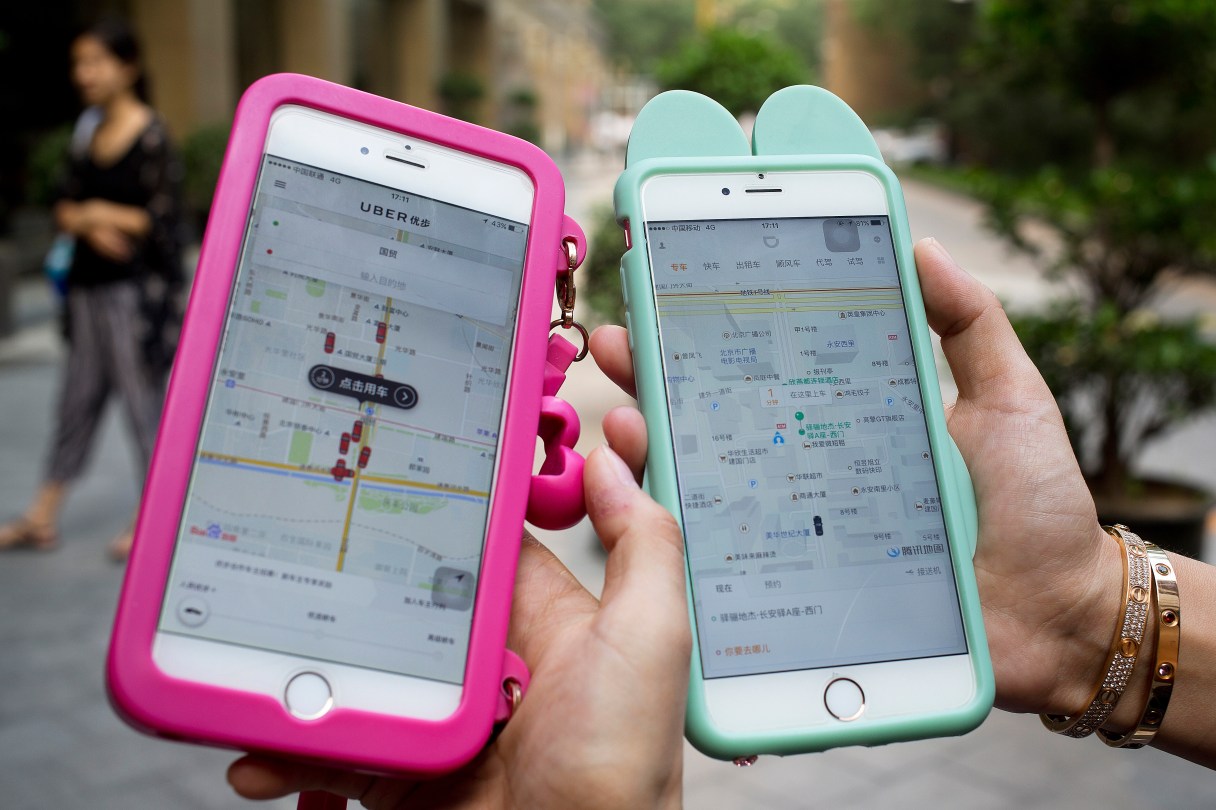
BEIJING (AP) – Uber Technology Ltd.’s main Chinese rival said Monday it is acquiring the U.S. ride-hailing service’s China operation in a deal that links the companies following a costly battle to attract riders.
Didi Chuxing’s announcement marked the latest surrender by a foreign technology brand in the face of intense competition in China. Yahoo, eBay and others also have turned over local operations to Chinese partners or withdrawn.
Didi Chuxing said it would take over all of Uber China and operate it as a separate brand. Uber will receive a stake in Didi Chuxing and Uber founder Travis Kalanick will join the Chinese company’s board while Didi Chuxing founder Cheng Wei joins the Uber board, it said.
“This agreement with Uber will set the mobile transportation industry on a healthier, more sustainable path of growth at a higher level,” Cheng said in a statement.
Ride-hailing services in China have grown fast but suffered heavy losses as they fought to attract customers. Kalanick told the Canadian technology platform BetaKit in February the company was losing $1 billion a year in China.