
Monday, November 16, 2026Nov 16

2 years of anti-IS airstrikes have redrawn the Iraqi map

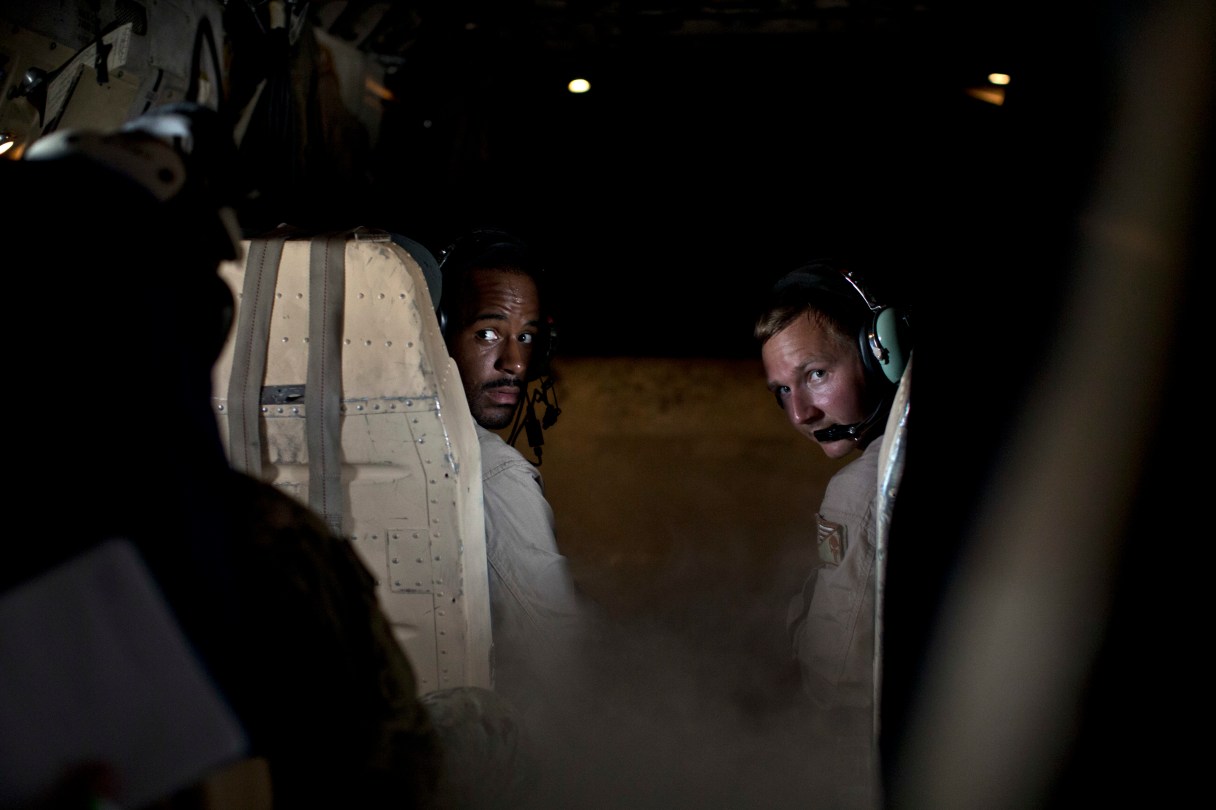
FILE - In this Thursday, Sept. 10, 2015 file photo, members of a cargo aircraft crew perform a visual check of their passengers as their plane prepares to land on the USS Theodore Roosevelt aircraft carrier currently deployed in the Persian Gulf, supporting Operation Inherent Resolve, the military operation against Islamic State extremists in Syria and Iraq.  Two years ago, just weeks after the fall of Mosul, an Islamic State group push deeper into Iraq’s Kurdistan region triggered Iraq’s Peshmerga forces to retreat and the U.S.-led coalition to drop the first airstrikes in the fight against the militant group. Since then coalition planes have dropped more than 9,400 bombs on Iraq. The munitions, often called in to closely support advancing forces on the ground, have dramatically changed the fight against IS, allowing Iraqi forces to slowly claw back cities, towns, supply lines and infrastructure. But the fight _ that continues to be largely waged from the air _ has also leveled entire neighborhoods, displaced millions and redrawn the Iraqi map. (AP Photo/Marko Drobnjakovic, File)
FILE - In this Thursday, Sept. 10, 2015 file photo, members of a cargo aircraft crew perform a visual check of their passengers as their plane prepares to land on the USS Theodore Roosevelt aircraft carrier currently deployed in the Persian Gulf, supporting Operation Inherent Resolve, the military operation against Islamic State extremists in Syria and Iraq. Two years ago, just weeks after the fall of Mosul, an Islamic State group push deeper into Iraq’s Kurdistan region triggered Iraq’s Peshmerga forces to retreat and the U.S.-led coalition to drop the first airstrikes in the fight against the militant group. Since then coalition planes have dropped more than 9,400 bombs on Iraq. The munitions, often called in to closely support advancing forces on the ground, have dramatically changed the fight against IS, allowing Iraqi forces to slowly claw back cities, towns, supply lines and infrastructure. But the fight _ that continues to be largely waged from the air _ has also leveled entire neighborhoods, displaced millions and redrawn the Iraqi map. (AP Photo/Marko Drobnjakovic, File)

MAKHMOUR, Iraq (AP) – Two years ago, the U.S.-led coalition dropped the first airstrikes on the Islamic State group, ushering in a deeper phase of intervention that dramatically changed the fight against the militant group in Iraq. Since then more than 9,400 coalition airstrikes have allowed Iraqi forces to slowly claw back cities, towns, supply lines and infrastructure.

But the fight – which continues to be largely waged from the air – has also leveled entire neighborhoods, displaced millions and redrawn the Iraqi map.

The U.S.-led coalition estimates that IS has lost more than 40 percent of the territory the group once held in Iraq since the airstrikes began on Aug 8, 2014. But while coalition airstrikes paved the way for Kurdish and Iraqi ground forces to retake territory, in many cases the result is a ruined prize.

The first coalition strikes were spurred by an IS push from Mosul just weeks after the group’s initial rampage across Iraq.

Makhmour base was just one of a number of frontline positions overrun in early August 2014 bringing IS fighters within just 30 kilometers (19 miles) of Erbil, the capital of Iraq’s Kurdistan region.