

Get help
Ken Smith said the best way to report issues concerning city roads is to send him an email at kensmith@chattanooga.gov, and copy Mayor Andy Berke at mayor@chattanooga.gov.To contact the Chattanooga Department of Transportation, call 643-6311.
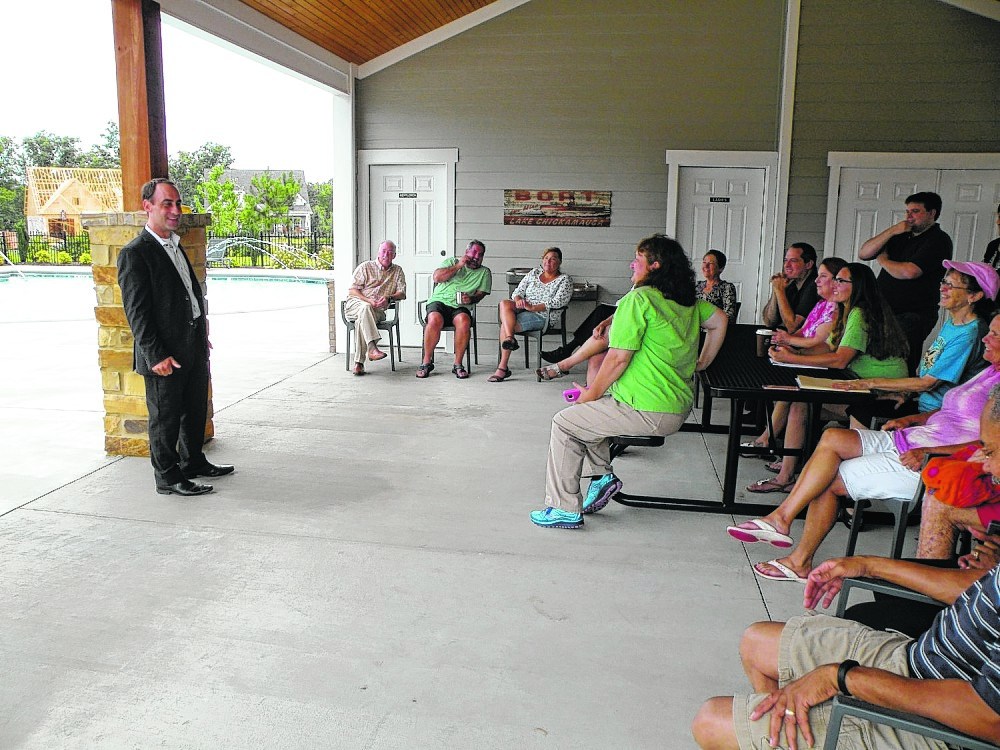
While meeting recently with a group of constituents opposing a proposed apartment complex on the other side of the river, District 3 City Councilman Ken Smith shared information regarding zoning changes and city planning and infrastructure improvements that provides clarification on these sometimes-mysterious processes.
Smith, who currently serves as chairman of the City Council’s Public Works and Safety Committee, said one of his main goals when coming into office was to improve the city’s infrastructure.
“For over 10 years, there was very little increase in the paving budget,” he said, adding that the $1.7 million allotted in the budget for paving when he took office did very little in terms of covering the cost of maintaining the number of roads in the city.
While he has successfully worked to double the paving budget to $3.4 million since he joined the council in March 2013, he said, that amount still doesn’t go very far in light of the current cost of materials. Between 2002 and 2004, Smith said, the cost of asphalt was $17-$18 a ton. Since then, the cost of raw materials has increased by 300-400 percent, he said.
Still, he recommends that his constituents contact him, and get as many others as possible to do the same, when they have serious issues concerning city roads.
However, he also suggested that people keep in mind that potholes serve as “reverse speed bumps.” He said when they are fixed he often receives calls soon thereafter from residents complaining about people speeding on the same stretch of road that was repaired.
He noted that road improvements are prioritized not based on the condition of the roads, but the number of people affected.
When citizens become aware of traffic issues such as blind spots and frequent speeding, Smith said they should contact the Chattanooga Department of Transportation, which handles signage and traffic studies in the city.
Smith also delved into the topic of zoning changes. He said when the City Council votes on a zoning change, the decision is based on how the proposed use fits in with the plan for the area and the use and density of surrounding properties, as opposed to the need or demand of the particular use being proposed.
Nearby residents are required to be notified of the proposed zoning change based on their distance from the property in question, not on whether they will be affected by the change, he said.
When a new business is proposed, it is required to conform to the regulations established for the existing zone, said Smith. If the developer proposes a zoning change, the RPA makes a recommendation to the city council or county commission based on how it fits in with the existing surrounding properties and its plan for the area.
He also explained why many of the 27 different community plans created by the Regional Planning Agency 15 years ago, such as those for Hixson and Highway 58, haven’t been fulfilled. Businesses that have opened since those community plans were developed have not been required to meet the regulations stipulated in those plans because when they were created, planners did not take into account how each individual plan would affect the surrounding communities. Therefore, the RPA is currently working on a new regional plan with a local focus.
Contact Emily Crisman at ecrisman@timesfreepress.com or 757-6508.