
RIO DE JANEIRO (AP) – Judo is a Japanese martial art that was developed in the 19th century based on principles of self-defense. Its creator, Jigoro Kano, combined elements of jiu jitsu, wrestling and karate with other styles of fighting.
The combat sport typically uses the opponent’s force against him, forbids striking and is not intended to do serious damage to rivals; even the sport’s most violent holds give competitors the chance to tap out.
According to the International Judo Federation, the sport’s governing body, etiquette is essential for any judo player, or judoka. That etiquette appeared to be torn to shreds on Friday when Middle Eastern politics spilled onto the judo mat.
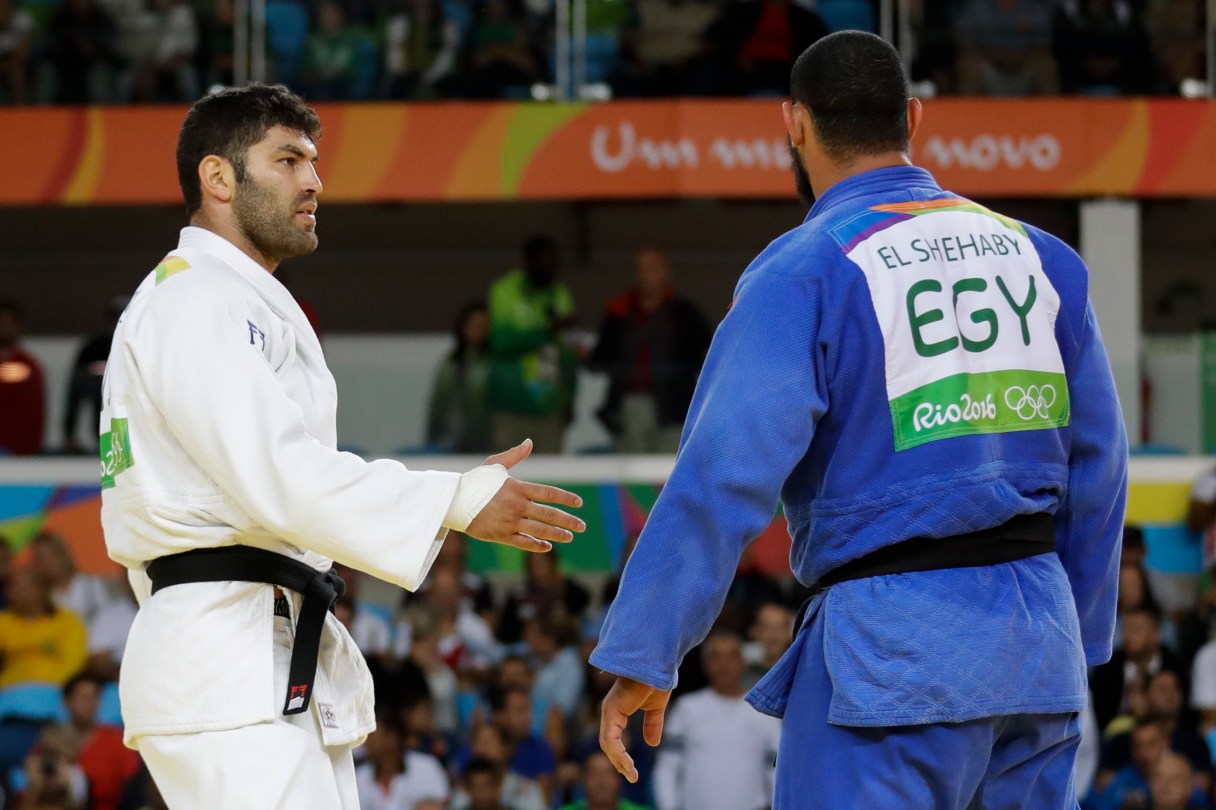
Islam El Shehaby of Egypt refused to shake hands with his winning opponent, Or Sasson of Israel. The Egyptian lay flat on his back for a moment before rising and standing opposite Sasson in front of the referee. When Sasson extended his hand, El Shehaby backed away, shaking his head.
The referee called El Shehaby back to the mat and obliged to him to bow; El Shehaby gave a quick nod, and he was loudly booed as he exited.