
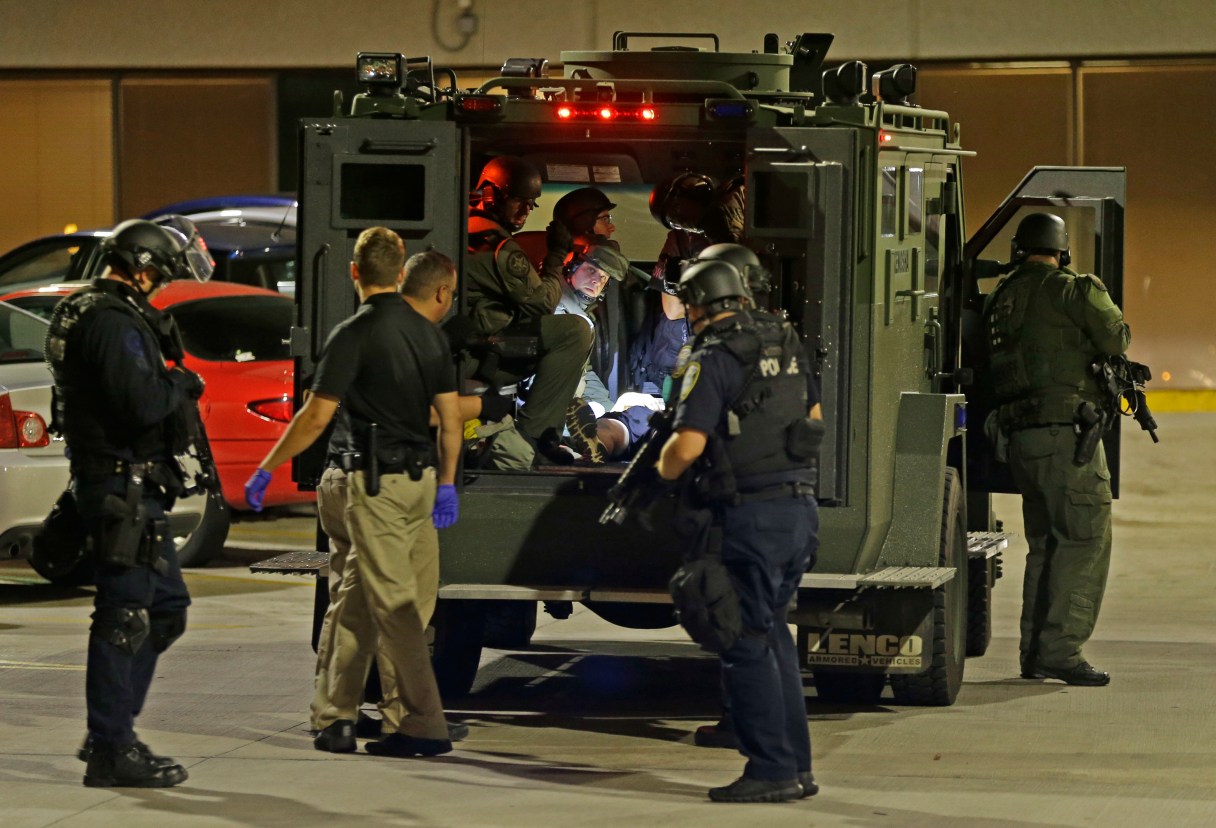
In the country’s long history of racial strife, a few cities have become flashpoints: Los Angeles. Chicago. Ferguson, Missouri. Baltimore.
But by many measures, there is no tougher place to be black in America than Milwaukee, where in recent days the shooting death of a black man by a black police officer has led to violent protests, riots that destroyed businesses and gunfire.
The city of 600,000 along Lake Michigan is also the country’s most segregated metropolitan area, surpassing larger, deeply divided Midwestern cities such as Chicago, Cleveland and Detroit, a 2012 Manhattan Institute analysis of census data found.
The overwhelming majority of the black residents who make up 40 percent of Milwaukee’s population are concentrated on its north side – where the rioting and Saturday’s shooting occurred – and away from the breweries and festivals that draw tourists to the waterfront.
People living on the north side are far more likely to live in poverty, to be incarcerated or to be out of work than those in the city overall or the metro area, according to a University of Wisconsin-Milwaukee report. Wisconsin also has the highest rate of black unemployment of any state, and it leads the country in the number of black men behind bars, with 1 out of 8 in prison or jail as of the 2010 census, another study found.