
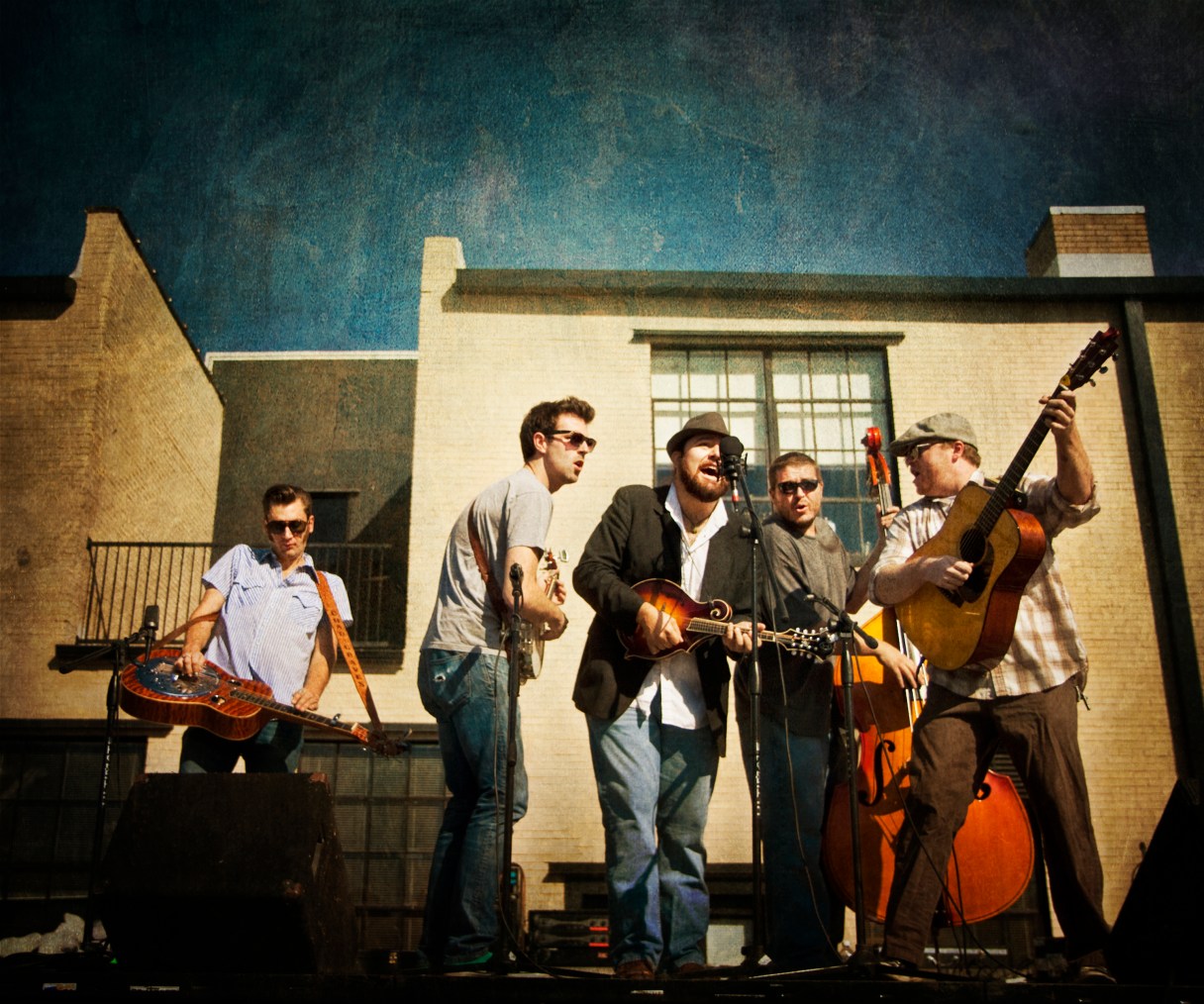
In advance of The HillBenders’ performance as this week’s Nightfall concert series headliner, mandolinist/vocalist Nolan Lawrence chatted with Chattanooga Times Free Press entertainment reporter Casey Phillips about creating a bluegrass adaptation of The Who’s rock opera “Tommy” and how the project almost tanked during their first day in the studio.
Q: When Louis Meyers approached you about doing a bluegrass cover of “Tommy,” what was your initial response?
A: You know, it was interesting. When he first brought it up, he brought it up to me directly at home. We were having dinner, and he brought it up over dinner. He mentioned that he had this crazy idea for a couple of decades to record “Tommy” as a bluegrass record. I said, “That’s interesting. I would never have thought of that. Who do you think is going to do that?” He looked me dead in the eye and said, “Well, I thought you would.”
I did a double take, and said, “Well, I’m definitely not opposed. Let me wrap my head around it.” Nobody took it very seriously. Then, at some point, we sat down with Louis, and he said, “I’m very serious. This is something I want to try.” It turns out our guitar player [Jimmy Rea] is a huge fan of “Tommy.” He saw it when he was a teen and knew every word. When we realized this was a real possibility, he got very, very excited and dove in head first. The rest of us definitely caught a bit of that excitement and jumped on board. It’s been a wild ride ever since.
Q: Were you all fans of The Who from the start? Was there anyone in the band who was less enamored than the rest, who had to be convinced to tackle the album?
A: It definitely took a lot of time. We were all fans of The Who. Some of us were bigger fans of “Tommy” than others. Jim was a huge fan. I’ve always been into musical theater and things like that, so it definitely struck a chord with me when I listened to it as a young teenager
Then, we have another younger member of the band who wasn’t as familiar with “Tommy” and didn’t know as much about it and didn’t how viable it would be, given today’s market. He took some talking and convincing, but not very much. Once he saw the possibilities and jumped into our shared vision for the project, he was 100 percent on board.
It wasn’t much of a struggle once we saw the vision Louis had for it and once we started working up some of the demo tracks and tried to figure out if it would work with a bluegrass sensibility. Very quickly, we found that it lent itself perfectly to it. It made sense very early on.
Q: Did Louis give you any background on how he thought up the idea?
A: He was always a huge Who fan. They were one of his favorite bands growing up. He also had a kind of rebellious bluegrass band – much like we are, in the sense that we don’t toe the line of tradition – 20 years ago or more. He said that back in those days, they would warm up with “Tommy” tracks on occasion as a soundcheck tune.
He says he thought it was really cool and wanted to do something with it, but he had never found the right band that could pull it off with the right kind of instrumentation and approach and vocals. Then he found us. He actually found us four or five years ago and never mentioned it, but he said he knew from the day he first saw us that he wanted us to do it. He was waiting until the right time in our career to make it work. He jumped in at the perfect time for us.
Q: When did you start working on the tribute?
A: The idea was first presented to us in probably August or September of 2014. We didn’t really fully get on board with the project and with deciding to move forward with recording until late September or early October of that year.
From that point, we were just in arrangement mode for a month or more, tossing back and forth arrangements with Jim, who arranged the record, and working up some basic concepts around it and working up some structure around how we’d do the recording. Then, we spent a month or two months really heavily practicing and working up the numbers, mostly individual work and then getting together once or twice as a band to solidify everything.
In early December of 2014, we went into the studio and cut the whole thing in about four days with another day of mixing. We did it all to analog tape, which was a first for us. Louis wanted to do it very similarly to the original, so we did it on 24-track analog tape and mixed it down to tape and had a phenomenal experience front to back with it.
Q: That’s so fast, but I guess the way was paved for you a little bit in that the album had been around for 45 years, right?
A: And we had really gelled our arrangements by that time. We knew what we were going for and the sound we wanted. We had an excellent engineer in there working with us and getting the sounds we wanted.
Interestingly, the first half of the first day, we all struggled because we were used to the digital recording process in that you could take as many takes as you wanted and carve it up. We’d never really experienced anything other than that, so our first attempt at songs with the analog setup were just dismal failures. Louis jumped out of the booth at one point and came in and chewed us up one side and down the other and said, “Do you realize we only have one week in the studio? This is never going to happen if you guys can’t pull it together and get these songs done in one take.” We all looked around at each other and said, “One take? Are you kidding?” He said, “No, I’m not kidding. You get one take – two, max. That’s all we have time for. Make it happen.”
We all freaked out, left the studio and walked around a little bit to try and absorb that. We’d never seen Louis get that fired up about something. We resolved to do it the way we needed to do it and make it happen. Sure enough, after that, we went in the studio and knocked all of them out in two takes, some of them in one. We just needed that inspiration, I guess, to push us hard enough to make that happen.
Q: How soon into the process did you realize, “Holy cow, this is gonna work?” Was it an immediate fit?
A: You know, in the very beginning, we all thought it would at least be interesting and fun to see if it would work. We roughly threw together three or four tracks as demo tunes to see if it would flip and if it would feel comfortable. At first, it was like wearing clothes that don’t quite fit because we weren’t settled into it.
We sent those first demo tracks off to Louis, and he turned around in a couple of hours and said, “Oh my God, this is exactly what I was hoping for. This is exactly the direction I want to go for. This is going to be so great. I can’t wait to flesh this out. Everybody, let’s jump on board. I want to set up a meeting right now so we can talk about the business of the project.”
We were all very excited about that and excited at the opportunity to work with him. He laid out a detailed business plan from the beginning, and we were all on board. It was meant to be, and we knew it fairly early in the process.
Q: Listening to the album, it’s definitely not schtick. You guys have done a really fine job. How important was it to the band for this not to just seem like a joke project, to take it seriously?
A: It was huge, actually. That was one of the driving factors behind doing it. There has already been a whole era of bluegrass schtick covers. There’s already been Iron Horse and Hayseed Dixie and the Pickin’ On series. That’s been there, done that, and everyone is used to hearing that.
We knew we would get pigeonholed into it if we erred on the side of schtick. None of us are into that kind of schtick or bluegrass anyway, not that there’s anything wrong with it. We just prefer a little more aggressive take on the music.
For us, it fit right in our wheelhouse; it fit with our style and with our energy. Emulating one of the greatest rock bands of all time was something that we all wanted to do since we were kids. It was a dream come true.
Contact Casey Phillips at cphillips@timesfreepress.com or 423-757-6205. Follow him on Twitter at @PhillipsCTFP.