
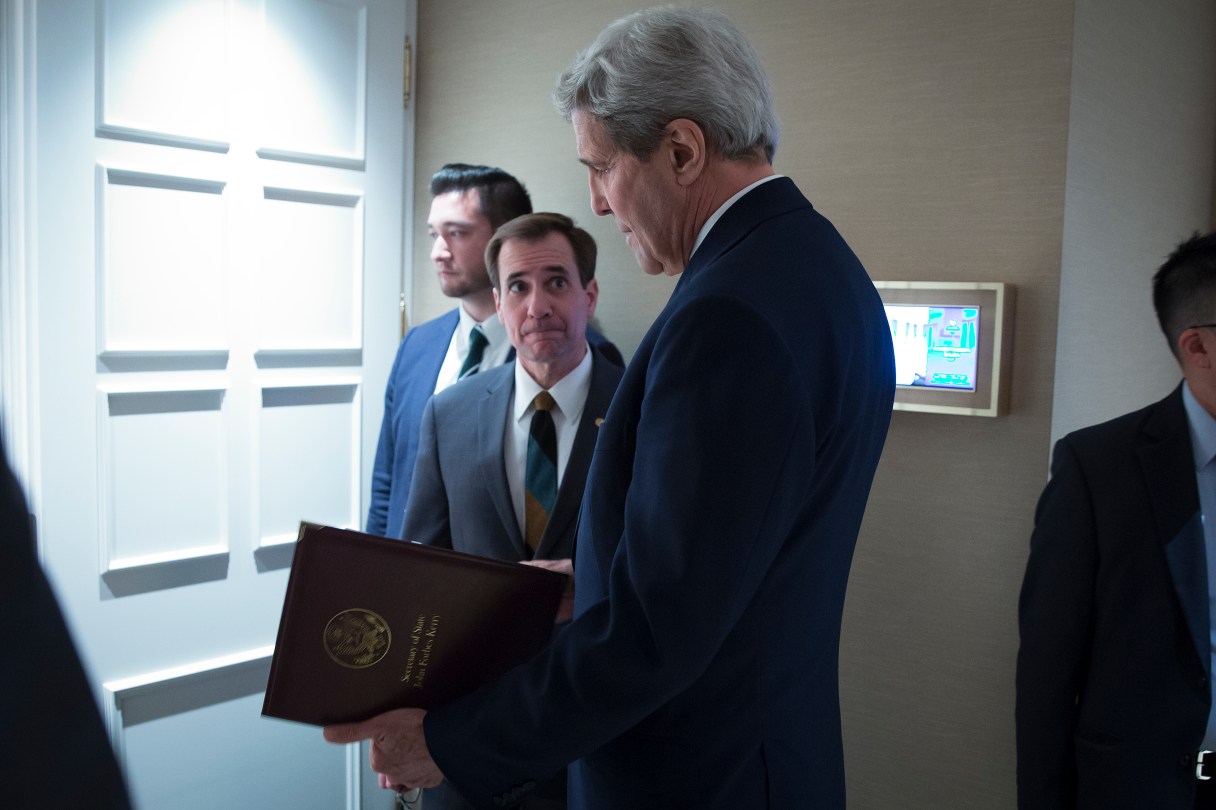
WASHINGTON (AP) – The Obama administration is facing a storm of Republican criticism after acknowledging that a $400 million cash payment to Iran seven months ago was contingent on the release of a group of American prisoners.
Thursday’s explanation was the first time the U.S. had so clearly linked the two events, which critics have painted as a hostage-ransom arrangement.
Repeating past administration statements, State Department spokesman John Kirby said the negotiations to return the Iranian money from a 1970s account to buy U.S. military equipment were conducted separately from talks to free four U.S. citizens in Iran. But unlike with past descriptions, he said the U.S. withheld the delivery of the cash as leverage until Iran permitted the Americans to leave the country.
“We had concerns that Iran may renege on the prisoner release,” Kirby said, citing delays and mutual mistrust between countries that severed diplomatic relations 36 years ago. As a result, he explained, the U.S. “of course sought to retain maximum leverage until after the American citizens were released. That was our top priority.”
Kirby said “it would have been foolish, imprudent, irresponsible” for the administration to have acted otherwise.