
Thursday, November 12, 2026Nov 12

Strong quake rattles central Italy: “The town isn’t here”

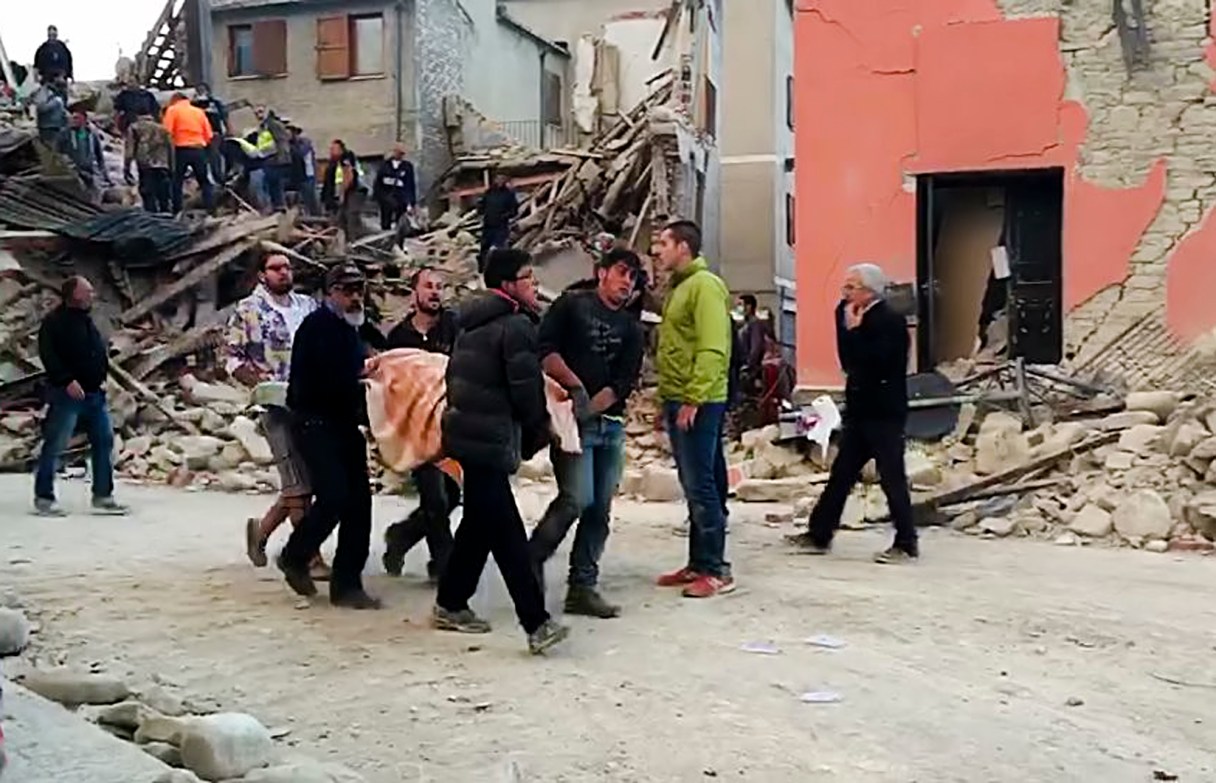
This still image taken from video shows rescuers recover a victim from a crumbled building in Amatrice, central Italy, where a 6.1 earthquake struck just after 3:30 a.m., Wednesday, Aug. 24, 2016. The quake was felt across a broad section of central Italy, including the capital Rome where people in homes in the historic center felt a long swaying followed by aftershocks. (AP Photo)
This still image taken from video shows rescuers recover a victim from a crumbled building in Amatrice, central Italy, where a 6.1 earthquake struck just after 3:30 a.m., Wednesday, Aug. 24, 2016. The quake was felt across a broad section of central Italy, including the capital Rome where people in homes in the historic center felt a long swaying followed by aftershocks. (AP Photo) This still image taken from video shows rescuers recover a victim from a crumbled building in Amatrice, central Italy, where a 6.1 earthquake struck just after 3:30 a.m., Wednesday, Aug. 24, 2016. The quake was felt across a broad section of central Italy, including the capital Rome where people in homes in the historic center felt a long swaying followed by aftershocks. (AP Photo)

AMATRICE, Italy (AP) – A strong earthquake struck central Italy early Wednesday, collapsing homes on top of residents as they slept. At least 10 people were reported dead in two hard-hit towns that were partially demolished.

“The town isn’t here anymore,” Amatrice mayor Sergio Pirozzi said.

The magnitude 6 quake struck at 3:36 a.m. (0136 GMT) and was felt across a broad swath of central Italy, including Rome where residents of the capital felt a long swaying followed by aftershocks.

The hardest-hit towns were Amatrice and Accumoli near Rieti, some 80 kilometers (50 miles) northeast of Rome. The center of Amatrice was devastated, with entire palazzos razed to the ground. Rocks and metal tumbled onto the streets and dazed residents huddled in piazzas as aftershocks continued into the early morning hours.

As daylight dawned, residents, civil protection workers and even priests began digging out with shovels, bulldozers and their bare hands, trying to reach survivors.