
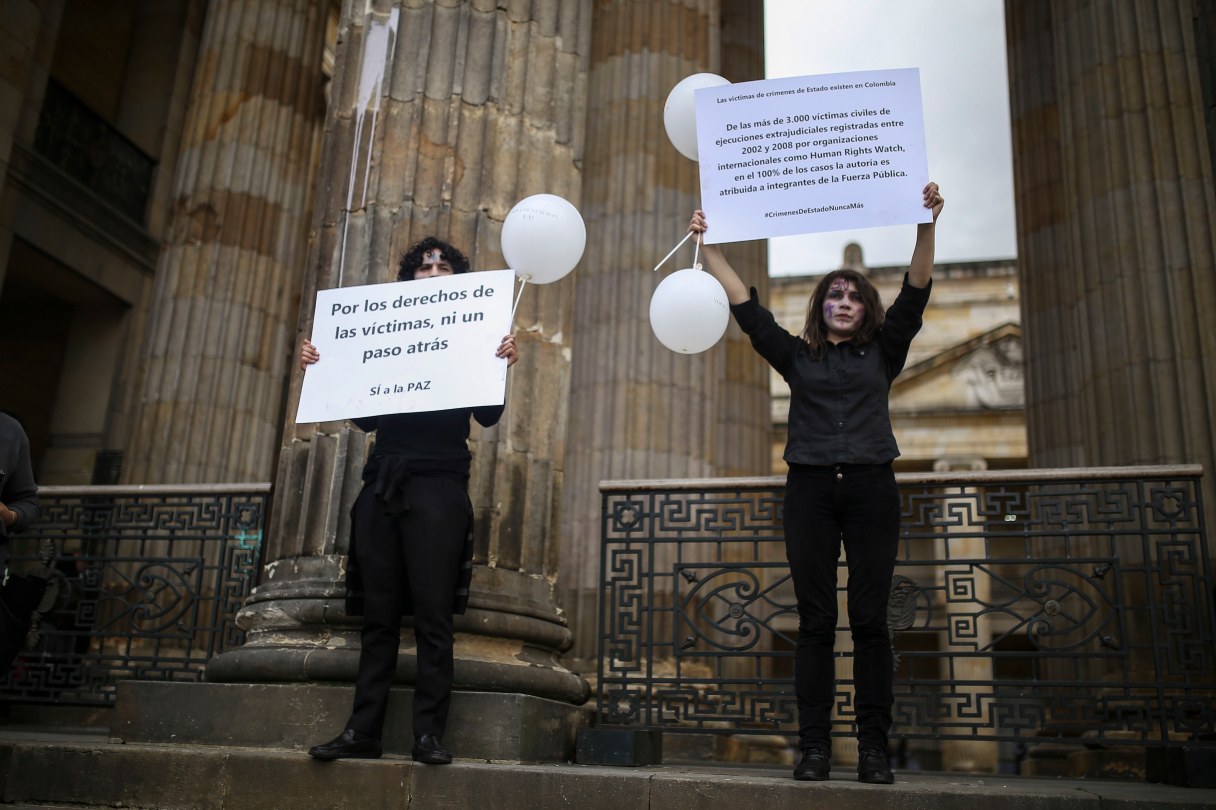
BOGOTA, Colombia (AP) – Congress formally ratified a revised peace agreement with Colombia’s biggest leftist rebel group, capping a torturous four years of negotiations, a stunning referendum rejection, last-minute compromises and two signing ceremonies.
The initial pact was narrowly rejected by voters last month, and President Juan Manuel Santos decided to skip a referendum on the new version and go directly to congress, where the deal’s supporters hold a majority. Opponents, led by former President Alvaro Uribe, boycotted the legislative votes, which resulted in unanimous approval by the Senate on Tuesday and by the lower house late Wednesday.
The new 310-page accord with the Revolutionary Armed Forces of Colombia introduced 50 changes to the initial deal in an attempt to assuage opponents as the government seeks to end a 52-year conflict that has killed more than 220,000 people and driven almost 8 million from their homes.
The modifications include a prohibition on foreign magistrates judging alleged crimes by government or FARC troops, and a commitment from the rebels to forfeit assets, some amassed through drug trafficking, to help compensate victims. But the FARC rejected demands for jail sentences for rebel leaders responsible for atrocities and stricter limits on their future participation in politics.
The compromises weren’t enough for some of the deal’s opponents.