
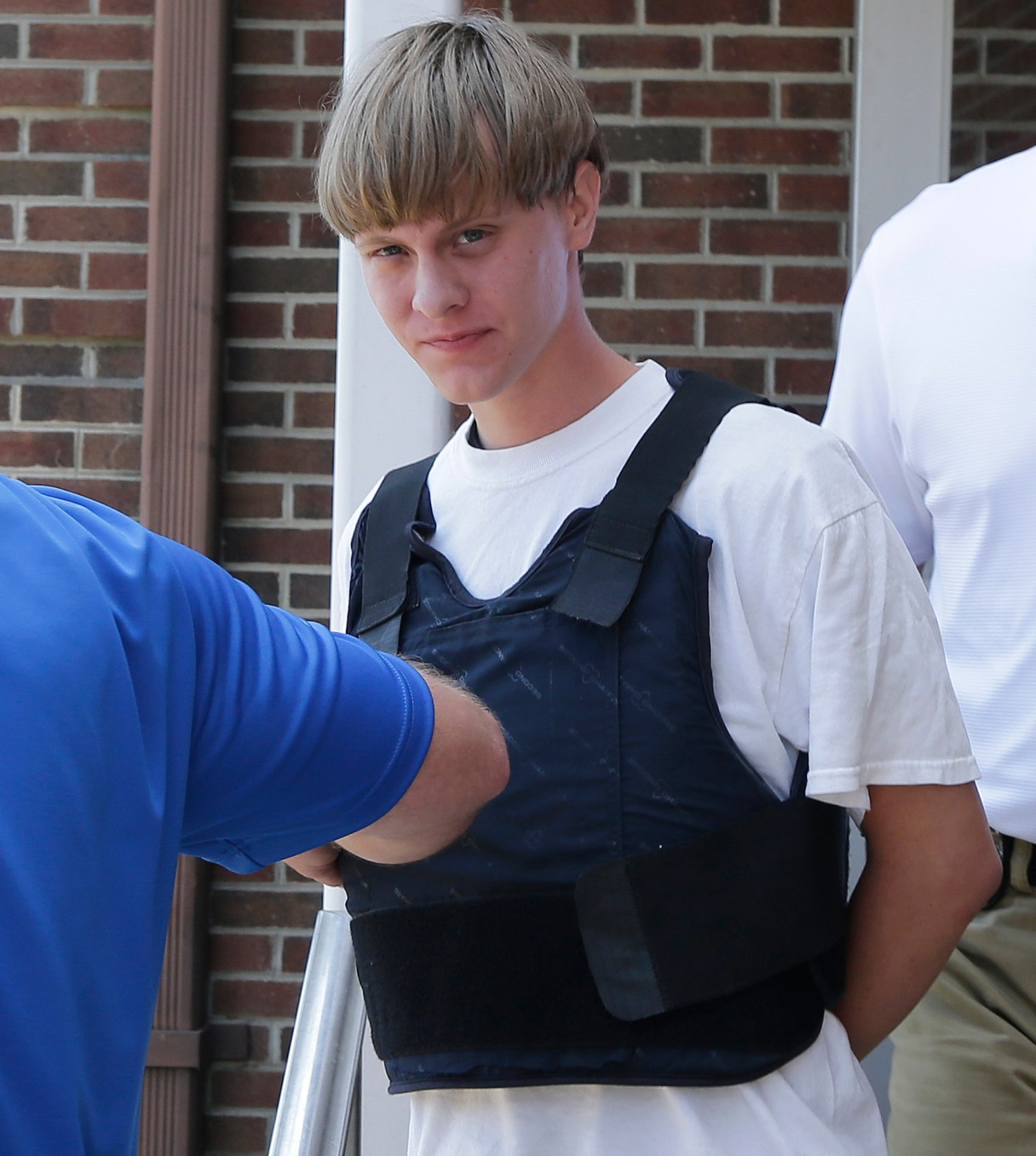
CHARLESTON, S.C. (AP) – A survivor of last year’s massacre at a black South Carolina church testified Wednesday that her Bible study group had just closed their eyes and started praying when a loud sound shattered the stillness. The basement room went dark.
When Felicia Sanders opened her eyes, she saw a young white man the parishioners had welcomed to the study only a half-hour earlier. Dylann Roof was mowing down the pastor and eight others with gunfire and hurling racial insults.
Sanders, the first witness in Roof’s death penalty trial, fought back tears as she recalled sheltering her granddaughter under a table and telling her to play dead. She watched in horror as her son Tywanza and her 87-year-old aunt, Susie Jackson, were killed in the fusillade.
At one point, she looked across the courtroom toward Roof and called him “evil, evil, evil.”
The gunman had planned the attack for months and traveled about 100 miles to Charleston on June 17, 2015, to attack Emmanuel African Methodist Episcopal Church, the oldest black church in the South, because of what it represented, prosecutors said. He told the parishioners he was killing them because blacks were raping white women and taking over the country. In a manifesto found later, he said he hoped to start a race war.