
ATHENS, Greece (AP) – European creditors have pulled a recently announced debt relief package for Greece in protest at subsequent budget spending measures by Athens.
Greek stocks fell sharply Wednesday and the government’s borrowing rates jumped higher as investors fretted over a potential flare-up in the country’s bailout problems and the possibility of early elections in the country.
The main stock market in Athens closed down 3.2 percent while the yield on the country’s 10-year bond rose 0.28 percentage point to 7.01 percent – above the 7 percent level that is considered to be unaffordable.
The market moves came after Michel Reijns, the spokesman for the eurozone’s top official, said in a tweet that recent, unsanctioned actions by the Greek government “appear to not be in line with our agreements.” As such, he said there was “no unanimity” for implementing the short-term debt measures announced on Dec. 5.
At a meeting of the eurozone’s 19 finance ministers, Greece’s creditors offered some immediate debt help to Greece. They include smoothing some of Greece’s repayments to prevent debt humps and a waiving of an interest rate increase. Officials said the measures could chop 20 percentage points off Greece’s debt burden through to 2060. Greece’s debt is worth around 180 percent of its GDP, a level experts consider unsustainable.
Days after that agreement, however, Greek Prime Minister Alexis Tsipras, announced that his government would distribute 617 million euros ($650 million) this Christmas to some 1.6 million low-income pensioners, replacing a holiday bonus scrapped by Greece’s bailout creditors – and whose reinstatement had been a key electoral pledge by Tsipras’ Syriza party.
Tsipras also said his government would restore a lower sales tax rate for Aegean Sea islanders who are struggling to cope with mass arrivals of migrants from Turkey.
Taken by surprise by Greece’s new spending measures, the eurozone creditor nations said Wednesday that they want more information on whether the costs will affect Greece’s ability to meet its financial targets.
The eurozone’s strong reaction was given added weight as it came on the eve of a year-end European Union summit where Tsipras is set to discuss the state of his debt-ridden nation with other leaders.
Tsipras defended the spending measures Wednesday in comments made before the eurozone suspended its debt relief measures. He said he had “no doubt” over their legitimacy.
“Everything we do is absolutely within the framework of the (bailout) agreement, which we are observing, and which our partners too must observe,” he said.
Tsipras noted that Greece has to deal with its economic difficulties at a time when it’s also at the front line of the immigration crisis.
“In the name of Europe, the Greek people are making sacrifices, and everyone must show respect for this,” Tsipras said.
Analysts said the eurozone’s move puts Tsipras in a tough situation and could pave the way for early elections.
“If Tsipras goes ahead, this would further antagonize the eurozone creditors, putting at risk the promised short-term debt relief,” said Wolfgango Piccoli, co-president of Teneo Intelligence. “On the other side, giving in to the creditors’ pressure would make Tsipras look amateurish at best, and at worst, further undermine his credibility and standing domestically.”
Piccoli said Tsipras “after overplaying his hand” could be tempted to “cut his losses” by calling early elections before his party loses even more support for adopting more unpopular measures.
Opinion polls show that the center-right New Democracy party has double-digit leads over Syriza and that it would likely form the next government.
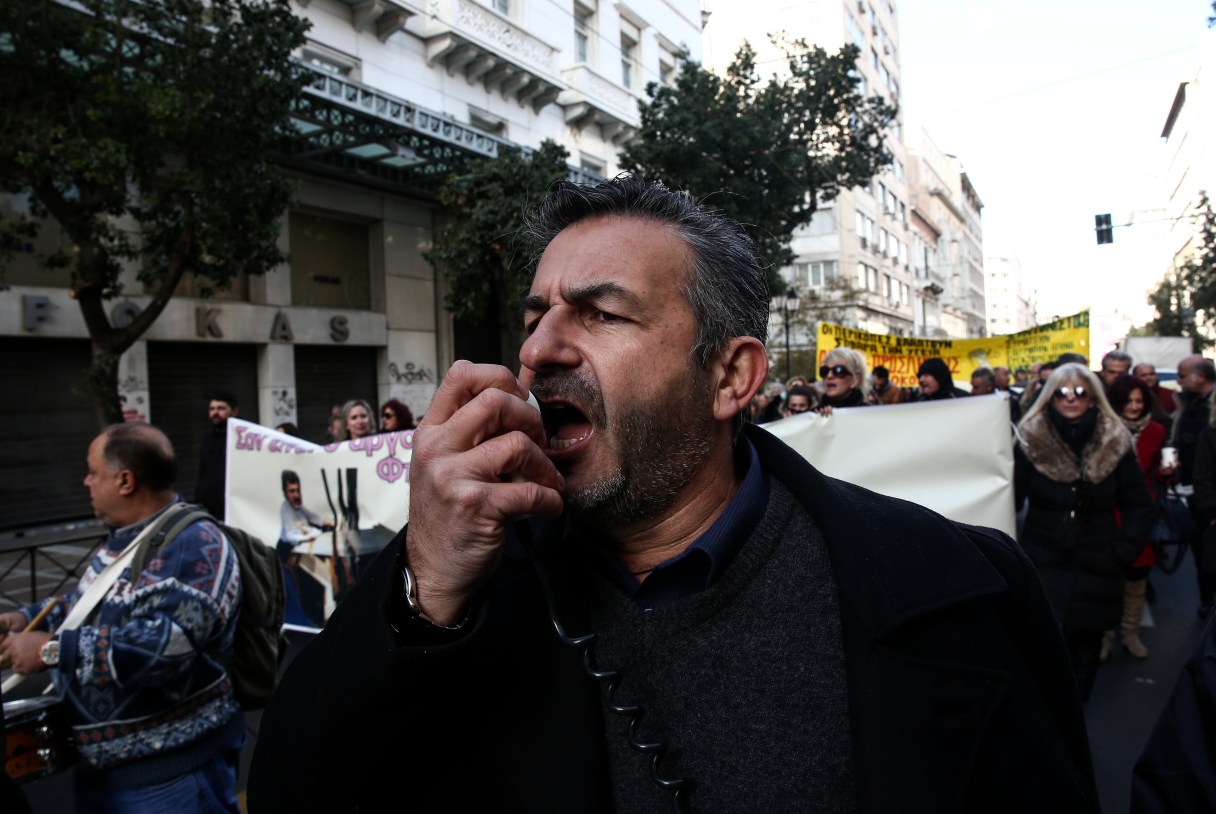
Anti-austerity protests – which Tsipras’ Syriza party spearhead while in opposition – have continued under the left-led government. On Wednesday, about 80 state hospital workers, who were holding a six-hour work stoppage, protested outside the health ministry against state spending cuts. They symbolically bricked up the building’s entrance before marching through the city center.
___
Raf Casert in Brussels contributed to this story. Pylas reported from London.