
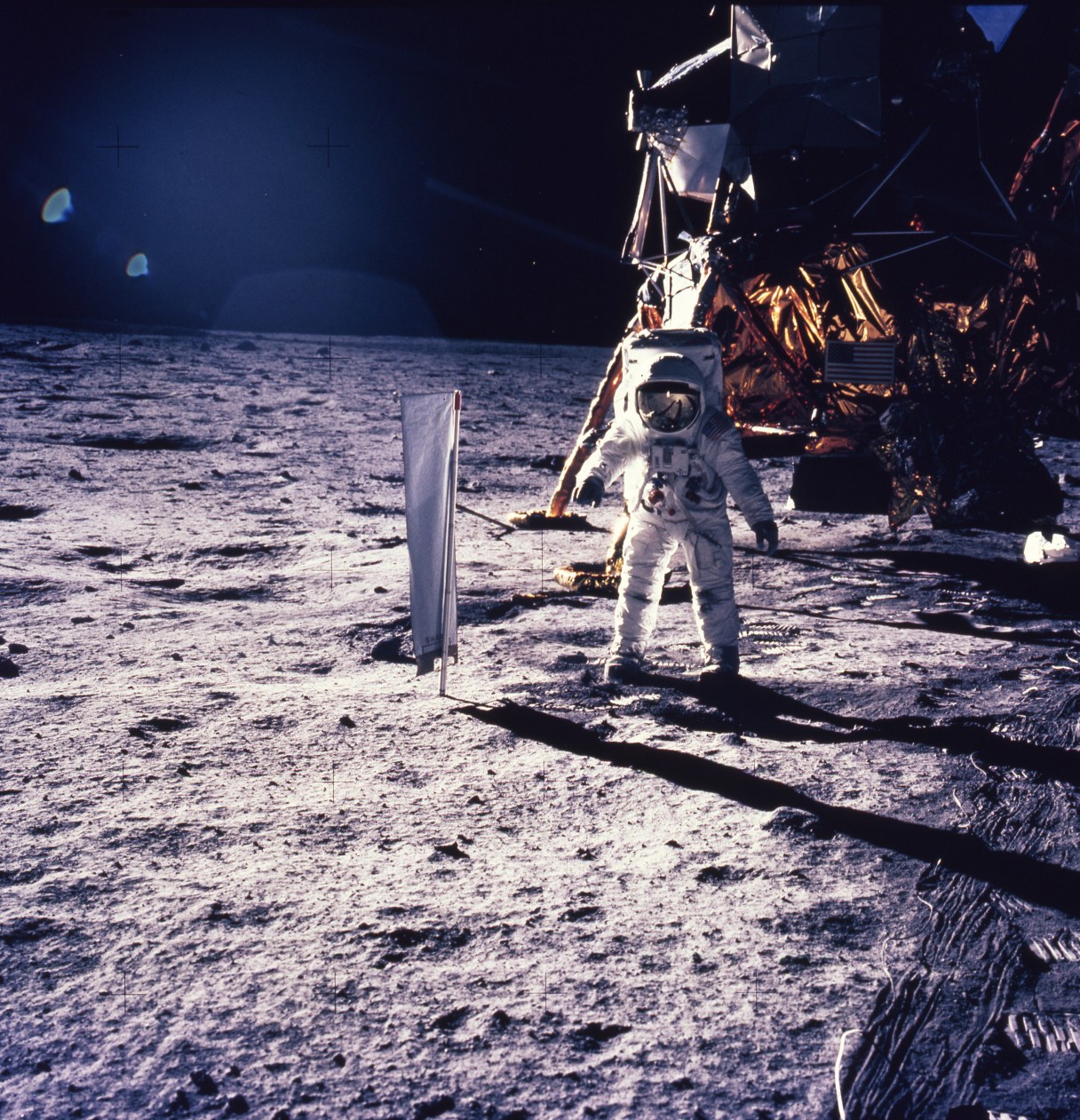
WICHITA, Kan. (AP) – A bag used to collect lunar samples during the first manned mission to the moon legally belongs to an Illinois woman who bought it for $995 when it was mistakenly sold during a government auction, a judge ruled Wednesday.
Judge J. Thomas Marten, of the U.S. District Court in Wichita, said he doesn’t have the authority to reverse the sale of the bag used during the Apollo 11 moon mission in July 1969, even though it shouldn’t have gone up for auction.
The white bag, which has lunar material embedded in its fabric and which the government considers “a rare artifact, if not a national treasure,” was mistakenly sold as part of a criminal case against Max Ary, the former director of the Kansas Cosmosphere and Space Center, a museum in Hutchinson. Ary was convicted in November 2005 of stealing and selling museum artifacts, including some that were on loan from NASA.
Investigators found the Apollo 11 lunar bag in 2003 during a search of Ary’s garage. The government contends that due to a mix up in inventory lists and item numbers, the bag was mistakenly thought to be a different bag that the government recovered. Ary had auctioned off that bag, which was used during the 1972 Apollo 17 lunar landing, for $24,150 in 2001.
The U.S. Attorney’s Office wanted Marten to set aside the final forfeiture order and rescind the Apollo 11 bag’s sale to Nancy Carlson in Inverness, Illinois, saying that NASA hadn’t been properly notified of its forfeiture because the bag was misidentified. When she bought the bag, Carlson only knew that it had been used in a space flight, but not which one.