
WASHINGTON (AP) – Smooth, rocky or in between, relationships between the leader in the White House and the House speaker on Capitol Hill can be the most important and defining in a presidency. Donald Trump and Paul Ryan were hardly pals during the campaign, but they appear to be moving together now.
Here are some of the significant president-speaker pairings in recent years:
-Republican President Ronald Reagan and Democratic Speaker Thomas “Tip” O’Neill. The conventional wisdom holds that this pair of Irish-American politicians would fight like partisans during the day only to savor their friendship with a post-6 p.m. drink, but in reality their relationship was often contentious. Reagan rolled over O’Neill in 1981 to win his first signature accomplishment – tax cuts – but a 1983 overhaul of Social Security and the much-lauded 1986 tax reform measure were products of difficult, but ultimately successful, negotiations.
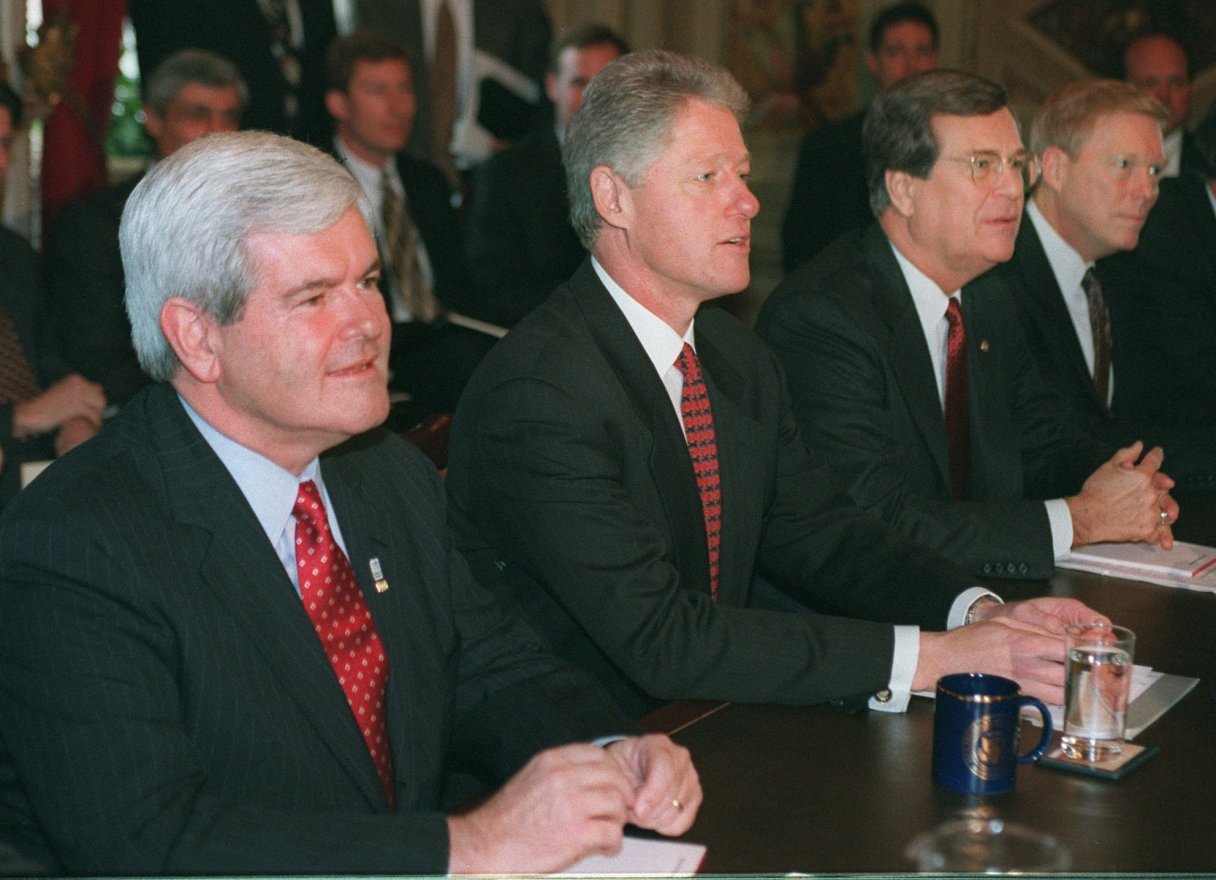
-Democratic President Bill Clinton and Republican Speaker Newt Gingrich. Republicans broke a four-decade hammerlock on Democratic control of the House in 1994 by running against Clinton’s agenda on taxes and gun control, but an over-reaching Gingrich was Clinton’s foil two years later as the Democrat easily won a second term. They brokered a 1997 budget pact, but perhaps their defining episode was the 1998 Monica Lewinsky scandal and impeachment drive – which tarred Clinton’s legacy and ended Gingrich’s speakership after it led to surprising midterm losses for Republicans.
-Republican President George W. Bush and Republican Speaker Dennis Hastert. Bush won the 2000 presidential race only narrowly and Hastert commanded a slender House majority. But with the help of a handful of Senate Democrats, Bush and Hastert powered home an agenda of tax cuts, battled terrorism and expanded Medicare. Hastert later was convicted on a bank fraud case linked to cover-up allegations regarding sexual abuse of teen boys.