
Friday, October 30, 2026Oct 30

This story is free to read.

Cuban President Raul Castro faces deep problems in 2017

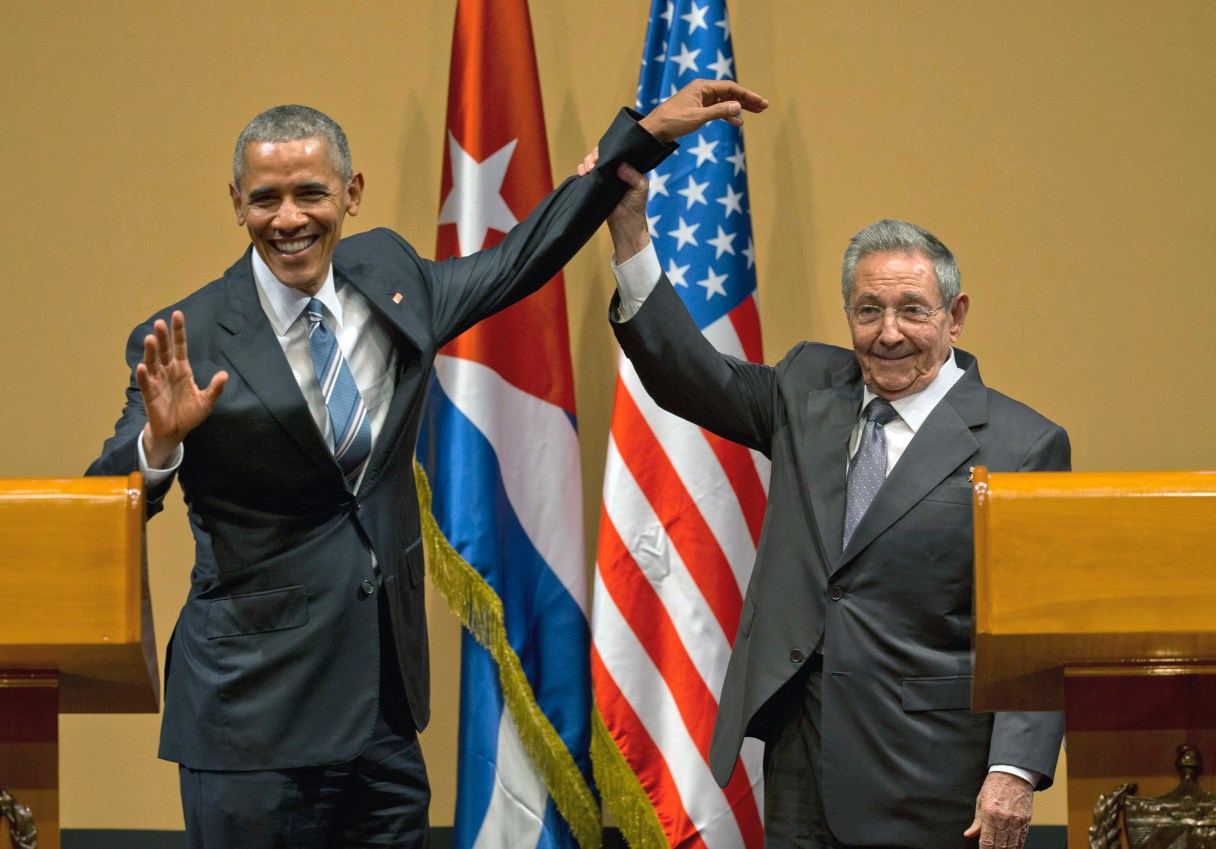
FILE - In this March 21, 2016 file photo, Cuban President Raul Castro, right, lifts up the arm of U.S. President Barack Obama, at the conclusion of their joint news conference at the Palace of the Revolution, in Havana, Cuba. Next year will likely be Castro’s toughest year in office since he took power in 2006, as the 85-year-old general faces a possible economic recession alongside a hostile new U.S. administration promising to undo measures that gave many Cubans expectations of a better future. (AP Photo/Ramon Espinosa, File)
FILE - In this March 21, 2016 file photo, Cuban President Raul Castro, right, lifts up the arm of U.S. President Barack Obama, at the conclusion of their joint news conference at the Palace of the Revolution, in Havana, Cuba. Next year will likely be Castro’s toughest year in office since he took power in 2006, as the 85-year-old general faces a possible economic recession alongside a hostile new U.S. administration promising to undo measures that gave many Cubans expectations of a better future. (AP Photo/Ramon Espinosa, File) FILE - In this March 21, 2016 file photo, Cuban President Raul Castro, right, lifts up the arm of U.S. President Barack Obama, at the conclusion of their joint news conference at the Palace of the Revolution, in Havana, Cuba. Next year will likely be Castro’s toughest year in office since he took power in 2006, as the 85-year-old general faces a possible economic recession alongside a hostile new U.S. administration promising to undo measures that gave many Cubans expectations of a better future. (AP Photo/Ramon Espinosa, File)

HAVANA (AP) – Alex Romero was delighted when President Barack Obama came to Havana in March bearing the promise of a bright new future.

Like so many other Cubans, the 42-year-old state photography shop employee thrilled at the president’s vision of restored ties between the U.S. and Cuba. Families would reunite. A flood of American business would lift the stagnant centrally planned economy, fueling its slow path toward reform. Even as Obama spoke, an 80 percent surge in U.S. visitors was drenching state-run and private businesses with hundreds of millions of desperately needed dollars.

Nine months later, the world seen from Havana looks very different.

President Raul Castro faces what could be his toughest year since he took power in 2006. 2017 brings a possible economic recession and a U.S. president-elect who has promised to undo Obama’s normalization unless the Cuban government makes new concessions on civil rights. Resistance to pressure from Washington is a founding principle for the Cuban communist system, making domestic concessions in exchange for continued detente a virtual impossibility.

“People expected that after Obama came there would be changes in the relationship between the U.S. and Cuba but that we could keep the best of what we have, the benefits for the people,” Romero said. “Trump’s not going to be able to get what he wants, another type of Cuba. If the world’s number one power takes us on, 2017 is going to be really bad for us.”