
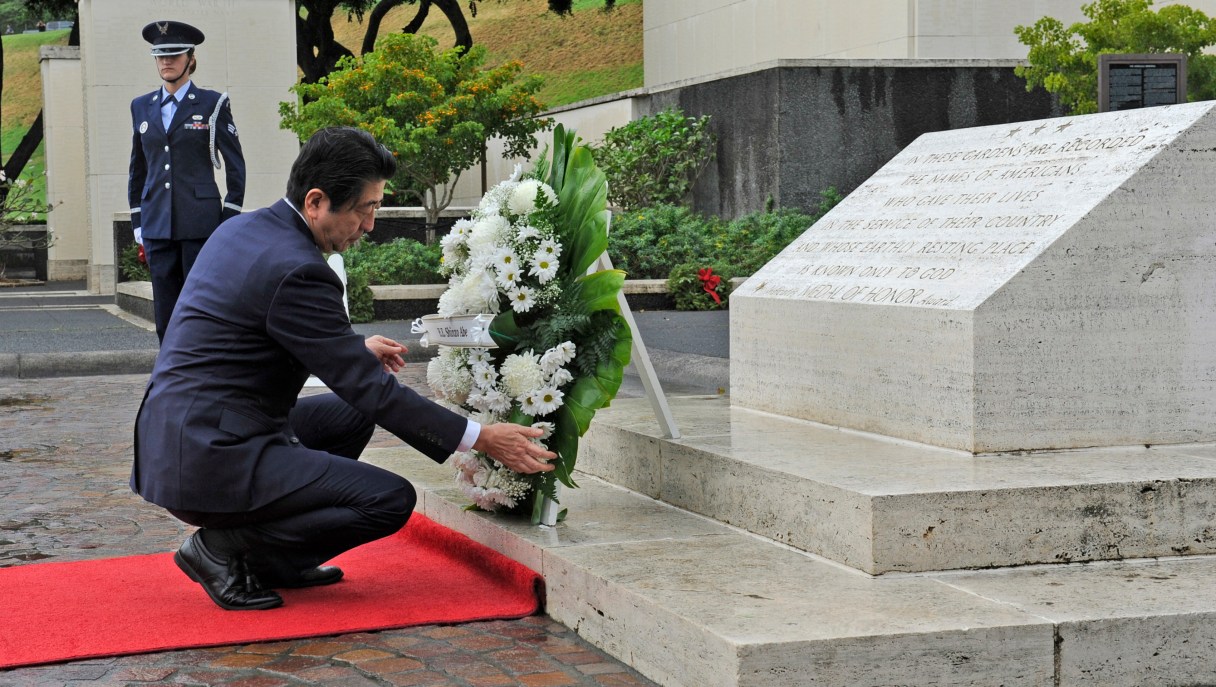
HONOLULU (AP) – Putting 75 years of resentment behind them, the leaders of the United States and Japan are coming together at Pearl Harbor for a historic pilgrimage to the site where the bloodshed of the surprise attacks drew America into World War II.
Prime Minister Shinzo Abe’s visit Tuesday with President Barack Obama is powerful proof that the former enemies have transcended the recriminatory impulses that weighed down relations after the war, Japan’s government has said. Although Japanese leaders have visited Pearl Harbor before, Abe will be the first to visit the memorial that now rests on the hallowed waters above the sunken USS Arizona.
For Obama, it’s likely the last time he will meet with a foreign leader as president, White House aides said. It’s a bookend of sorts for the president, who nearly eight years ago invited Abe’s predecessor to be the first leader that Obama hosted at the White House.
For Abe, it’s an act of symbolic reciprocity, coming six months after Obama became the first sitting U.S. president to visit Hiroshima in Japan, where the U.S. dropped an atomic bomb in hopes of ending the war.
“This visit, and the president’s visit to Hiroshima earlier this year, would not have been possible eight years ago,” said Daniel Kritenbrink, Obama’s top Asia adviser in the White House. “That we are here today is the result of years of efforts at all levels of our government and societies, which has allowed us to jointly and directly deal with even the most sensitive aspects of our shared history.”