
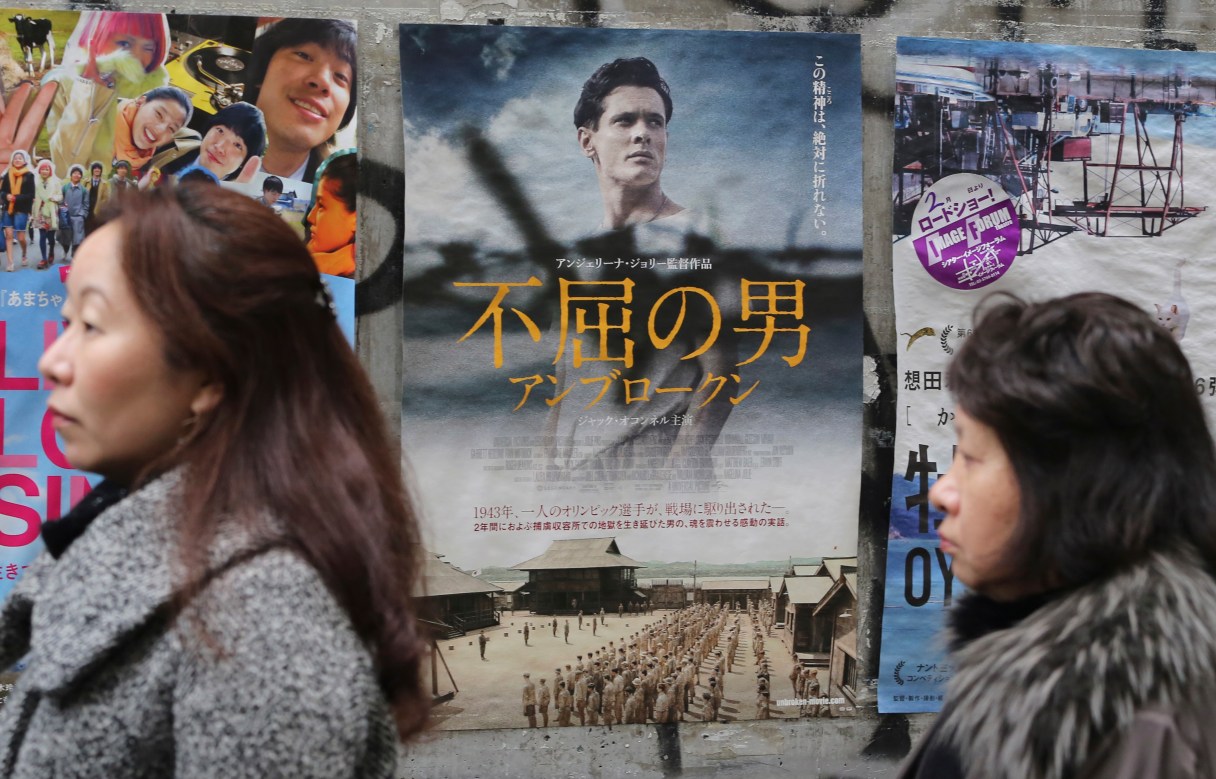
TOKYO (AP) – Angelina Jolie’s “Unbroken” opened Saturday more than a year after the rest of the world in Japan, where the main character endures as a prisoner of war and where some have called for a boycott of the movie.
There were concerns that right-wing extremists may try to disrupt the opening. But the crowd at Theatre Image Forum in Tokyo, a small theater that specializes in independent films and documentaries, was peaceful, appearing engrossed in the film, flinching at the torture scenes and sympathizing with the hero, Louis Zamperini.
The distributor said in a statement that it decided to go ahead with the showing because various views on war should be expressed, and because it was unnatural for a movie about Japan not to be shown in the country.
A publicity official said the company had received some angry calls when it first announced the film’s showing in October. Other than that, nothing unusual happened, and the film is scheduled to be shown in other theaters throughout Japan.
“Unbroken” is based on the true story of Zamperini, an Olympic athlete who gets shot down in a U.S. bomber and survives by floating in the ocean on an inflatable boat, but gets captured by the Japanese. He survives horrible torture in World War II camps until Japan’s defeat in 1945.