
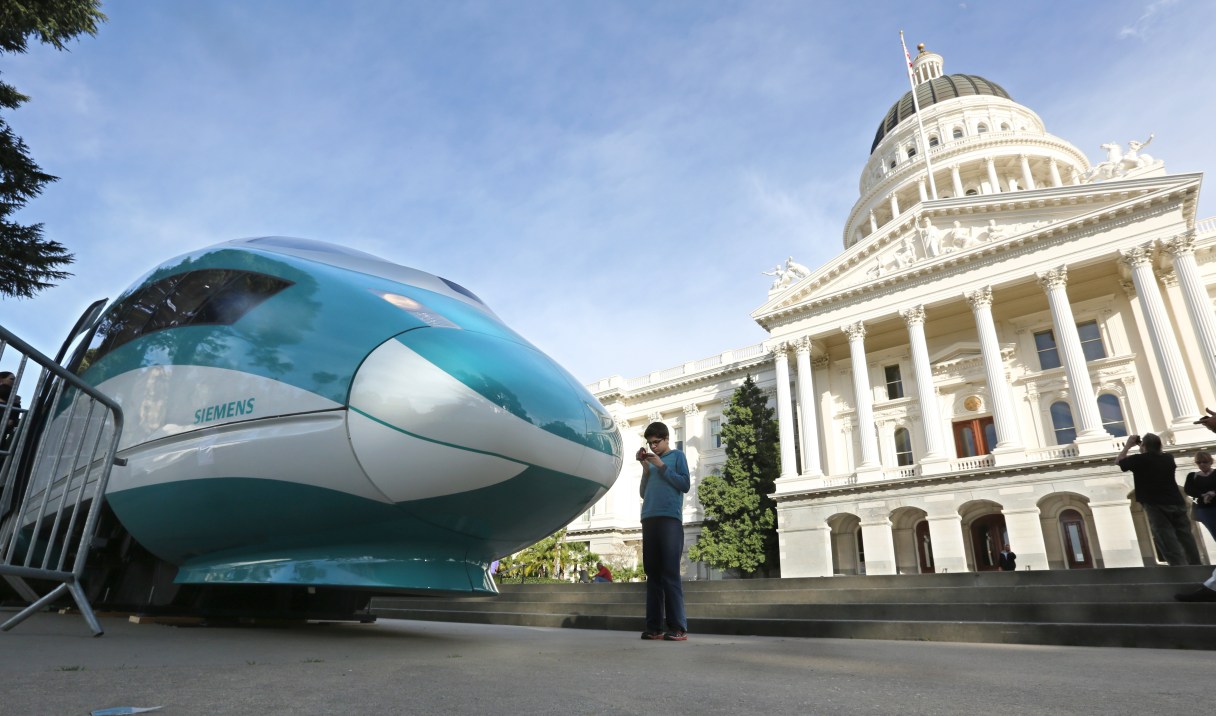
SACRAMENTO, Calif. (AP) – California voters embraced the idea of building the nation’s first real high-speed rail system, which promised to whisk travelers from San Francisco to Los Angeles in under three hours, a trip that can take six hours or more by car. Eight years after they approved funding for it, construction is years behind schedule and legal, financial and logistical delays plague the $68 billion project.
The bullet train’s timeline, funding and speed estimates are back in the spotlight for a longstanding lawsuit filed by residents whose property lies in its path.
In the second phase of a court challenge filed in 2011, attorneys for a group of Central Valley farmers will argue in Sacramento County Superior Court on Thursday that the state can’t keep the promises it made to voters in 2008 about the travel times and system cost. Voters authorized selling $9.9 billion in bonds for a project that was supposed to cost $40 billion.
In recent months, rail officials have touted construction of a viaduct in Madera County, the first visible sign of construction. Though officials have been working for years to acquire the thousands of parcels of land required for the project, they currently have just 63 percent of the parcels needed for the first 29 miles in the Central Valley.
And as planning continues, opposition has mounted in Southern California, where bullet train officials are weighing four potential routes.